Get in Touch with Xiamen Huandao Packaging Technology Co., Ltd.

ISO Certified Manufacturing
Custom Corrugated Mailer Boxes
Custom Corrugated Mailer Boxes for E-Commerce Shipping
Huandao manufactures custom corrugated mailer boxes at its Xiamen plant, combining E- or B-flute single-wall board with sheetfed offset printing, converting, job-run quality reports, and coordinated inserts or outer cartons. Send your packed-product dimensions, artwork, quantity, and distribution route. Our team will turn those inputs into a structure, sample, and quotation you can review.
- Standard MOQ: 1,000 pieces per size and style
- 150 × 150 × 50 to 400 × 300 × 120 mm common range
- CMYK + up to 2 Pantone spot colors
- Blank and digital sample routes available
Send Your Mailer Box RFQ
The project quotation gives timing after structure, artwork, finish, quantity and approval route are determined.
E- or B-flute
- Natural kraft or white kraft single-wall board
- 4 structure routes
- Roll-end tuck-top, book-wrap, rigid paperboard mailer and self-seal strip
Offset color control
- X-Rite system calibrated to G7 against a signed contract proof
Run-specific reports
- ECT/burst, ink-rub and basis-weight results for the customer’s own run
In-house converting
- Pre-press through folder-gluing at the owned Xiamen facility
- Consolidated supply
- Printed box, insert, tray and outer carton can share one shipment
Huandao Mailer Box Capability at a Glance
These custom corrugated boxes are built for brands that need more control than a stock mailing box provides: a structure matched to the pack-out, graphics that follow an approved proof, and production evidence tied to the actual job. Huandao operates its own Xiamen plant, founded in 2003, with 133 staff, as the color-printing plant of Huan Yin Packaging Group, not a trading office. The operation is certified to ISO 9001 and ISO 14001.
Roll-end tuck-top
01
Book-wrap
02
Self-seal formats
03
Rigid paperboard
04
Owned-factory
05
Coordinated spec
06
Roll-end tuck-top mailers
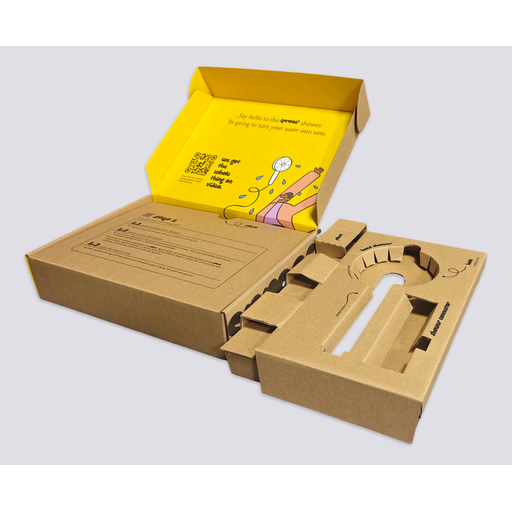
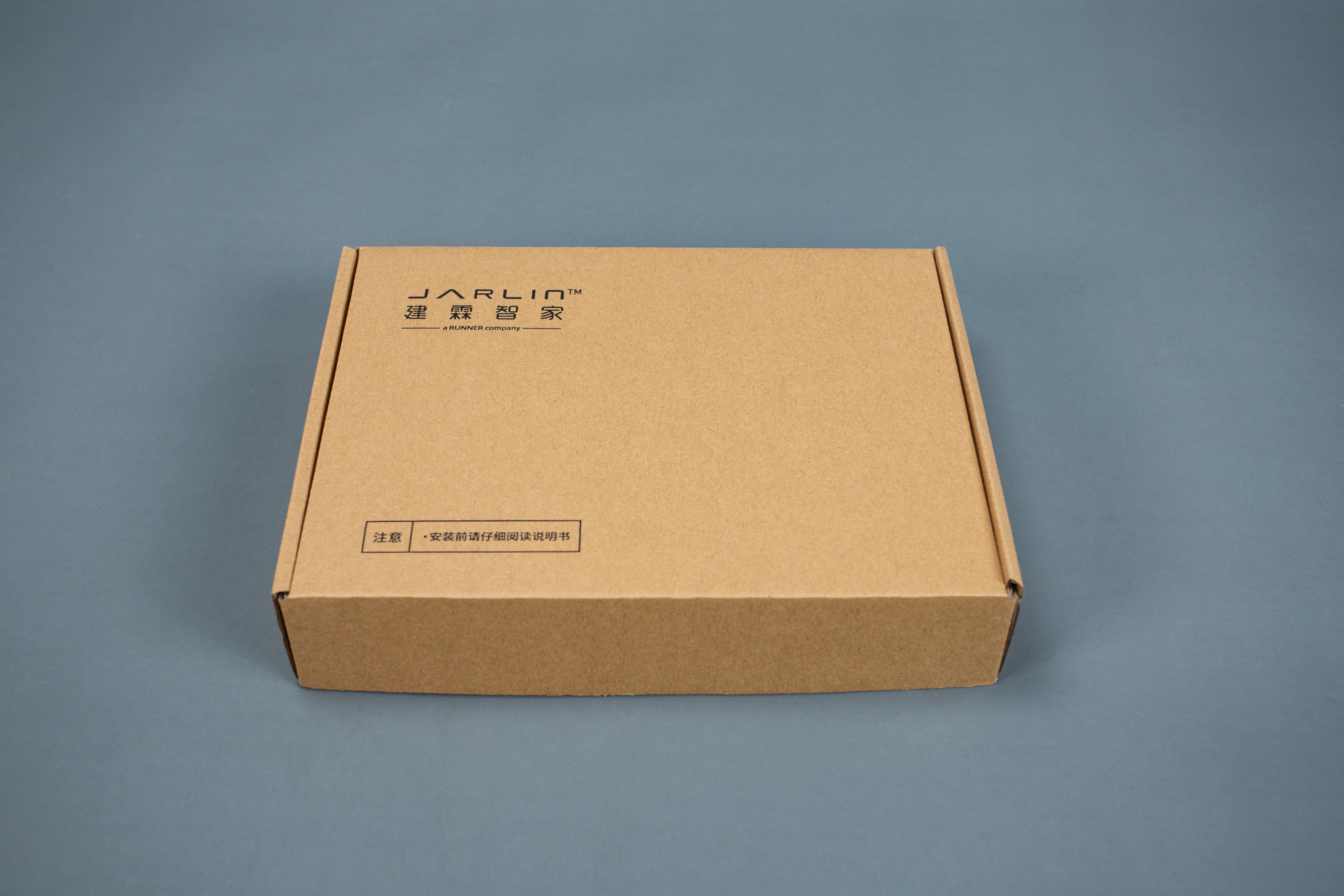
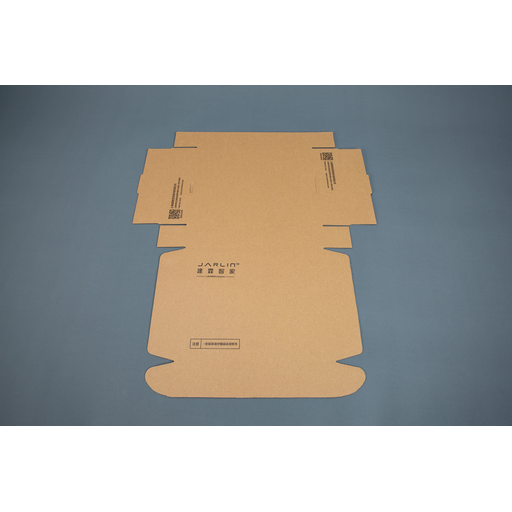
This e-commerce design has a hinged lid, side rolls, and a tuck closure, making it a practical starting point for subscription boxes, branded mailer boxes, and products that need a presentation surface inside the box.
- Natural kraft or white kraft surfaces
- Exterior or coordinated interior graphics
- Paper inserts and protective pack-out options
Book-wrap structures
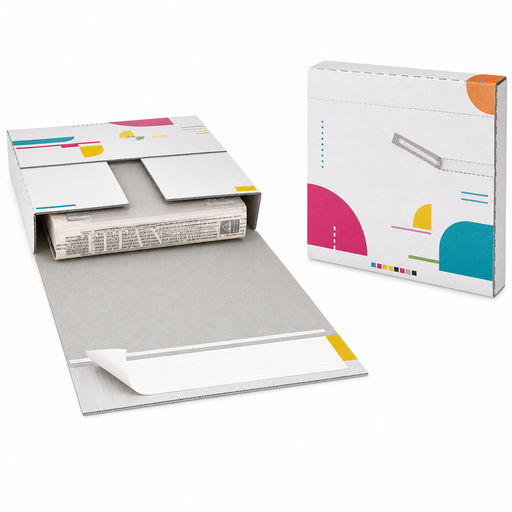
Book-wrap geometry may be a better choice to package items of varying height in a family of products. The dieline should be derived from the packed product and not from product dimensions alone.
- Variable-depth project review
- Close wrap around flat goods
- Insert and closure coordination
Self-seal and return-led formats
A self-seal strip on the mailer reduces the need for packing tape. If the same mailing box must support a return, define the opening experience and second closure before the dieline is released.
- Seal and tear-open placement
- Return workflow reviewed at structure stage
- Pack-line handling considered in the sample
Rigid paperboard mailers
When presentation matters more than corrugated cushioning, a rigid paperboard mailer may be the better route. Huandao may review rigid paperboard and corrugated cardboard options instead of routing every enquiry through the same box style.
- Premium presentation alternative
- Printed wrap and finish options
- Coordinated shipping protection where required
Owned-factory production boundary
Pre-press, sheetfed offset printing, UV coating, lamination, die-cutting and folder-gluing run in-house at No. 587 Tongfu Road, Tong’an District, Xiamen. An inline corrugator supplies single E- and B-flute board just in time; A, C, F, BC and other profiles are converted from sourced board when the project requires them.
One custom box, one coordinated specification
Huandao treats each mailer as part of a custom packaging solution, not an isolated print job. The custom box specification connects structure, board, custom size, artwork, inserts, acceptance evidence and shipment scope so custom printed boxes arrive ready for the intended pack-out.
Board and Flute Options for Shipping Performance
The decision-making process for board selection starts with the packed product, closure and distribution. There’s a lot more to board performance than just naming a flute. Consideration must be given to basis weight, dimensions, liner combination, print and score direction, board machine factors and the load path of the product.
E-Flute Corrugated Board
E-Flute provides a compact profile and smooth print surface for custom printed mailer boxes. It suits smaller ecommerce packs where product presentation is critical and cushioning is not a major concern.
- Natural kraft or white corrugated surfaces
- Single-wall construction made just in time
- Useful for compact retail, beauty, accessory and subscription packaging
B-Flute Corrugated Board
B-flute offers a balance between a rigid structure and cushioning. It is primarily used for larger packs where the panel requires more structure, or where product handling is likely to cause damage to the pack.
- Natural or white kraft liners
- Single-wall construction made just in time
- Useful where panel stiffness and protection take priority
Other Flute Profiles
A, C, F and other profiles are available through sourced corrugated board. Other profiles are quoted as project-specific options because they can change thickness, print route, converting behavior, and freight cube.
FSC Board Route
FSC Chain of Custody certified board is available upon request. Put your material and claim requirements in the RFQ to determine board availability and to verify documentation and artwork.
Engineer The Internal Space First
Use internal box dimensions to evaluate product fit. An insert, product, and outer carton can each be optimized separately and still fail together.
- For best results, provide the product packed to its maximum condition and state the clearance required to accommodate assembly, return and/or shipping.
- The trade-off is simple. Pack volume can be reduced by eliminating extra space, but the pack may lose protection or pack-line reliability.
Offset Printing and Premium Finishes
Huandao’s sheetfed offset route suits graphics with fine lines, gradients, multicolor registration, or a coated stock. Simple logos, text, and solid areas may cost less with flexographic printing. The decision to choose flexo vs. offset (with a lamination) should follow artwork complexity and acceptance requirements, not a generic “premium” label.
| Print or Finish | Available Scope | Use in the Specification |
|---|---|---|
| Offset Color | CMYK plus up to 2 Pantone spot colors; up to 6 colors with inline coater | Fine images, gradients, brand color control and coordinated inside/outside graphics |
| Lamination | Gloss, matte or soft-touch | Surface feel, scuff resistance and visual contrast |
| Protective Coating | UV coating or matte anti-scratch varnish | Rub and surface protection selected against handling needs |
| Spot Effects | Spot UV | Gloss contrast on selected graphics or text |
| Foil | Gold, silver or holographic hot foil stamping | Small, controlled accent areas rather than blanket metallic coverage |
| Relief | Embossing or debossing | Tactile hierarchy subject to board, print and score position |
| Window | Window patching | Product visibility after structural and transit review |
Size, Print and Acceptance Specifications
This table is a planning envelope for custom mailers, not a substitute for an approved dieline or production specification. Internal dimensions remain under review unless otherwise noted in the project quotation.
| Specification | Huandao project range or control | Release input |
|---|---|---|
| Common finished-size range | 150 × 150 × 50 to 400 × 300 × 120 mm | Internal L × W × H and packed-product condition |
| Standard flute routes | 1-wall E-flute or 1-wall B-flute | Product mass, panel span, handling route and print construction |
| Offset process color | 4-color CMYK | Approved artwork and signed contract proof |
| Spot-color capacity | Up to 2 Pantone colors with CMYK | Pantone references and agreed Delta E tolerance |
| Press configuration | Up to 6 colors + inline coater | Color separation and coating callout |
| Standard MOQ | 1,000 pieces per size and style | Quantity split by artwork, size and structure |
| Sample routes | 3 routes: blank, digital printed or press-run finished | Decision needed from structure check, graphic check or full finish review |
| Job-run board checks | 4 report fields: ECT/burst, ink rub and basis weight | Acceptance values and report scope agreed for the order |
| Production tracking | MES scan at each process step | Order record linked to the job and process status |
Job-Specific Board and Print Control Reports
A board or print report can be mistaken for proof of route survival. Huandao’s in-house laboratory issues ECT/burst, ink-rub and basis-weight results against the customer’s own production run, giving procurement and quality teams a job-linked release record rather than a generic report detached from the order.
“A board report answers a material-release question. Because route risk is driven by the complete pack-out, Huandao Packaging engineers separate run release from finished-package validation and confirm each against its own acceptance criteria.”
Evidence Layer
What It Supports
What To Define Before Release
Signed contract proof
Artwork, content, color target and approved visual direction
Proof type, Pantone references and Delta E tolerance
Basis-weight record
Board material check for the production run
Specified board combination and sampling point
ECT or burst result
Agreed corrugated-board strength property
Which property is the acceptance criterion and its required value
Ink-rub result
Print resistance under the agreed test condition
Surface, test method and acceptance level
Packed-product validation
Performance of the complete product, insert, box and closure through a defined route
Product condition, pack-out, route hazards and test sequence
Certifications & Patents
Board Release Is Not Distribution Validation
Packed products or packages may be tested in several ways. FEFCO classifies different methods for boards, such as basis weight, burst and edgewise crush tests, and different methods for packages, such as compression, drop and vibration tests. Make sure that the validations for a new product or route define what is meant by a finished package and do not ask a good board report to prove a different question.
Run-Linked Evidence
Unlike a generic certificate, each in-house report belongs to the customer’s production run. The differentiator is a visible handoff from signed proof to measured run controls, whereas route-specific drop, vibration or compression work remains a separate validation step.
Color Management
X-Rite measurement calibrated to G7 supports control against the signed proof and the tolerance agreed for the order.
Process Traceability
Every process step is scanned into the MES kanban and reported in real time, with ERP and intelligent scheduling behind the production record.
Management Systems
Operations are certified to ISO 9001 and ISO 14001. Job-specific documents and any customer-required audit package are scoped during quotation.
×
![Enlarged Certification]()
From Dieline to Consolidated Shipment
Buyers want help for practical prototype building before bulk production. Huandao separates structural fit, graphic layout, and production-finish decisions. Therefore the sample selected answers the question that is actually holding up the release.
Where Corrugated Mailer Boxes Are Not the Best Fit
A mailer box is usually a structure choice rather than a universal upgrade. Often, the best supplier decision is a different package format, particularly when the product’s shape, weight, fragility, or return loop works against the mailer’s strengths.
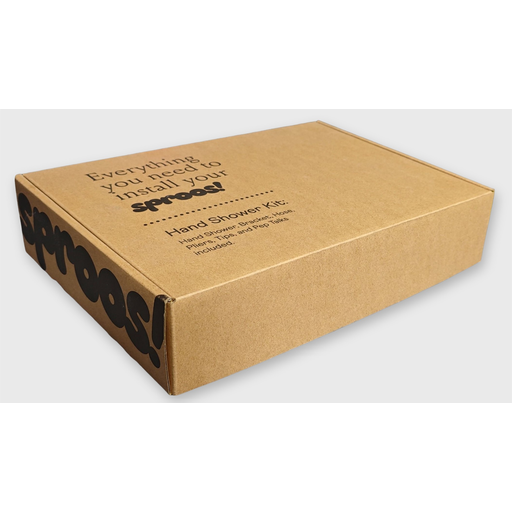
| Situation | Why it works against the mailer | Route to evaluate |
|---|---|---|
| Soft, non-fragile goods with no presentation requirement | Corrugated volume can add material and dimensional-weight exposure without adding needed protection | Paper or flexible mailing bag with the carrier rule checked |
| Heavy, tall or bottom-loaded products | A shallow roll-end structure may not give the required load path or closure security | Regular slotted shipping box, stronger flute combination or separate outer shipper |
| Very fragile products with an undefined insert | The box alone cannot control product movement or impact load | Engineer the insert and packed-product validation before releasing the outer box |
| Luxury presentation with little distribution exposure | Corrugated edges may not deliver the intended tactile or visual result | Rigid paperboard gift box with a separate protective shipper if needed |
| Controlled closed-loop B2B returns | Repeated cycles may justify a higher-use returnable asset | Compare a reusable tote or returnable box against the actual recovery rate |
Right-size without stripping out protection
Carriers may compare dimensional weight with actual weight, so reducing empty volume can matter. Keep the divisor user-defined and confirm the current rule with the selected carrier; box optimization stops being a saving when protection or pack-line reliability is lost.
Three assumptions to challenge
The lowest unit price is not always the lowest delivered cost, and the lightest board is not always suitable for a fragile pack-out; it can be the wrong choice. A board-strength result is not a substitute for route validation; offset printing can be the wrong choice for simple graphics; and a corrugated mailer is not always the right format for soft goods or a controlled reusable loop.
Custom Corrugated Mailer Box Engineering Tools
Dimensional Weight Comparator
Compare actual packed weight with dimensional weight before the custom box dimensions are released. Enter the divisor supplied by your carrier; this tool does not assume that a carrier rule is permanent.
Access Tool
Mailer Internal-Fit Planner
Build an internal-size starting point from the product, insert allowance and assembly clearance. The result is a dieline input, not a finished-size guarantee; the physical sample still decides fit and closure.
Access Tool
Mailer Box RFQ Readiness Checker
Mark the project inputs you have. A lower score does not block an enquiry; it tells both sides which decisions must be made before the dieline, sample or quotation can be released.
Access Tool
Specification, Run-Release and Distribution-Test Matrix
Select the decision holding up your project. The matrix points to the evidence layer that answers that question and keeps unlike documents from being treated as substitutes.
Access Tool
Mailer Box RFQ Checklist Builder
Turn the details you already know into a compact handoff brief. Empty fields stay visible as decisions to confirm, so a supplier does not silently substitute assumptions.
Access Tool
Custom Corrugated Mailer Box FAQ
Start with product mass, panel span, handling route and print requirement. E-flute offers a compact profile and smoother presentation surface; B-flute adds caliper and cushioning. The final board combination should be released with the sample and the required run-report fields.
The standard MOQ is 1,000 pieces per size and style. Smaller runs are quoted case by case because each artwork, dimension and structure can introduce its own tooling, make-ready and board-yield cost.
Yes. A blank structural sample and a digital-printed sample are free, with courier paid by the buyer. A press-run finished sample carries a sample fee because it uses production printing and finishing steps.
Interior and exterior graphics can be reviewed within the offset-laminated construction. Mark both surfaces clearly on the artwork and proof, including areas hidden by folds, inserts or the closed lid.
Yes. Huan Yin Packaging Group can coordinate inner trays, paper inserts and outer shipping cartons with the printed box. Send the product model or packed dimensions so retention, removal and consolidated shipment can be reviewed together.
Strength cannot be confirmed from the words “E-flute” or “B-flute” alone. Define the product, insert, closure, route and acceptance test; use job-run board reports for material release and packed-product drop, vibration or compression work for the distribution question.
Sheetfed offset supports CMYK plus up to 2 Pantone colors, with up to 6 colors and an inline coater. Finish options include gloss, matte or soft-touch lamination, matte anti-scratch varnish, spot UV, foil, embossing, debossing and window patching.
Send internal dimensions or the packed product, quantity by size/style, artwork versions, board or protection target, print surfaces, finishes, insert requirement, sample route, delivery destination and required date. If a field is open, label it as a decision needed rather than guessing.
Production is controlled with an X-Rite system calibrated to G7 against a signed contract proof and an agreed Delta E tolerance. Supply Pantone references and identify the color-critical areas before the proof is signed.
A repeat order can skip tooling and sampling when the approved structure, artwork and specification remain unchanged. Quantity, board availability, finishes, delivery term and the production schedule are reconfirmed in the new quotation.