Get in Touch with Xiamen Huandao Packaging Technology Co., Ltd.

SYS // CARTON_PROD
Folding Carton Packaging from an In-House Manufacturer
Quotes within 24 hours
250–450 gsm paperboard
1,000-piece standard MOQ
Job-specific test reports
Huandao manufactures custom folding carton packaging for brands that require offset printing, structural converting, and release evidence all in a single production path. We handle cartons from pre-press through printing, coating, lamination, die-cutting, and folder-gluing. We coordinate inserts, trays and outer shipping cartons if the packed product requires a wider packaging system.
Print-ready files and product details are treated as confidential. We can review and sign an NDA before sensitive artwork is shared.
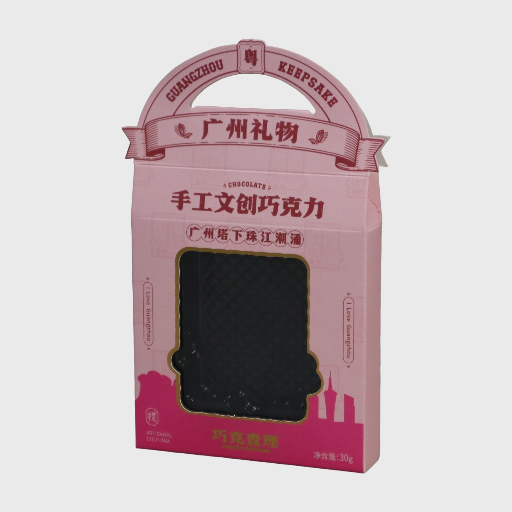
Die-cut carry-handle folding carton with offset printing and a front window
Client-supplied product photograph: a die-cut carry-handle carton with window patching.
Board range
Folding boxboard from 250–450 gsm
Print capacity
CMYK plus up to 2 Pantone colours
Press config
6 colours plus an in-line coater
Standard MOQ
1,000 pieces per size and style
Physical samples
Normally prepared in 5–7 working days
Run evidence
Applicable reports tied to your own job
Custom Folding Carton Capabilities
One folding carton manufacturer can serve many consumer-goods categories, but the structure should follow the packed product rather than a catalog thumbnail.[2] Our structural design review covers dimensions, packed weight, retail presentation, filling method, stacking and distribution exposure.
Retail folding carton boxes
We manufacture straight tuck, reverse tuck, seal-end, auto-bottom, snap-lock and other carton styles for retail and B2B packaging. The flap and closing areas are set relative to the filling process and the way the pack is opened.
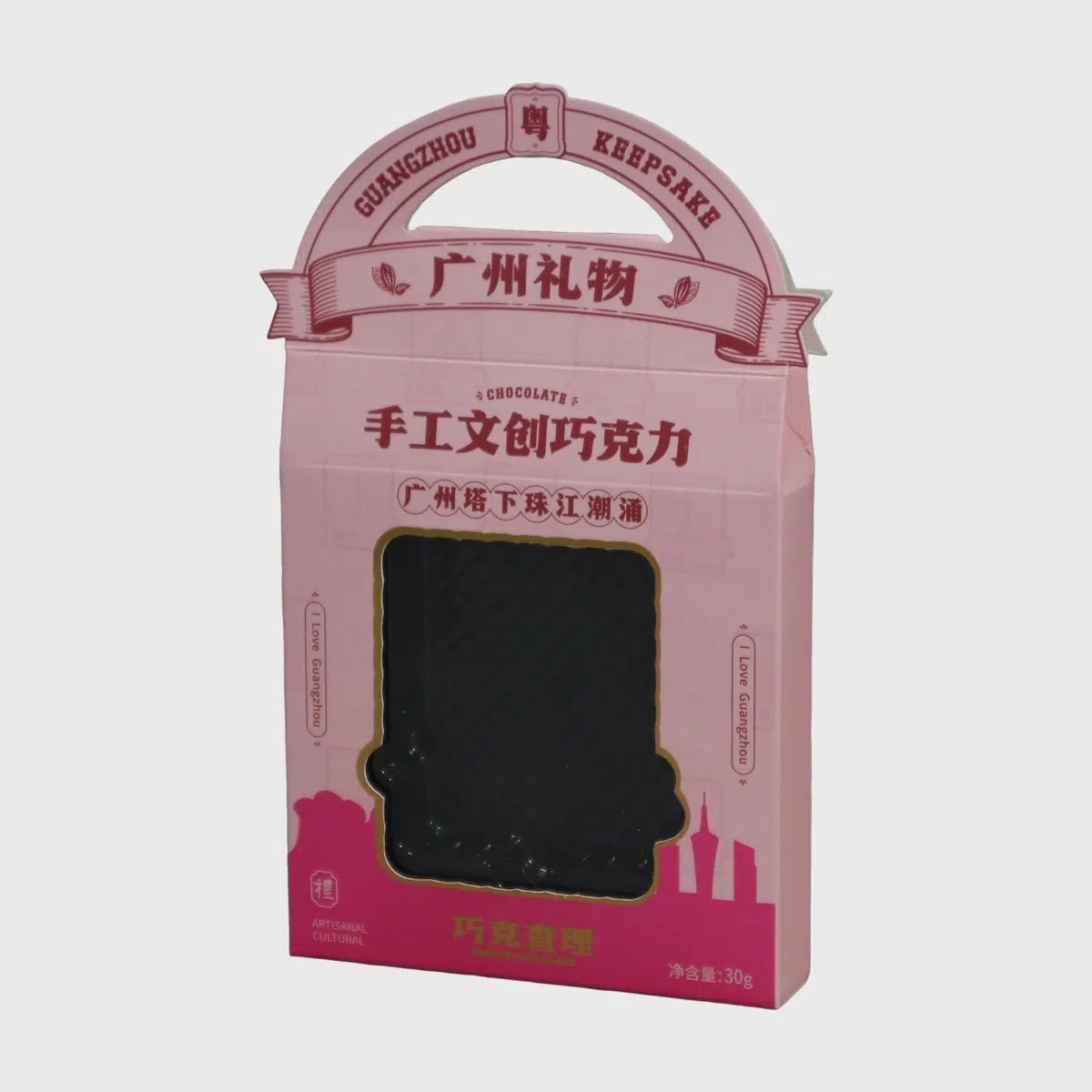
Die-cut custom boxes
Carry handles, display openings and product windows are cut from the approved dieline. The packaging structure is customizable and may incorporate a retail display element along with locks, dust flaps, and paperboard support.
Litho-laminated flute
When solid paperboard does not provide enough protection, we laminate the printed sheet to E-flute. Single E-flute and single B-flute board run through the in-line corrugator on a just-in-time route; A, C, F, BC and other profiles use sourced board.
Coordinated packaging sets
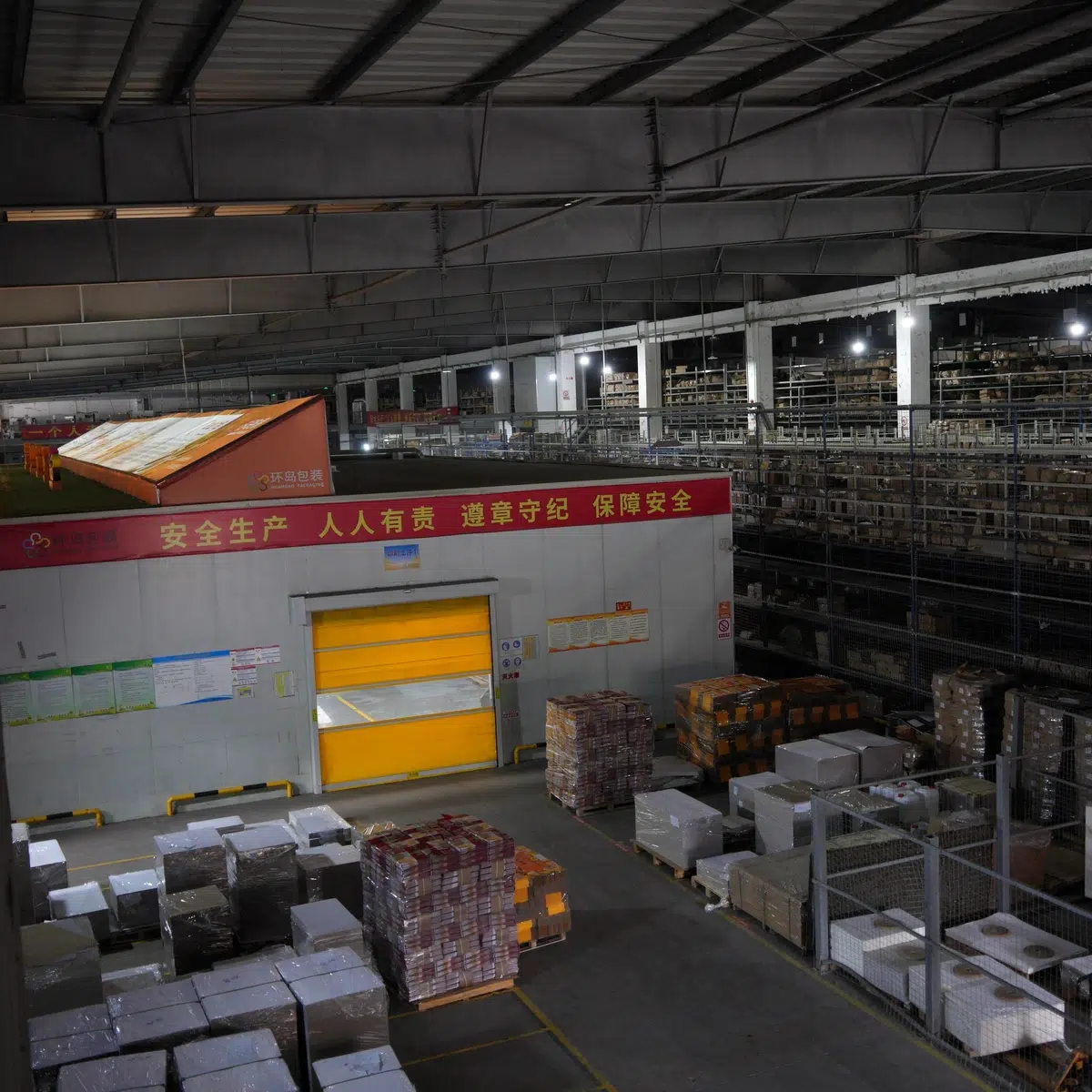
All the components of the package (carton, insert, tray and corrugated box) can be integrated as one package by the Huan Yin Packaging Group. Using one packaging supplier puts the components on one packing and shipment brief, while the written quotation fixes the actual scope and freight term.
Structure-to-use decision matrix
| Packaging need | Starting structure | Release check |
|---|---|---|
| Fast manual filling | Straight tuck or reverse tuck folding carton box | Panel orientation, tuck direction and glue clearance |
| Heavier retail item | Auto-bottom or snap-lock carton | Base lock under the packed product |
| Carry-home gift | Die-cut handle structure | Handle geometry and loaded lift trial |
| Product visibility | Window carton | Window film, patch area and product clearance |
| Premium unboxing | Sleeve, tray or shaped gift carton | Opening force, reveal and insert fit |
| Small loose components | Carton with paper insert or divider | Component retention through handling |
| Fragile consumer product | Carton with protective tray | Movement, impact points and pack-out order |
| Extra stacking strength | E-flute litho-laminated carton | Applicable ECT or burst requirement |
| Distribution case packing | Folding carton plus corrugated shipper | Case count, orientation and void control |
| Promotional display | Die-cut display carton | Assembly sequence and retail footprint |
Paperboard, Kraft and Flute Boundaries
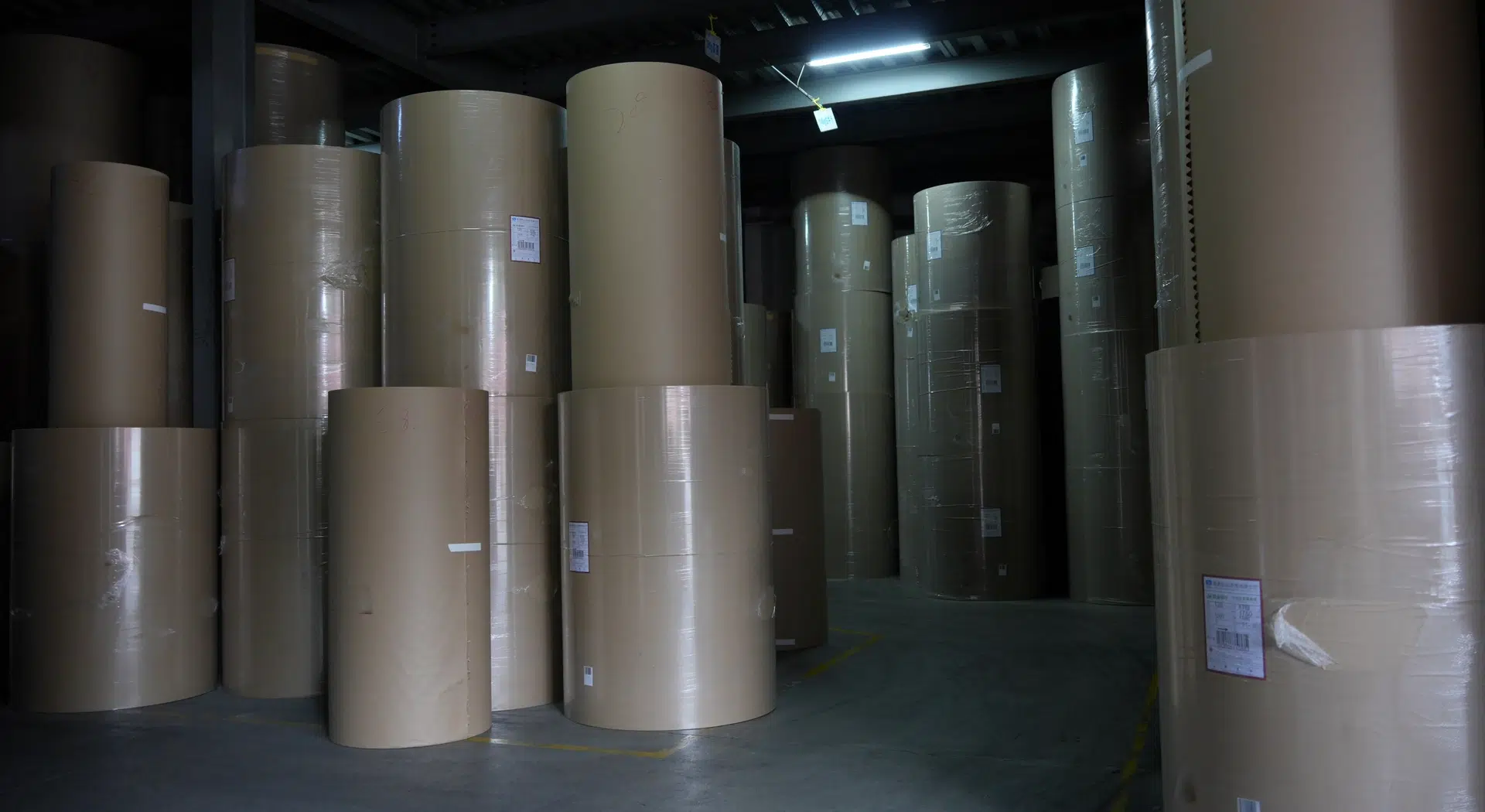
Packaging board choices control the stiffness, crease response, visual appeal and convertibility of a blank. Huandao quotes folding boxboard from 250 to 450 gsm, kraft board and E-flute litho lamination; stock availability, recycled materials and any special paperboard specification are confirmed on the job.
Folding Boxboard
Kraft Paperboard
E-flute Lamination
Other Flute Profiles
Crease performance starts before the die
Various factors affect die-cutting and creasing behavior including paperboard, grain direction, moisture, thickness, and surface treatment.[2] For a humidity-sensitive packaging route or a tight fold, we put the use environment and physical fold check into the Build Record instead of relying on screen artwork alone. This information is documented in the Build Record rather than relying on artwork shown on the screen.
Sustainability and claim control
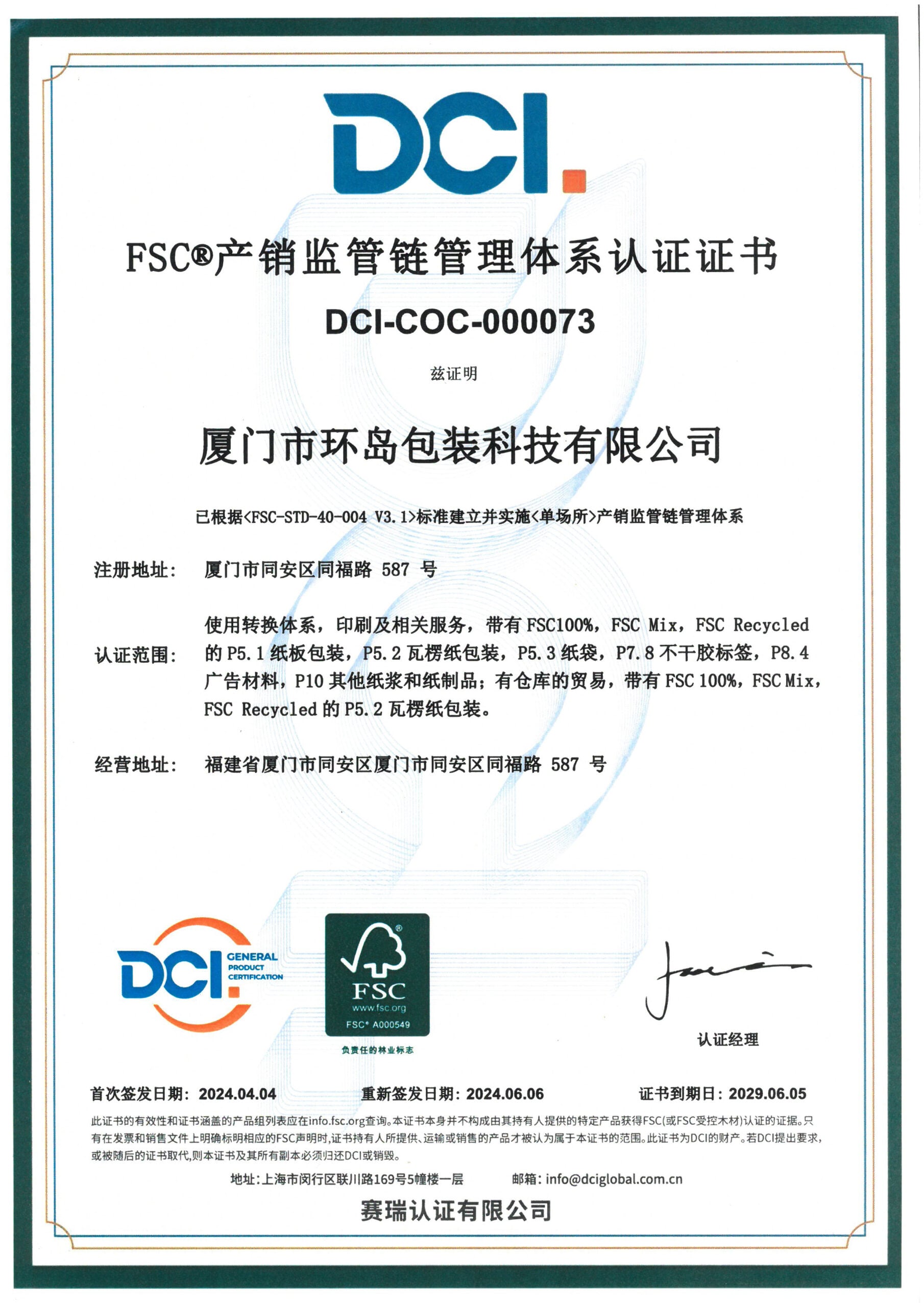
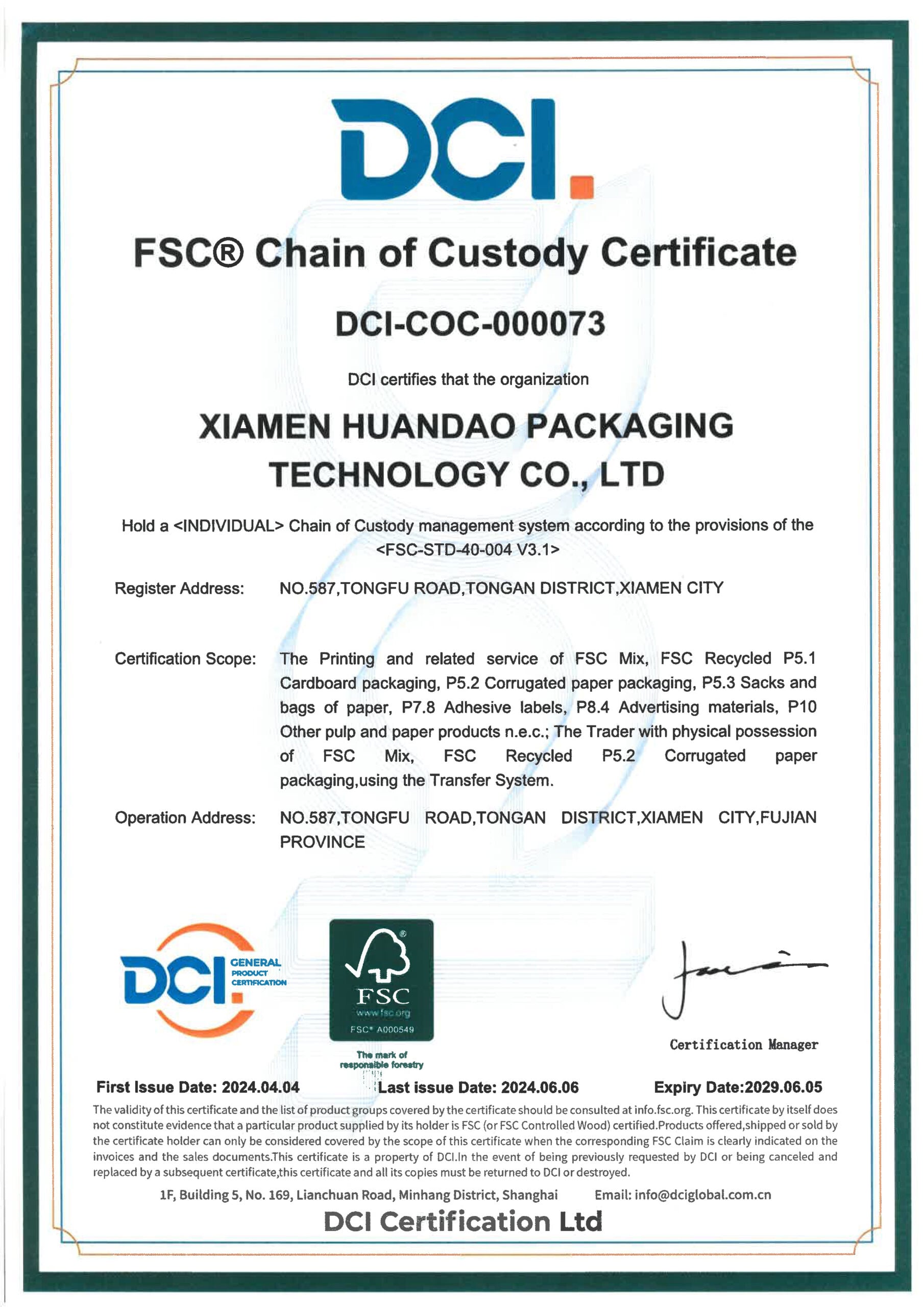
- FSC Mix and FSC Recycled are available within certificate DCI-COC-000073 and its stated product scope.
- The FSC wording and/or label are included on the quotation and sales documents for the certified job; board availability alone does not allow a finished-pack claim.
- Paperboard is renewable and enters recycling streams where local collections accept finished products. The route may include laminate, window film, foil and other packaging materials.
- Recyclable, recycled, biodegradable and eco-friendly are different claims. Name the sustainability goal in the RFQ so the structure and documentation can be reviewed responsibly.
Offset Printing and Finishing Options
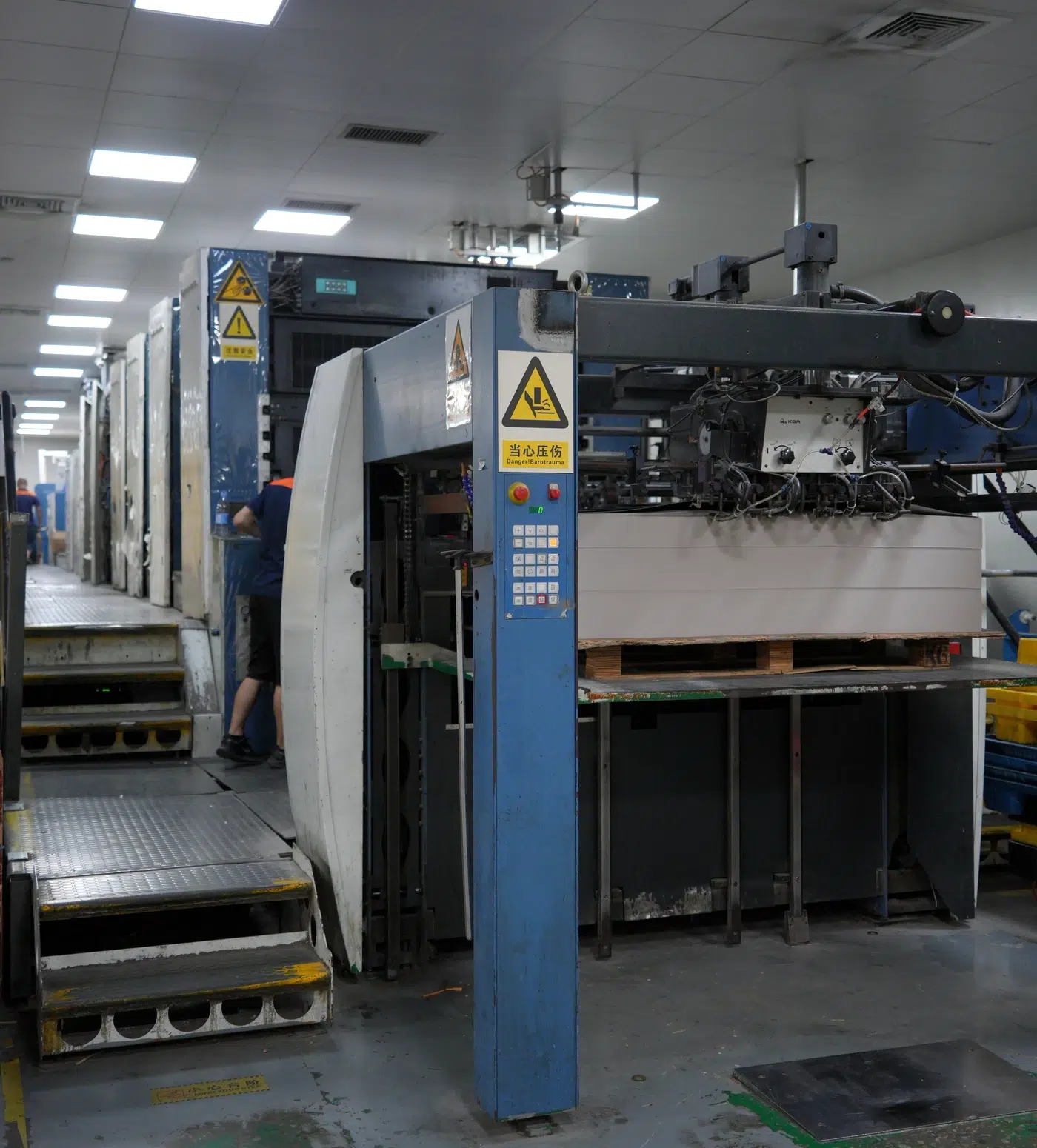
Sheetfed offset printing runs in-house with CMYK, up to 2 Pantone spot colours and a 6-colour press plus in-line coater. High-quality packaging graphics are controlled against a signed contract proof and an agreed Delta E tolerance through X-Rite colour management calibrated to G7.[2]
Uncoated appearance
Paper-led surface with no gloss laminate; board and ink interaction stay visible
Confirm board & rub requirement
Gloss lamination
Higher sheen and surface protection
In-house lamination
Matte lamination
Low-reflection surface with a smooth hand
In-house lamination
Soft-touch lamination
Velvet-like tactile finish for premium items
In-house lamination
Matte anti-scratch varnish
Reduced gloss with improved scuff resistance
Specified by coverage area
Spot UV
Gloss contrast on selected graphics or the company logo
Separate artwork layer required
Gold foil stamping
Metallic gold decorative effect
Foil area & die shown in artwork
Silver foil stamping
Metallic silver decorative effect
Foil area & die shown in artwork
Holographic foil stamp
Diffractive colour effect for shelf impact
Pattern & viewing angle approved
Emboss
Raised paperboard detail
Male & female tooling aligned
Deboss
Recessed graphic or text
Depth reviewed against board marks
Window patching
Product visibility through a die-cut opening
Film, glue & clearance confirmed
7-Field Folding Carton Build Record.
The Folding Carton Build Record turns a packaging request into a production brief that purchasing, design and quality teams can review together. It keeps the packed product, paperboard, structure, colour approval, sampling and applicable reports attached to the same job.
01
Buyer input
Production decision, Packed product
Dimensions, weight, contact points and orientation; Internal size, clearance and support
02
Use environment
Retail, warehouse, humidity and distribution
Board, flute and coating shortlist
03
Structure
Filling method, opening direction and display
Dieline, closure, flap and glue plan
04
Graphics
Artwork, brand colour, barcode and variable marks
Print separation and proof route
05
Finish
Laminate, varnish, UV, foil, emboss or window
Tooling, layers and acceptance sample
06
Release evidence
Fit check, colour limit and required reports
Sample ladder and inspection record
07
Pack-out
Insert, tray, shipper, destination, hand date
Consolidated quotation and shipment brief
Specification Huandao production basis
Paperboard
Folding boxboard 250–450 gsm; kraft board quoted to the job
Fluted route
Single E-flute and single B-flute in-line; A, C, F, BC and other profiles use sourced board
Printing
CMYK plus up to 2 Pantone spot colours
Press
6 colours plus an in-line coater
Standard MOQ
1,000 pieces per size and style; smaller runs quoted case by case
Quote response
Within 24 hours on business days
Physical sample plan
Normally 5–7 working days after artwork confirmation
Smaller production run
20–30 days after final sample approval; the written quotation fixes the job schedule
Colour acceptance
Signed contract proof plus an agreed Delta E tolerance
Run reports
Applicable ECT or burst, ink-rub and basis-weight reports can be issued for the customer’s production run
Quality RecordsProduction Run
Our laboratory can generate job-related ECT or burst, ink-rub and basis-weight reports upon request. Packaging reports use the edge-crush test for corrugated board, while ink-rub and basis-weight reports check other properties of paper or paperboard.
Report-to-Substrate Boundary
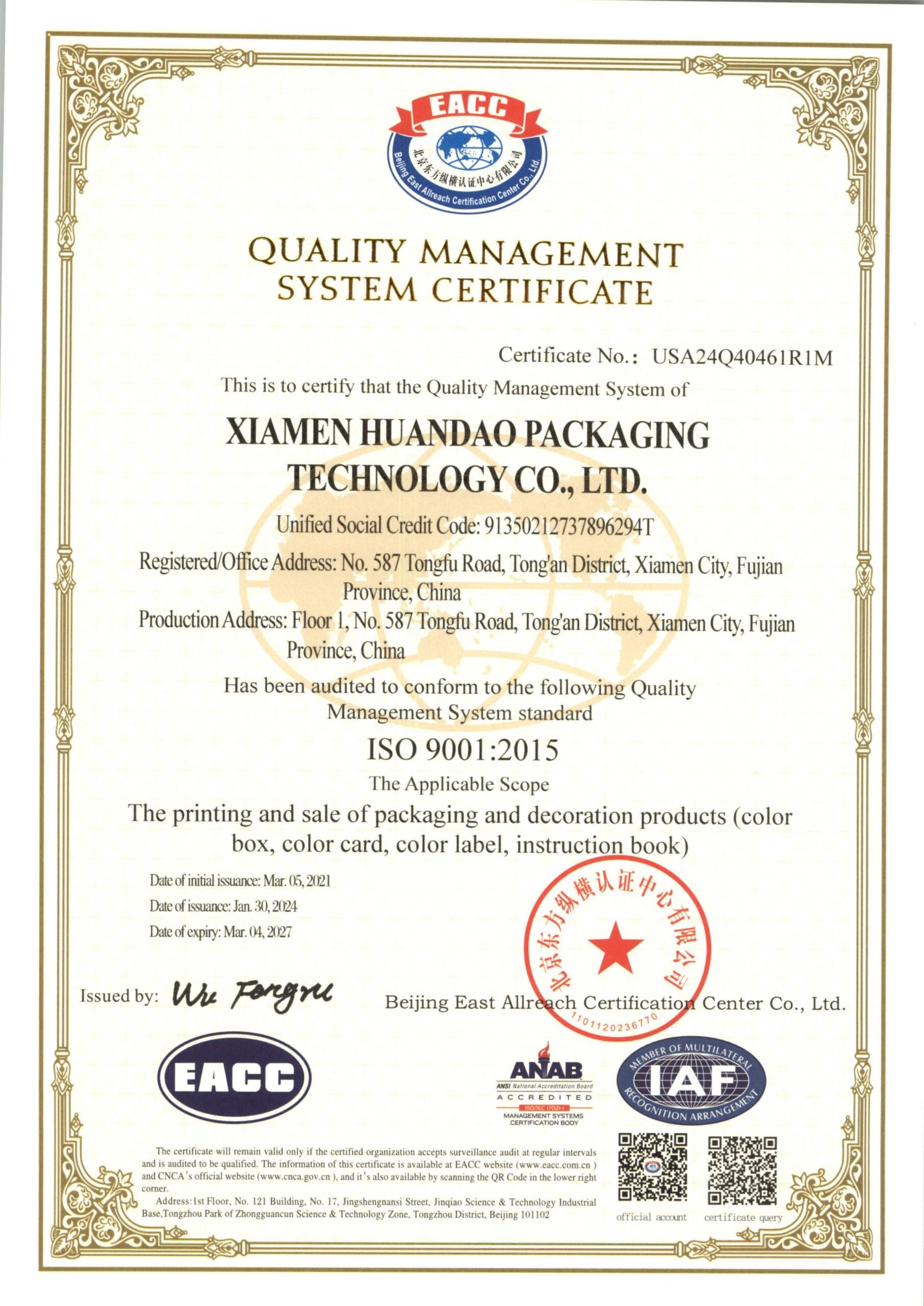
The risk is a generic certificate or test name being treated as proof for the wrong material. Because each construction needs a different check, Huandao attaches the applicable report and approval evidence to the run under its ISO 9001 quality system.
STATUS: ACTIVE
SYS: ISO 9001
Job Control Sequence
Specification Lock
Inputs approved: dieline, board, ink, finish, packed product & proofs.
Colour Control
Agreed Delta E during offset printing, via X-Rite & contract proof.
MES Kanban & ERP
Each step is scanned into MES, intelligent reporting in real time.
Release Record
Report, sample and packing requirement remain prior to shipment.
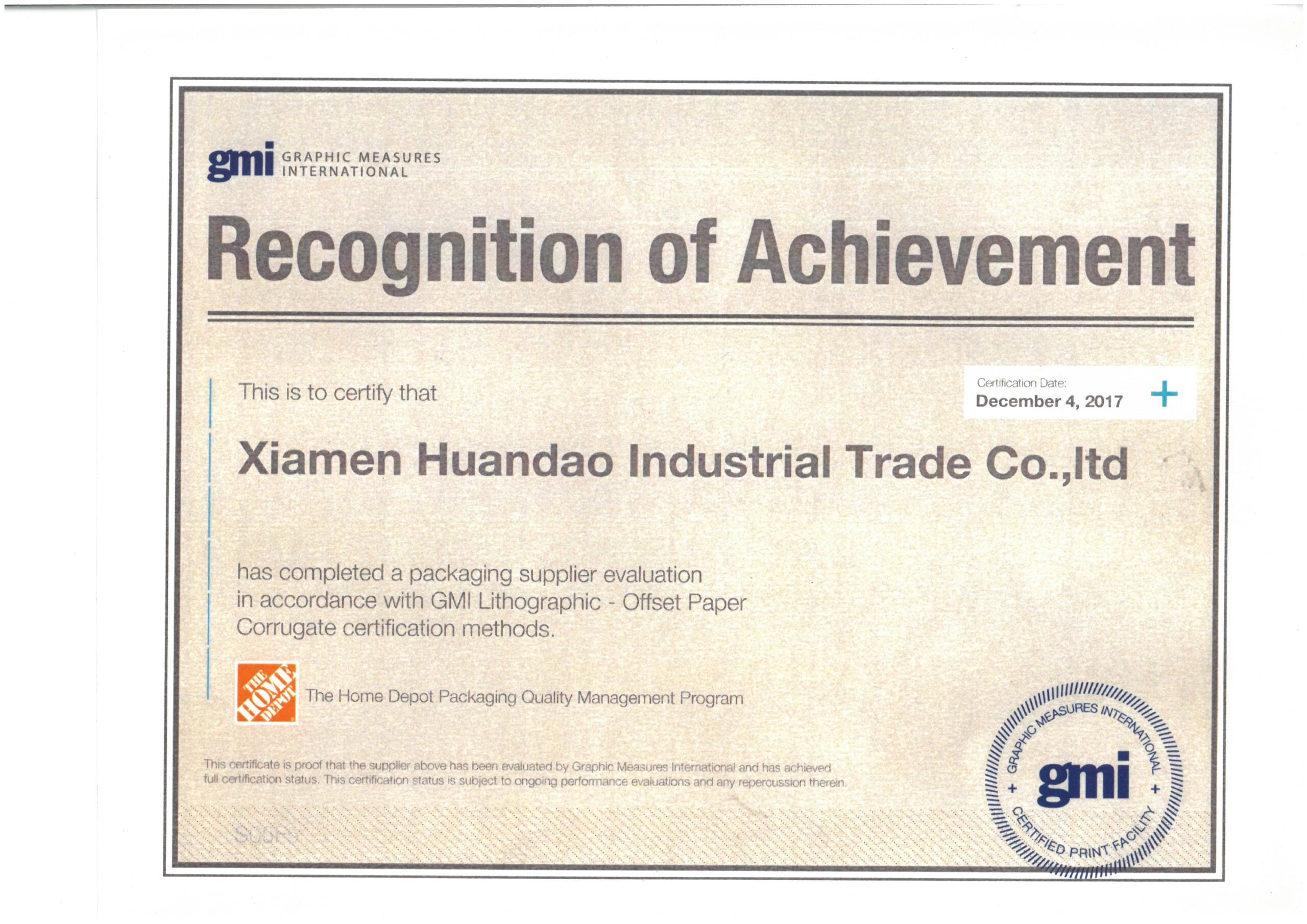
System Accreditations
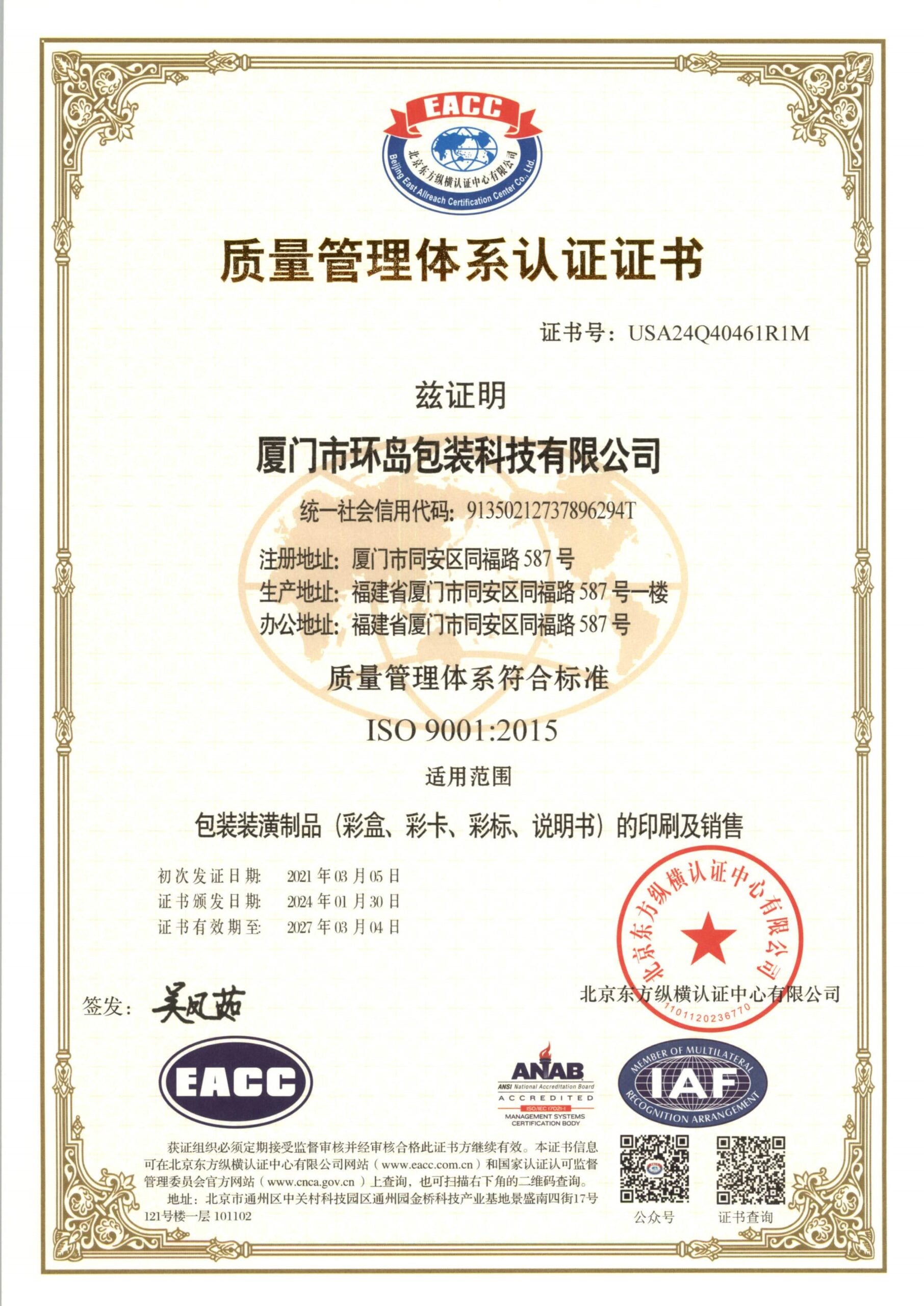
ISO 9001:2015
USA24Q40461R1M · to 4 Mar 2027
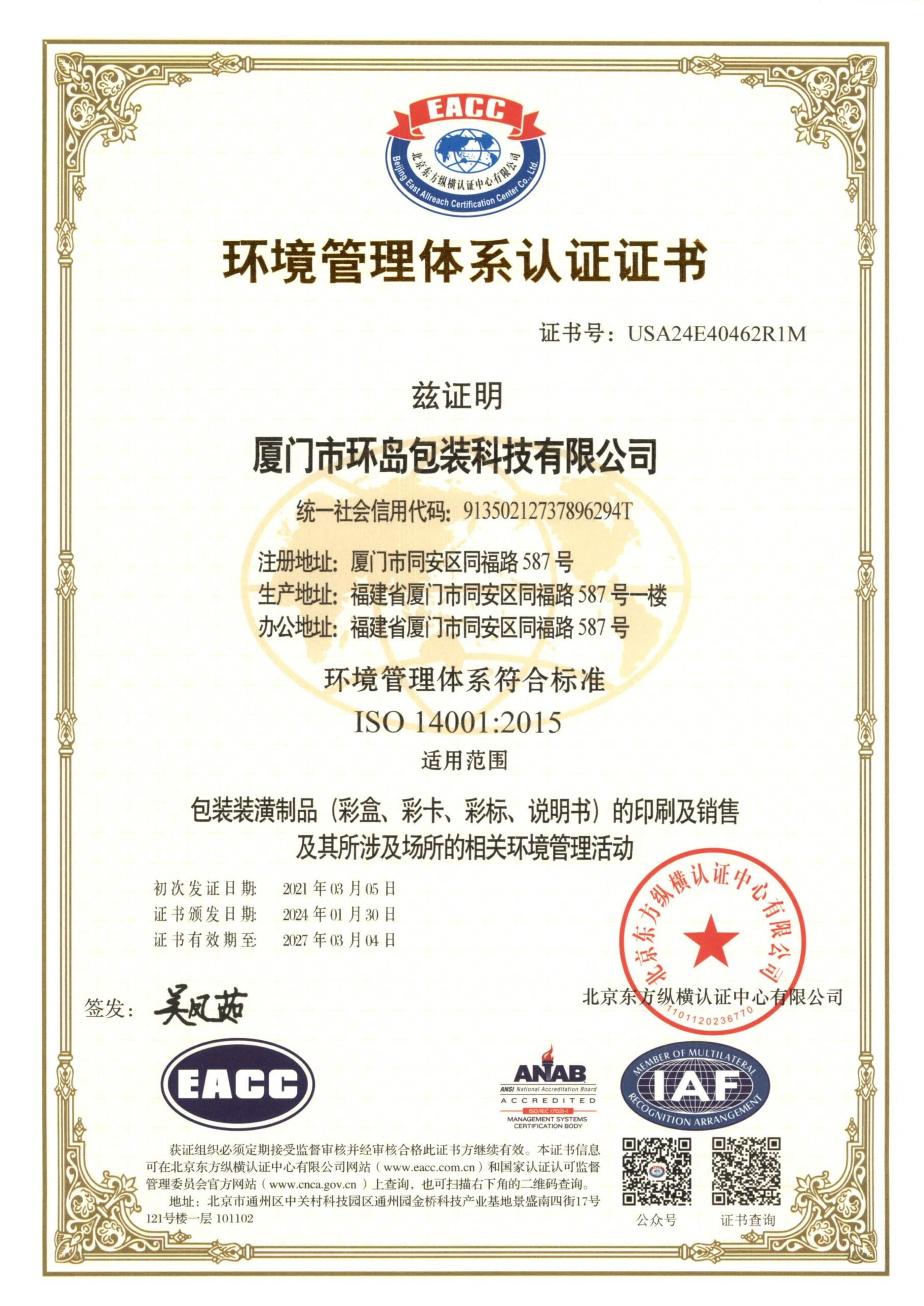
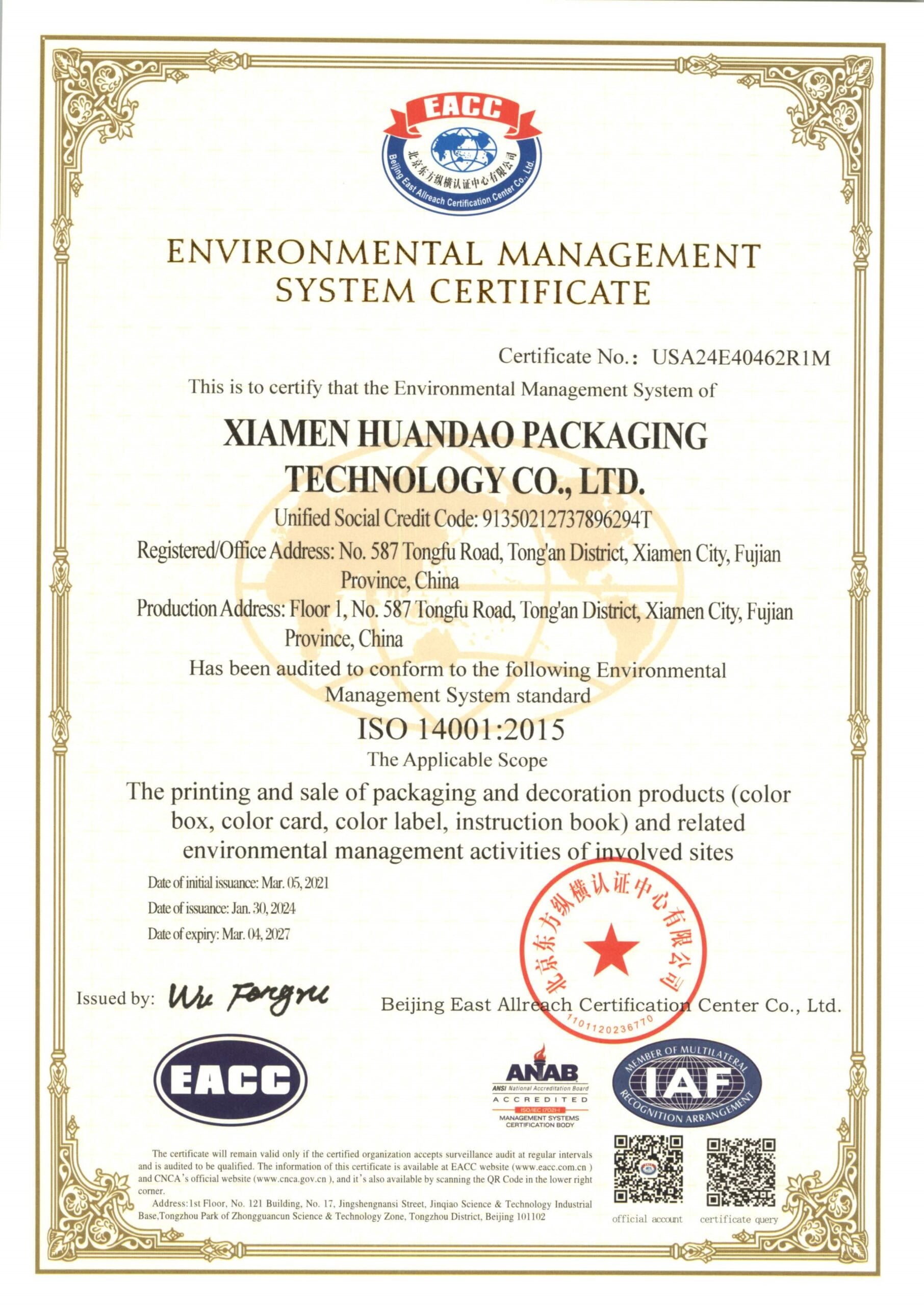
ISO 14001:2015
USA24E40462R1M · to 4 Mar 2027
FSC Chain of Custody
DCI-COC-000073 · to 5 Jun 2029
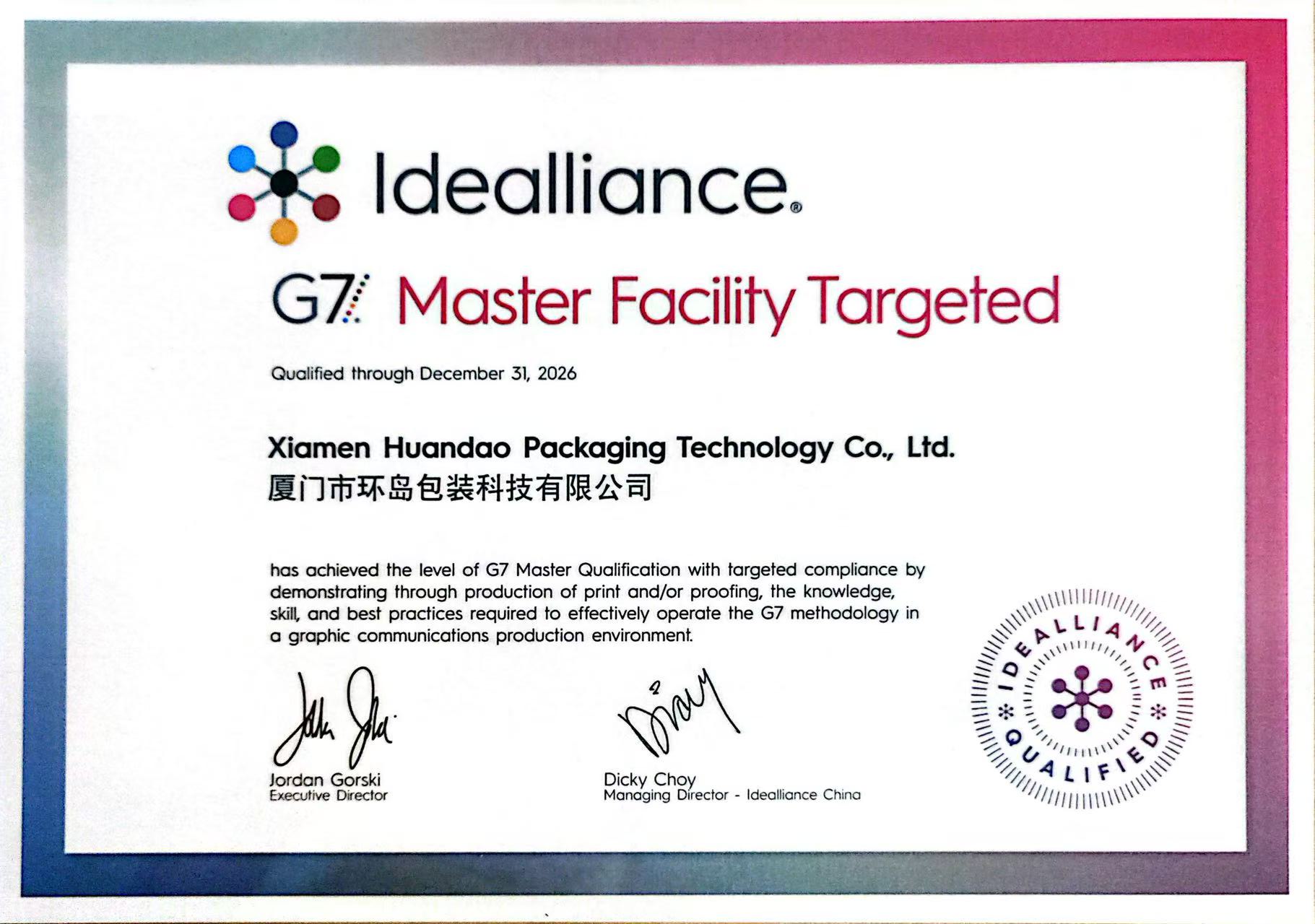
G7 Master Facility
Idealliance · qualified thru 2026
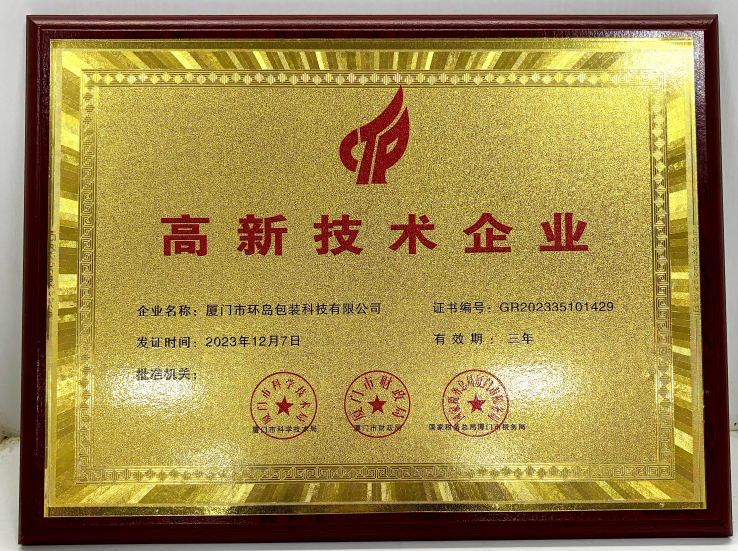
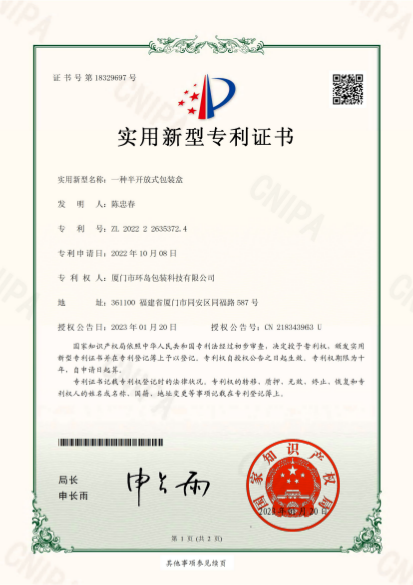
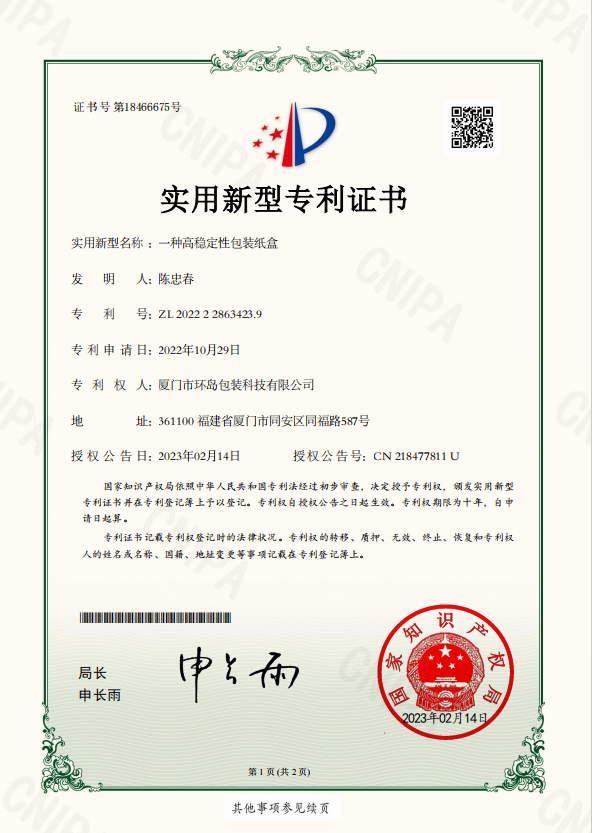
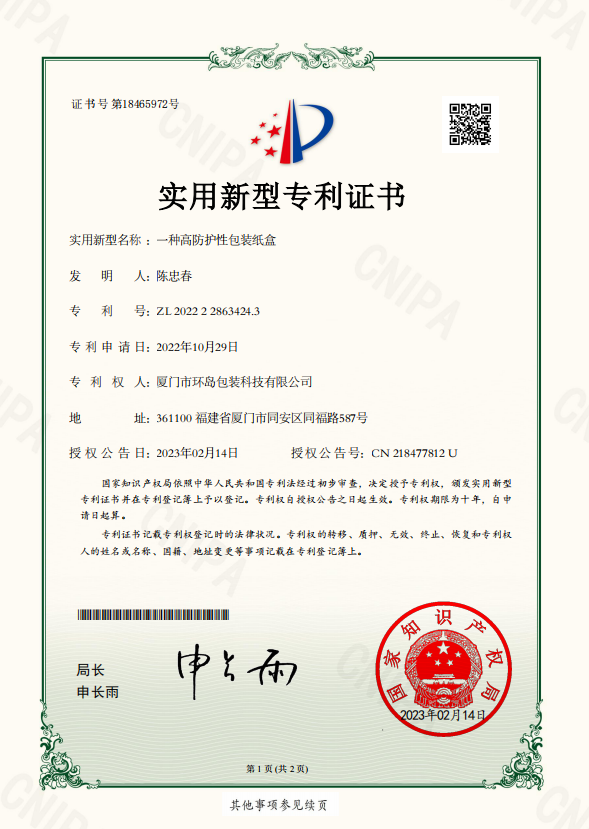
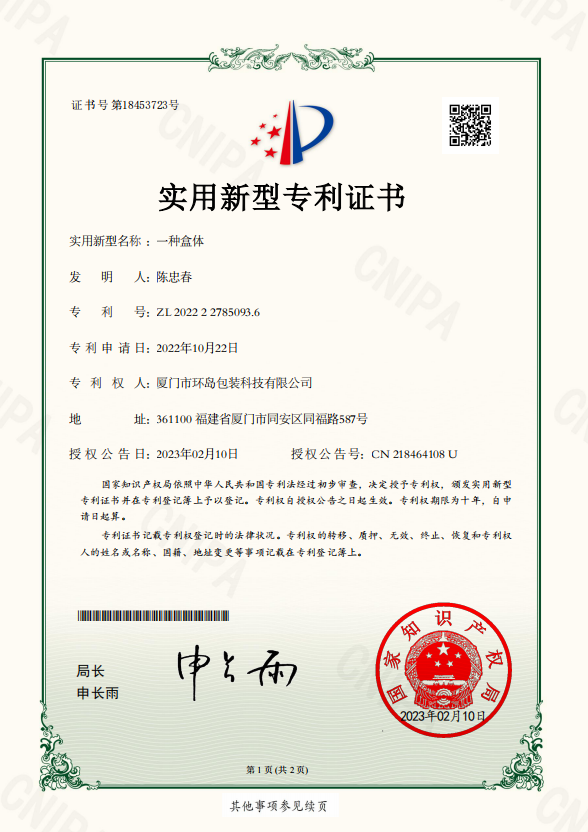
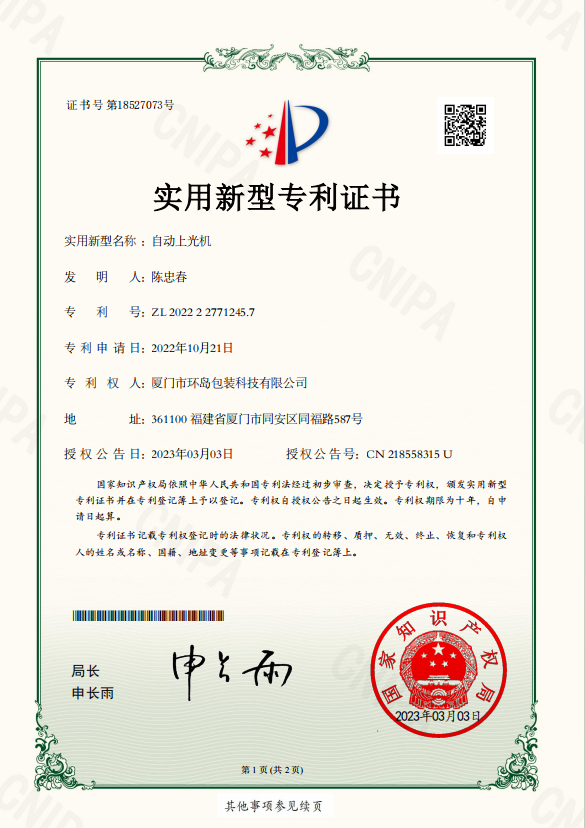
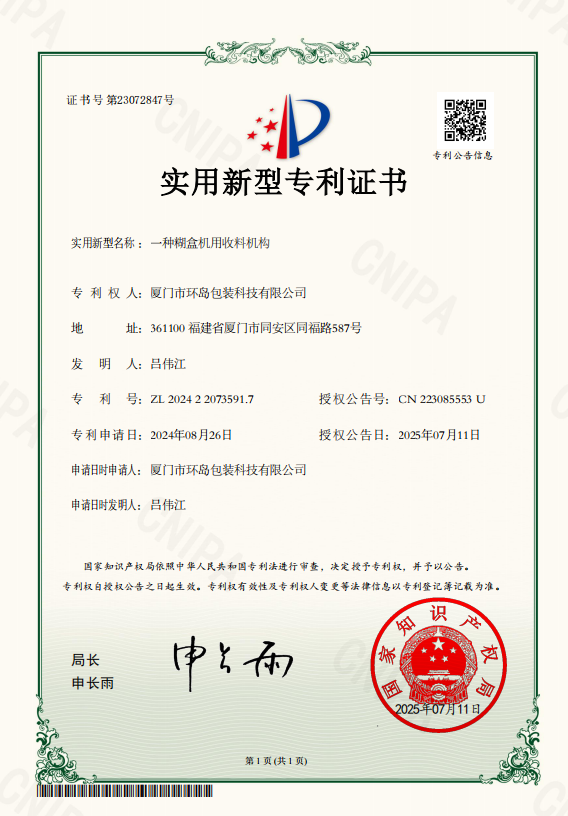
National High-Tech
GR202335101429 · Dec 2023
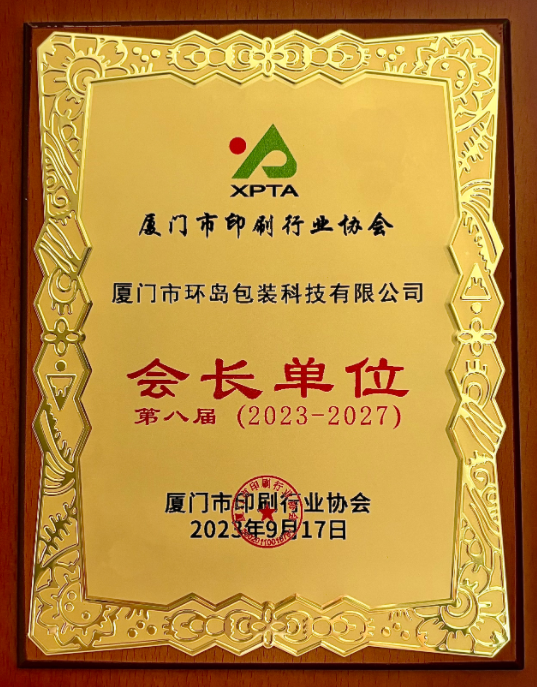
Xiamen Printing Assoc.
President Unit · 2023–2027
01 / 18
Real Factory and Product Evidence
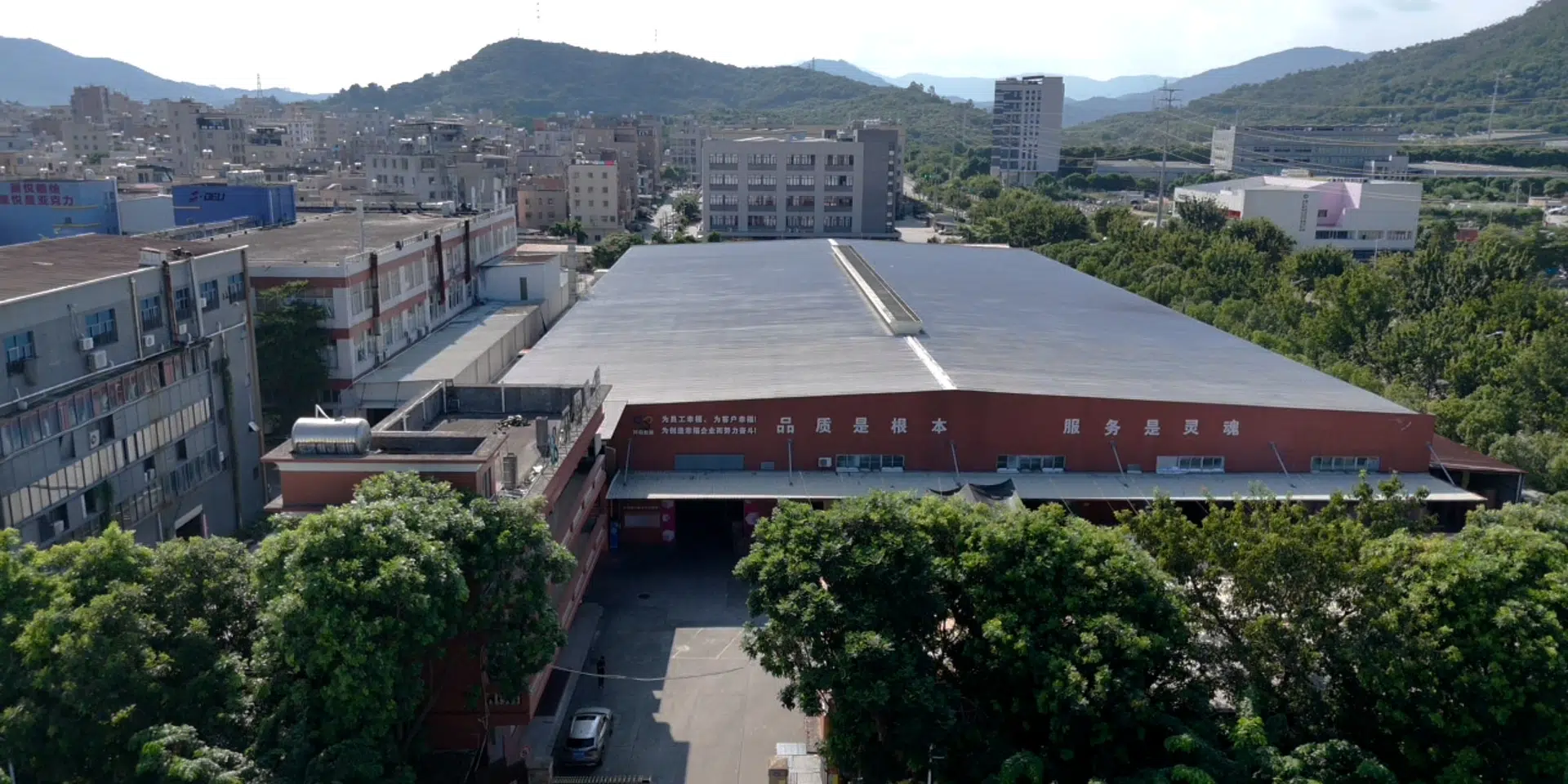
Xiamen Huandao Packaging Technology Co., Ltd. operates its own plant at No. 587 Tongfu Road, Tong’an District, Xiamen, Fujian, China. The company has manufactured printed paper packaging since 2003, and 133 people work at this facility across production and support functions.
Initiate Inquiry
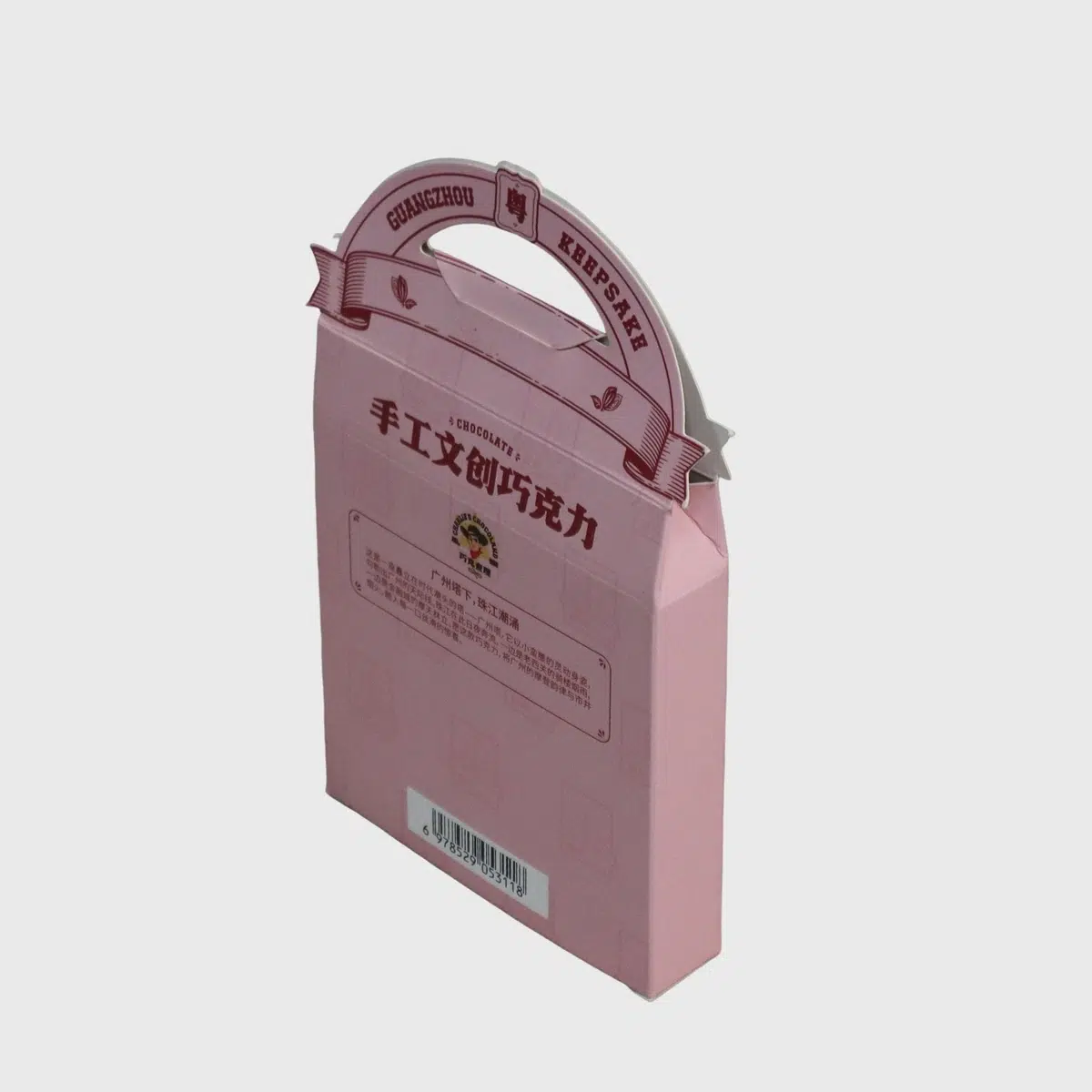
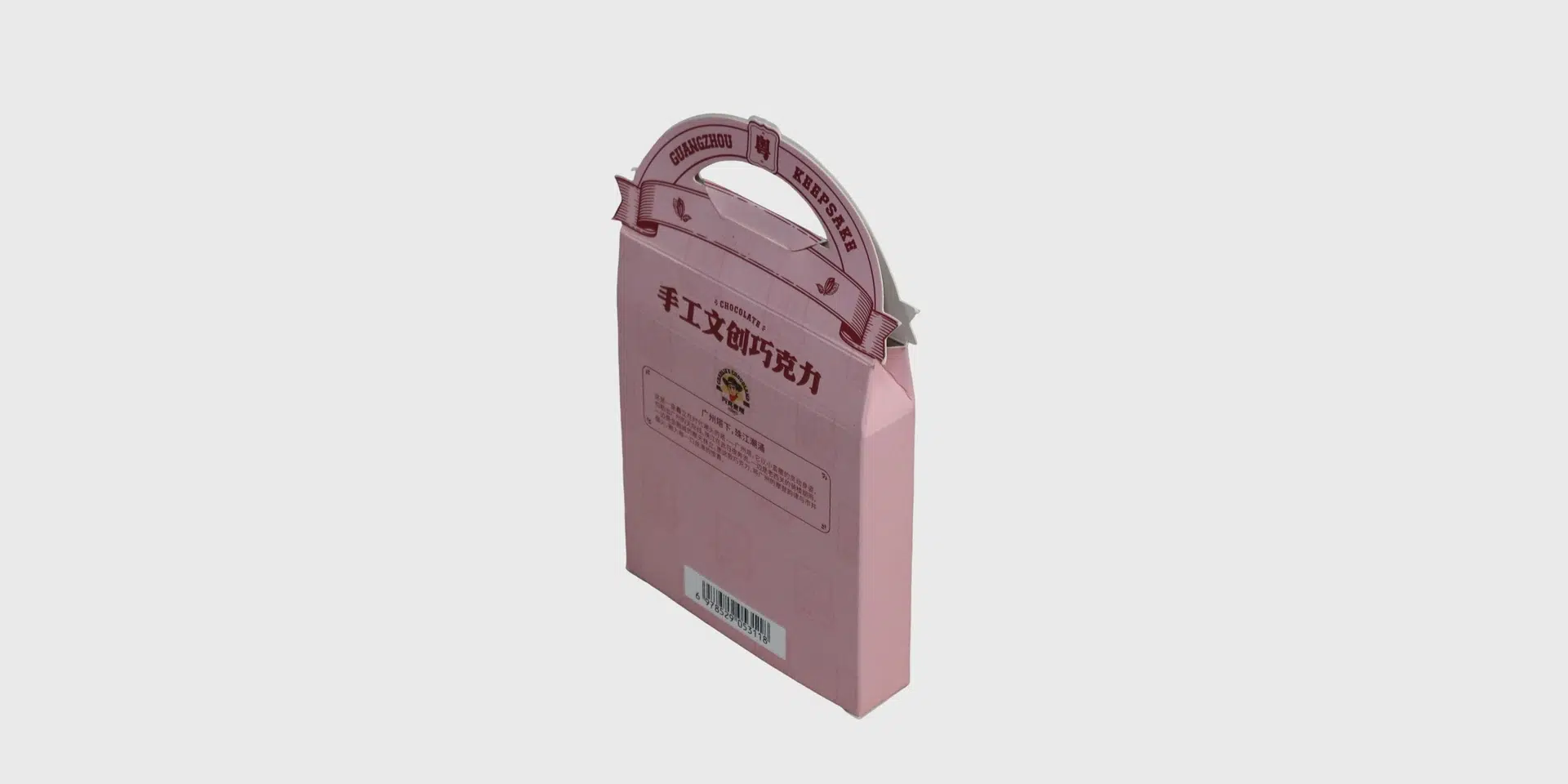
Rear panel, handle lock and tuck closure on the supplied product sample.
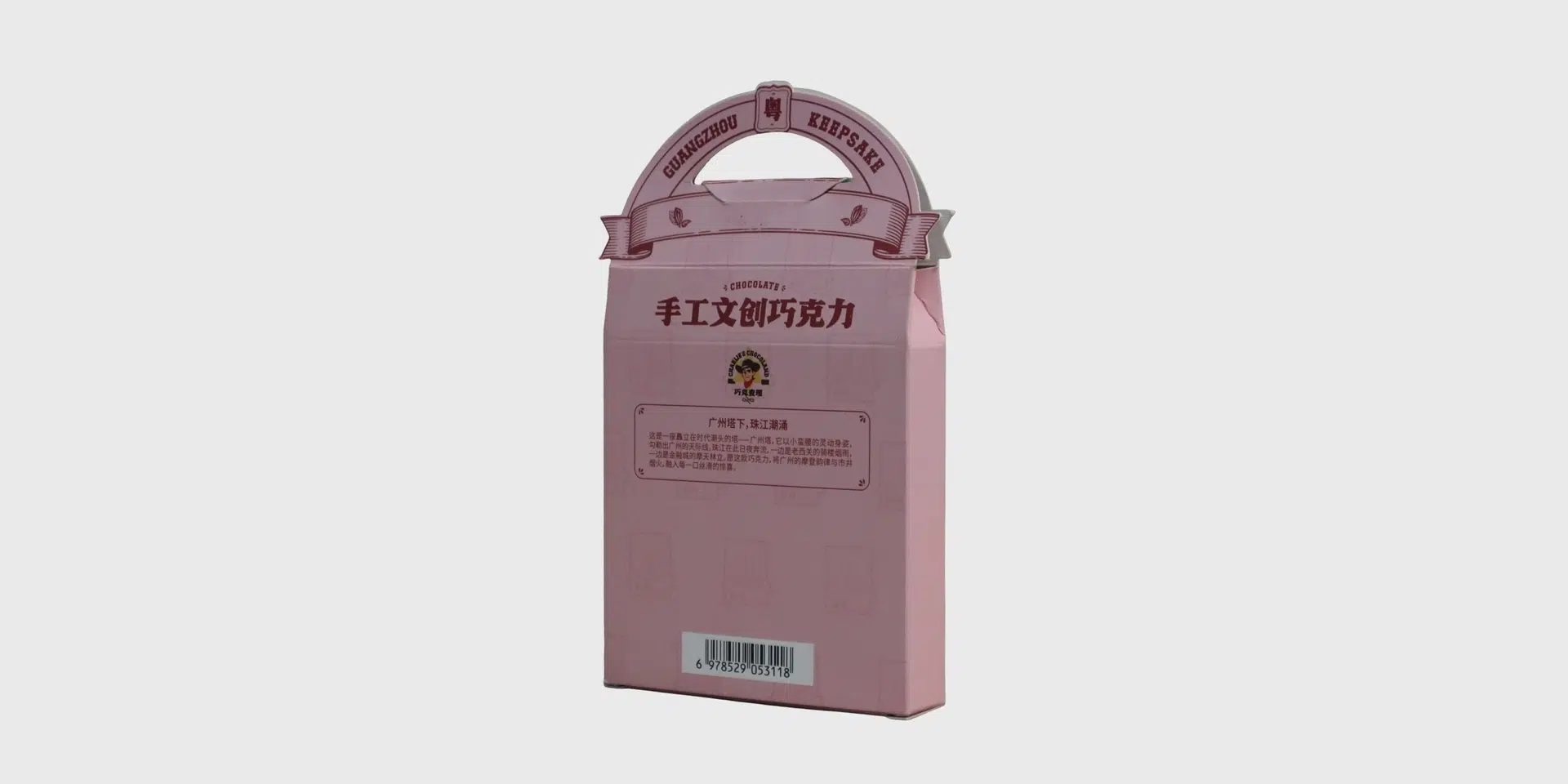
Side geometry and handle assembly shown from the rear angle.
Huandao’s production facility at No. 587 Tongfu Road in Xiamen.
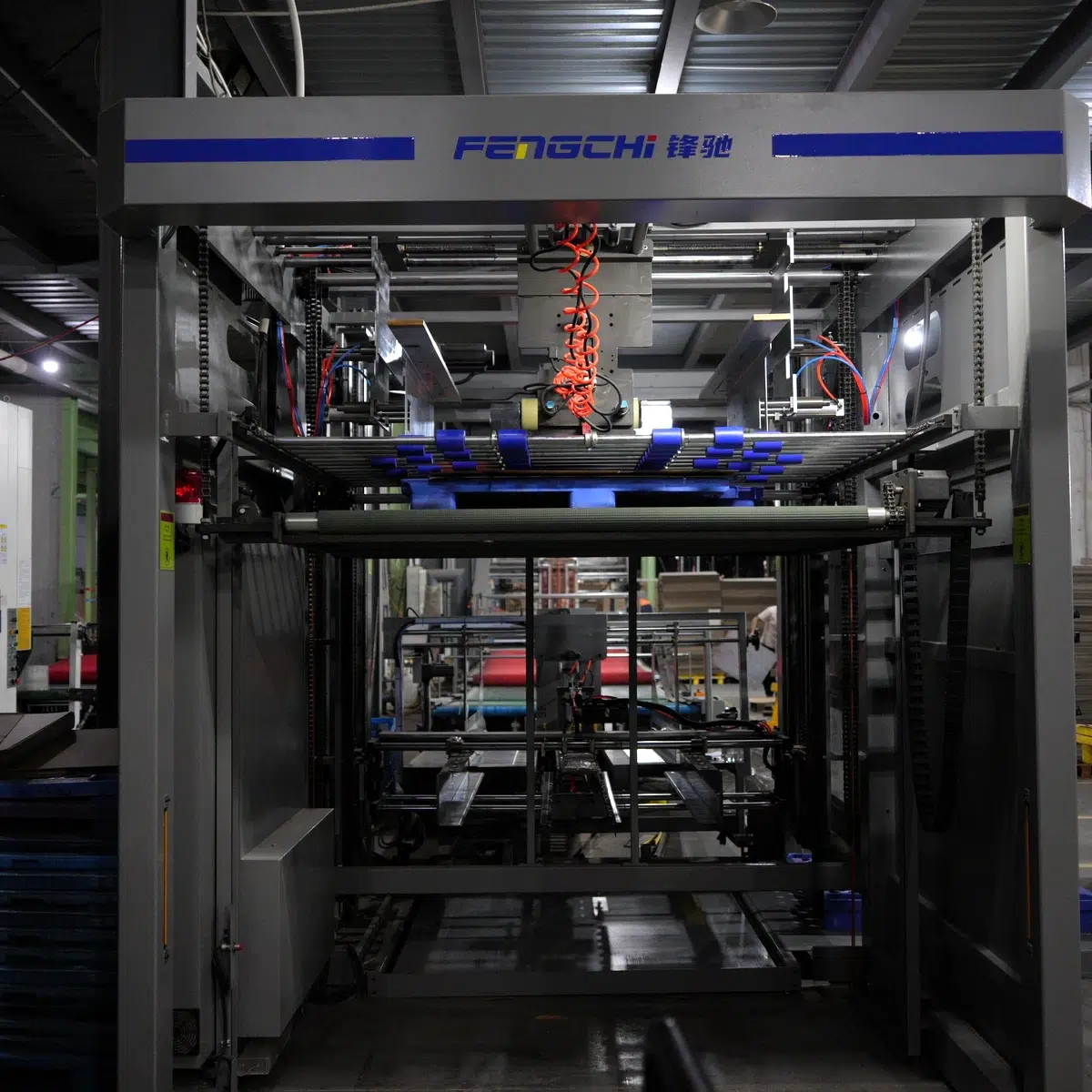
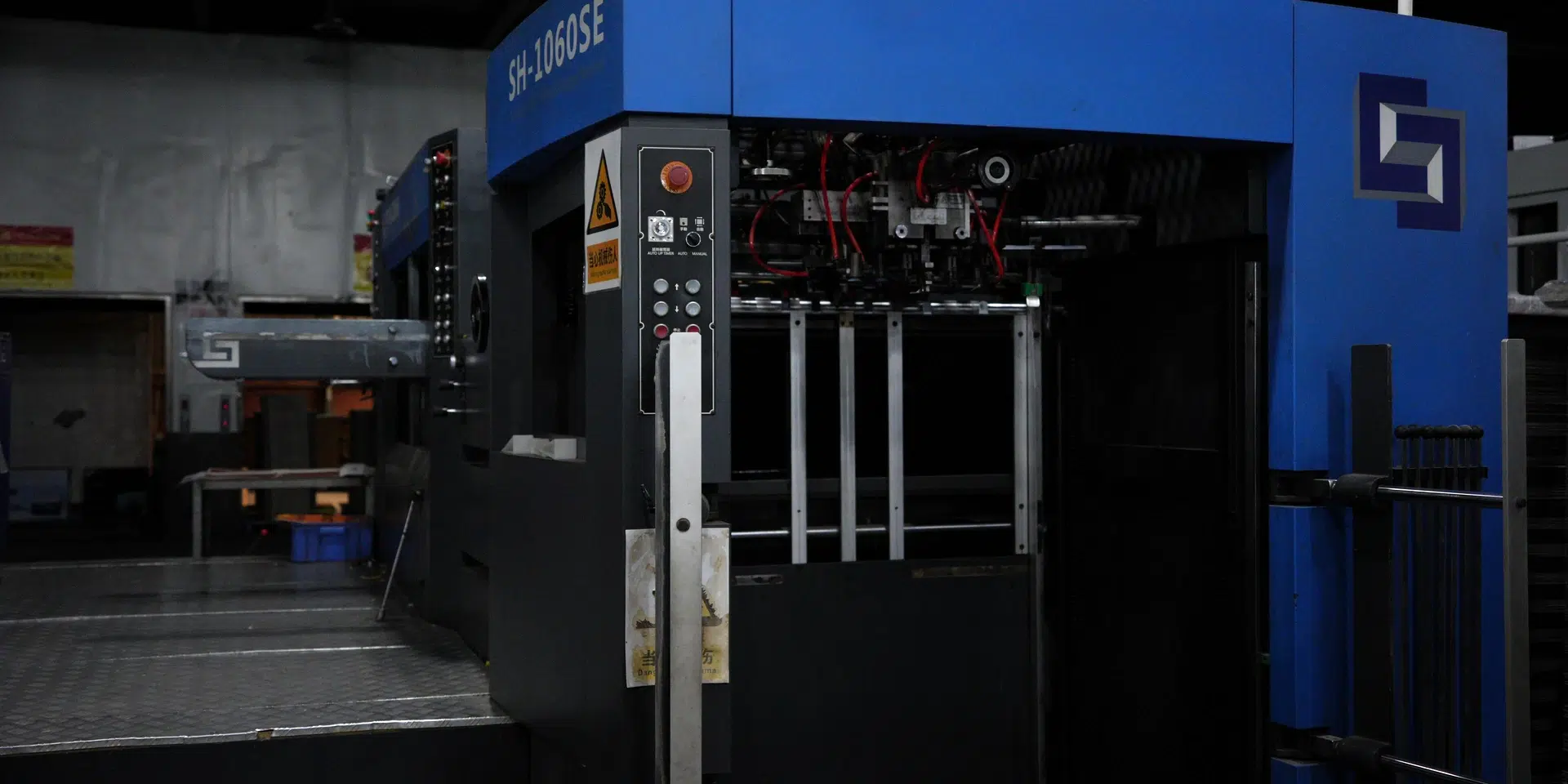
Die-cutting equipment used after printing and finishing.
Cross-industry applications
Food and beverage
Printed food packaging cartons for dry goods, beverage accessories and foodservice products, with construction-specific material and claim review.
Cosmetic and personal care
Brand-led paperboard packaging with colour controls, decorative effects, inserts and window options.
Household and consumer goods
Custom boxes that protect your product while carrying instructions, barcodes and retail graphics.
Quality is fundamental. Service is the soul.
Huandao Packaging company value
Packaging Layer Decision Guide
Why screen approval is insufficient
A folding carton is a cost-effective retail package when paperboard can carry the print, closure and handling load. Paperboard and corrugated board are not interchangeable, and a digital proof is not a physical fit check.[2]
The wrong material can look acceptable on screen and still fail after loading or distribution. The trade-off among retail appearance, converting efficiency and protection follows the packed product and its distribution; unlike a catalogue-only choice, it cannot be settled from a thumbnail.
Situation
Heavy or impact-sensitive product
Insufficient
Solid paperboard may not control movement or stacking load
Better Route
Add a tray, insert, E-flute structure or corrugated shipper
Situation
Liquid barrier or squeeze-pouch need
Insufficient
A folding carton is not the primary containment layer
Better Route
Use suitable flexible packaging or a container, with the carton as the printed outer pack
Situation
Very short validation batch
Insufficient
Offset setup, die tooling and finishing dominate unit cost
Better Route
Use the digital sample route or ask for a case-by-case smaller-run quote
Situation
High stacking or parcel exposure
Insufficient
Retail appearance does not prove distribution performance
Better Route
Define the complete packaging system and required transit test
Situation
Finished sustainability claim
Insufficient
Paper origin alone does not settle coating, window, adhesive or label eligibility
Better Route
Fix the claim, material and certificate scope before artwork release
Folding Carton Engineering Tools
DATA.01
7-Field Folding Carton Build Record
Capture the product, use environment, structure, graphics, finish, release evidence and pack-out in one copy-ready manufacturing brief. The readiness score measures supplied fields; it does not approve the structure.
Initialize ToolDATA.02
Folding Carton Sample Route Selector
Select the decision you need to make. A blank sample checks physical structure, a digital-printed sample checks layout and general appearance, and a press-run sample checks the intended production print-and-finish route.
Select RouteDATA.03
Consolidated Packaging Shipment Brief
Calculate component quantities for the folding carton, paper insert, protective tray and outer shipping case. The result coordinates one quotation and shipment brief; it does not assume a freight saving.
Run CalculationTechnical Support & FAQs
Folding Carton Packaging FAQs
What materials are used in folding cartons?
Our core paperboard materials are 250–450 gsm folding boxboard and kraft board. When the product needs more stiffness or cushioning, we can quote an E-flute litho-laminated construction or coordinate another flute profile.[2]
What is the difference between a folding carton and a corrugated box?
A folding carton is made from scored and die-cut paperboard and normally ships flat. A corrugated box uses fluted fibreboard for greater distribution strength; litho lamination combines high-quality offset graphics with a corrugated packaging layer.
What folding carton styles can Huandao produce?
The range includes straight tuck, reverse tuck, lock-bottom, seal-end, sleeve, tray, display, carry-handle, window and die-cut gift structures. Final structure follows product size, packed weight, filling sequence and opening experience.
What coatings and embellishments are available?
Printing options include CMYK plus up to 2 Pantone colours. Finishes include gloss, matte and soft-touch laminate, matte anti-scratch varnish, spot UV, gold/silver/holographic foil stamping, embossing, debossing and window patching.
Can folding cartons be recycled?
Paperboard cartons are commonly recyclable where local collection accepts the complete construction. Laminate, foil, window film, adhesive and product residue can change the result, so the sustainable packaging brief should name the target market and disposal claim.
What is the minimum order quantity for custom folding cartons?
The standard MOQ is 1,000 pieces per size and style. Smaller runs are quoted case by case because each structure and artwork version carries its own printing, die-cutting and setup work.
How long does a physical sample take?
Physical samples are normally prepared in 5–7 working days after artwork confirmation. A blank structural sample checks size and closure, a digital-printed sample checks layout, and a press-run sample checks the final print and finish route.
Does a digital proof confirm that the product will fit?
No. A screen or digital proof can confirm graphic layout, but physical fit depends on internal dimensions, board thickness, crease behaviour, the packed product and the closing sequence; use a blank structural sample for that decision.
How quickly will Huandao return a quotation?
Quotes are normally returned within 24 hours on business days. Include dimensions, packed weight, quantity by version, artwork status, finish, destination and required date so the first quote covers the actual packaging needs.
Can the carton, insert, tray and shipping case be supplied together?
Yes. Huan Yin Packaging Group can quote the printed carton, inner tray, insert and outer corrugated box as one packaging solution, then consolidate the approved components into a single shipment with the selected freight term.
Which quality reports can be issued for my job?
Applicable ECT or burst, ink-rub and basis-weight reports can be issued for the customer’s own production run. The method and test object are selected to match paper, paperboard or corrugate rather than applying one document to every construction.
Can my carton carry an FSC label?
Huandao holds FSC Chain of Custody certificate DCI-COC-000073, valid to 5 June 2029. Label and sales-document eligibility are fixed for the specific certified material and job scope before artwork release.[4]
Where is the packaging produced?
Production is at Huandao’s own facility at No. 587 Tongfu Road, Tong’an District, Xiamen, Fujian, China. Pre-press, sheetfed offset printing, UV coating, lamination, die-cutting and folder-gluing run in-house.