Get in Touch with Xiamen Huandao Packaging Technology Co., Ltd.

ISO Certified Plant
Custom Die Cut Boxes
Custom Die Cut Boxes Made Around Your Product
Provide your product, target pack dimensions, distribution route, artwork, and order quantity. From those inputs, we will create controlled dielines, a structural sample route, print standards, and repeatable die cut boxes in our own factory.
- We perform sheetfed offset printing, coating, lamination, die-cutting and folder-gluing all in house.
- Folding boxboard and litho-laminated corrugated structures are reviewed separately.
- Job-specific ECT/burst, ink-rub, and basis-weight reports can be issued against the customer’s own production run.
| Baseline item | Confirmed value | Scope |
|---|---|---|
| Company founded | 30 June 2003 | Xiamen Huandao Packaging Technology Co., Ltd. |
| Registered capital | RMB 20 million | Customer-supplied company record |
| Plant address | No. 587 Tongfu Road, Tong’an District, Xiamen | Own-operated production facility |
| Plant team | 133 staff | Customer-supplied current facility figure |
| Press configuration | 6-color sheetfed press with in-line coater | Offset print and coating route |
| Color configuration | CMYK plus up to 2 Pantone colors | Subject to artwork and job specification |
| Standard MOQ | 1,000 pieces per size/style | Smaller quantities reviewed case by case |
2003
Packaging production since133
Staff at the Xiamen plant1,000
Standard MOQ per size/styleCMYK + 2
Up to two Pantone colorsOne lot
Job-linked test reportingDie Cut Packaging Boxes Built for the Actual Packing Job
While special shapes may stand out, they will not help if they fail to fold cleanly, support the load, deliver the intended unboxing experience, or withstand the distribution route. Style isn’t always right, and the best approach is not determined until the packed product is evaluated. That’s why custom die-cut packaging usually starts with a discussion of the packaging requirements as opposed to reviewing a catalog picture.
BOXES
Structure first
We consider product dimensions, orientation, center of gravity, closure, window, handle, inserts, and assembly when developing a box dieline. The result is a box dieline based on a specific use case.
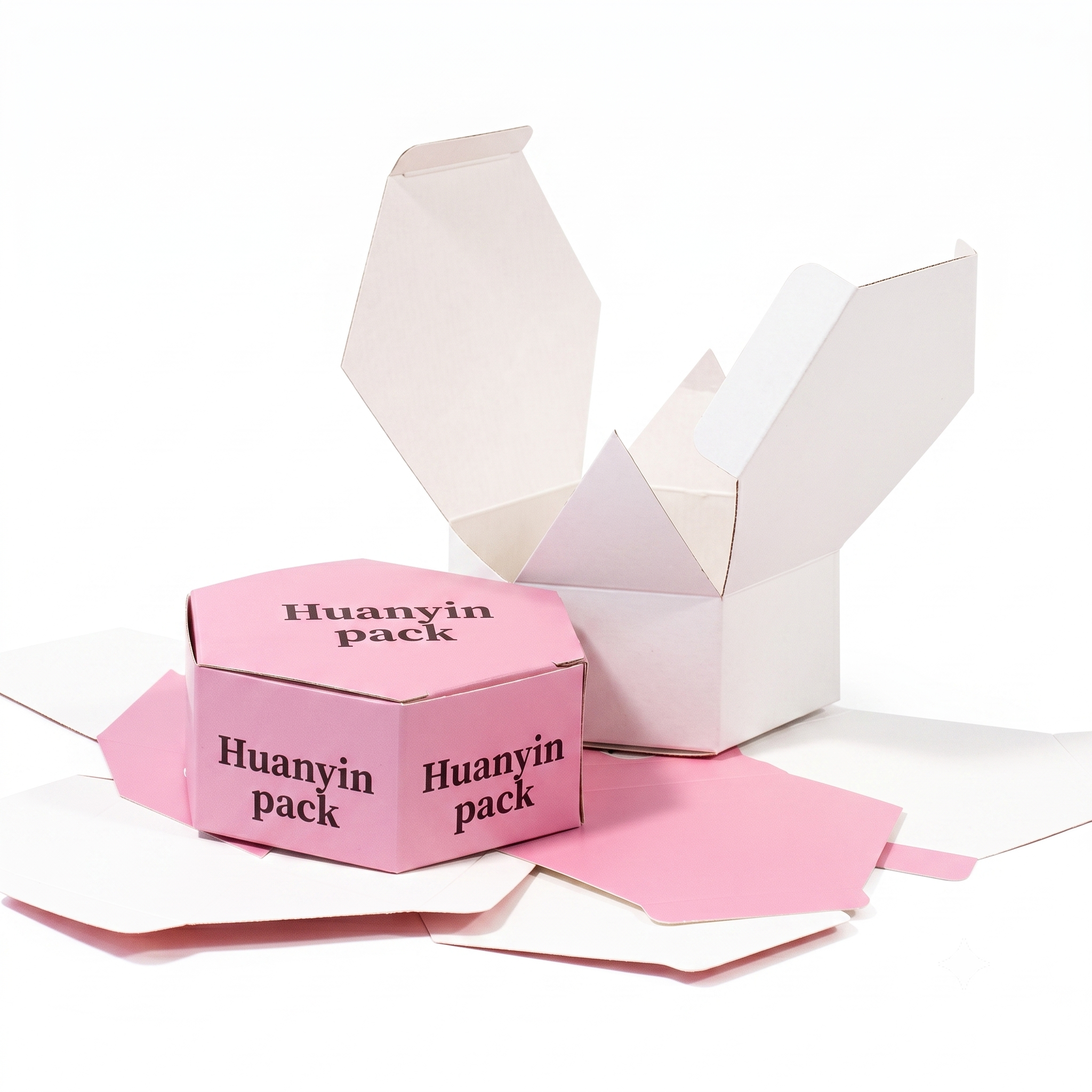
- Hexagonal and non-rectangular forms
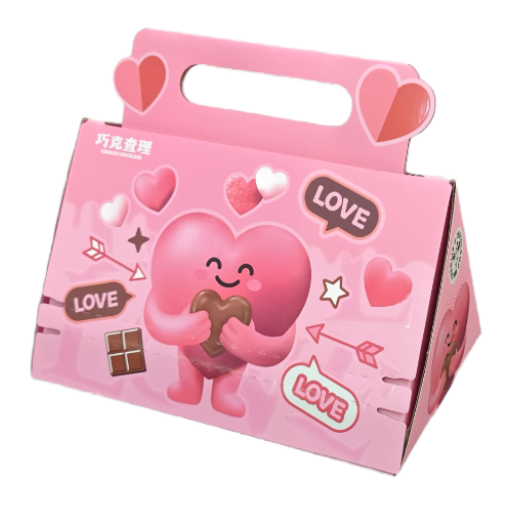
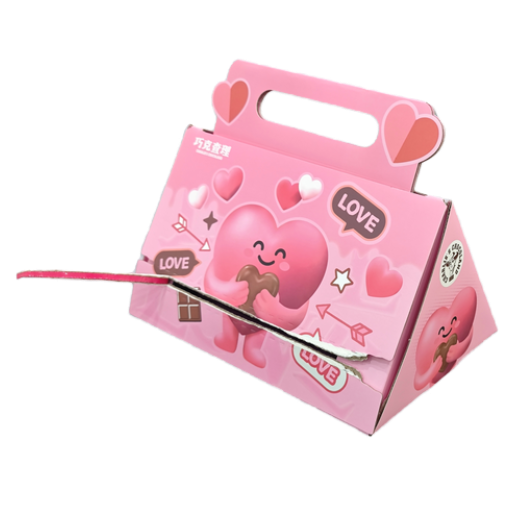
- Suitcase and carry-handle packs
- Crash-lock and tuck-in closures
Print after the board choice
Boxboard, Kraft, and litho-lam corrugated work differently with respect to artwork. We set our proof route after the board and finish decisions to ensure the approved color target is pertinent to production.
- CMYK plus up to two Pantone colors
- Signed proof and agreed Delta E tolerance
- X-Rite color measurement
Evidence by production lot
The quality evidence is stronger when it belongs to the order being shipped. Our lab is able to provide ECT/burst, ink-rub and basis-weight results for the customer’s job.
- MES process scans
- ERP-backed job control
- Real-time production kanban
What to send with your RFQ
Include the product dimensions and packed weight, target internal box size, reference artwork, quantity per size, intended finish, packing method, shipping route, destination, and required tests; state whether a structural sample route recommendation is also required.
Choose the Board and Structure Around the Product
There are many different constructions that can be encompassed by the term “cardboard boxes”. One example is boxboard, which is also referred to as folding carton. It’s a suitable choice for lighter weight retail and product packaging; another example is litho-laminated corrugated boxes that add flute structure behind the printed surface.
| Starting Construction | Where It Fits | Design Questions to Settle | Factory Route |
|---|---|---|---|
| Folding boxboard | Compact retail packaging, cosmetic packs, sleeves, light gift boxes, and shaped cartons | Caliper, grain direction, crease behavior, lock style, window, finish, and packing speed | Offset print, coating or lamination, die-cutting, folder-gluing |
| Litho-laminated E-flute | Printed die cut boxes that need a fine print face with added stiffness | Product support, score allowances, flute direction, edge exposure, closure, and pallet pattern | Printed top sheet plus E-flute lamination and conversion |
| Single B-flute | Larger die cut packaging boxes or shipping boxes where cushioning and stacking matter | Board grade, packed weight, handling, print route, inserts, and distribution risk | In-line B-flute supply with project-specific print/conversion plan |
| A, C, F, BC, or other profiles | Projects whose cushioning, thickness, strength, or display requirements point elsewhere | Confirm sourced-board availability and validation plan before locking the dieline | Sourced board, then in-house downstream conversion as confirmed |
Choose Material Before Price Comparison
A packaging company should match the packaging material to the product instead of treating every die cut cardboard format as interchangeable. Buyers comparing die cut boxes wholesale should define their packaging needs before comparing unit price, because custom die cut packaging boxes, standard boxes, and rigid boxes use different structures, tooling, assembly, and freight logic.
- When the goal is to create custom packaging, packaging design and customization start with the product and route. Folding cartons, mailer boxes, litho-laminated corrugated packs, and rigid formats are different starting points rather than interchangeable labels.
Structure Code Is Not a Performance Approval
FEFCO codes allow buyers and converters to mutually describe box styles. One style code does nothing for performance approval: it does not determine board grade, fit, print, tolerance, behavior of packed product, or the performance of distribution.
Custom Structures We Can Review
- Non-rectangular and hexagonal packaging boxes
- Carry-handle and suitcase-style custom die-cut boxes
- Crash-lock bottoms for faster manual packing
- Tuck-in corrugated box formats
- Die-cut display boxes, window cartons, and customized packaging stands
- Mailer and presentation structures with die cut box inserts
Why a Blank Sample Comes Early
Blank samples answer many questions like fit, panel movement, lock engagement, handle comfort, window position, packing sequence, and many others before color takes the center stage.
- Catch a tight lock before tools and dies are made or printed.
- Determine if the insert will load without scraping the print face.
- Ensure the box opens and closes as expected and stands when it is supposed to.
Dieline-to-Delivery Risk Map
Each approval addresses a different risk. Considering one signed PDF of artwork as approval for structure, color, manufacturing, and shipping is taking too big of a risk.
01
Input
Product and route
Dimensions, weight, fragility, orientation, packing method, channel, and destination.
02
Structure
Controlled dieline
Cut, crease, glue, lock, handle, window, insert, artwork zones, tooling, and die press setup.
03
Sample
Fit approval
Blank structural or digital printed sample, followed by a press-run sample when needed.
04
Proof
Color approval
Signed proof, substrate and finish context, and agreed Delta E tolerance.
05
Lot
Production evidence
MES records and agreed job-specific inspection or laboratory reports.
Performance Reports Have a Defined Scope
Edge compression tendencies related to ECT must be considered in conjunction with burst behavior. Burst behavior helps assess rupture resistance, but does little to explain the complete journey of the packed product.
- Using ASTM D5639, choose board and construction attributes accordingly.
- Use ASTM D4169 or another ISTA distribution protocol for shipping unit validation, when required.
- Match the protocol to the actual parcel, LTL, pallet, retail, or mixed route.
The highest ECT is not always the right answer because the dominant risk may be puncture, moisture, closure failure, or product movement. Huandao records acceptance criteria and agreed job tests so the evidence can be traced to the production lot.
Printed Die Cut Boxes with Controlled Color and Finishing
Color and finishing can drift when the proof, board, finish, or measurement method changes. Huandao’s sheetfed offset route supports custom printed paperboard and litho-laminated corrugated packaging because print and conversion remain under one production system.
Print and color
- CMYK process printing
- Up to two Pantone colors
- Signed proof route
- X-Rite measurement against the agreed target
Surface finish
- Gloss, matte, or soft-touch lamination
- Anti-scratch matte varnish
- Spot UV and foil stamp
- Emboss and deboss effects
Structural add-ons
- Window patching
- Integrated die-cut handle
- Paperboard or protective inserts
- Outer shipping carton coordination
Color evidence
The six-color press with an in-line coater supports CMYK plus up to two Pantone colors when the logo, artwork, and project specification call for them. The signed proof and agreed Delta E tolerance become the acceptance criteria for X-Rite measurement.
Unlike a screen-only approval, the Huandao Packaging route ties the proof to the specified substrate, finish, and measured production target.
Regional recyclability guidance
For EU corrugated applications, Packaging Europe reports FEFCO/CPI guidance that sets plastic at 5% of pack weight maximum and 3% preferred. Those figures are regional design guidance, not a universal recovery guarantee, and local systems still decide the practical result.
Color approval note
A screen image or office print is not a production color standard. Substrate whiteness, kraft tone, lamination, varnish, foil, emboss depth, and viewing light can change what the eye sees, so name the approved proof and tolerance in the order specification.
Finish choices also change recovery options
Do not use “recyclable” or “eco-friendly” as a shortcut for a construction review. Film, foil, windows, adhesives, coatings, contamination, local collection, sorting, and mill capability all matter.
- Ask us to compare the uncoated, varnished, and laminated versions of the same design.
- State whether shelf scuffing, moisture, grease, or a premium tactile finish is the main risk.
- Request FSC CoC board when chain-of-custody sourcing is part of the brief.
More finishing is not always better for the intended recovery route. A finish that looks premium but blocks that route is the wrong choice, so the trade-off belongs in the board and finish review.
Proof-to-Production Approval Scorecard
A short approval record prevents the most expensive sentence in custom packaging: “That is not what we meant.” The risk grows because structure, artwork, color, tests, and commercial scope can be approved by different people.
Evidence owner
Huandao links each approval to the job record, and the buyer names the final acceptance owner. For regulated uses, FDA or destination-market requirements remain a separate evidence line rather than an implied benefit of the print process.
Structure signed
Internal size, board family, flute if applicable, cut/crease geometry, closure, insert, handle, window, and glue.
Artwork signed
Controlled file revision, panel orientation, barcode location, copy, bleed, safe zones, and required overprint behavior.
Color signed
Reference proof, process/Pantone split, substrate and finish, measurement method, and agreed Delta E tolerance.
Quality signed
Inspection level, appearance limits, functional checks, lot traceability, and required laboratory reports.
Commercial scope signed
Quantity per size/style, tooling and sample route, pack-out, delivery split, destination, and freight responsibility.
Validation signed
Board tests, packing trial, distribution protocol if required, acceptance criteria, and owner of final approval.
Freeze the board, structure, proof, and acceptance method in one record before production. A change to any one of them can change the finished box.
Working rule from Huandao Packaging Engineering
One Plant from Pre-Press Through Folder-Gluing
Xiamen Huandao Packaging Technology Co., Ltd. has made printed paper packaging since 2003, giving the operation a 20 year-plus production history. The own-operated plant at No. 587 Tongfu Road in Xiamen has 133 staff and is the color-printing plant of Huan Yin Packaging Group.
Processes under one production system
- Pre-press and sheetfed offset printing
- UV coating and lamination
- Die cutting and stripping
- Folder-gluing and packing
- In-house job testing
- MES kanban scans with ERP and intelligent scheduling
When one shipment matters
For a buyer managing a product launch, the group’s 20 year-plus manufacturing base can coordinate custom box packaging with inner trays, protective inserts, and the outer corrugated carton. Shared planning can reduce handoffs and allow the packaging set to be consolidated into one shipment, subject to the confirmed project scope.
- One fit discussion across the inner and outer pack
- One consolidation plan for compatible components
- Shared freight planning instead of separate dispatches
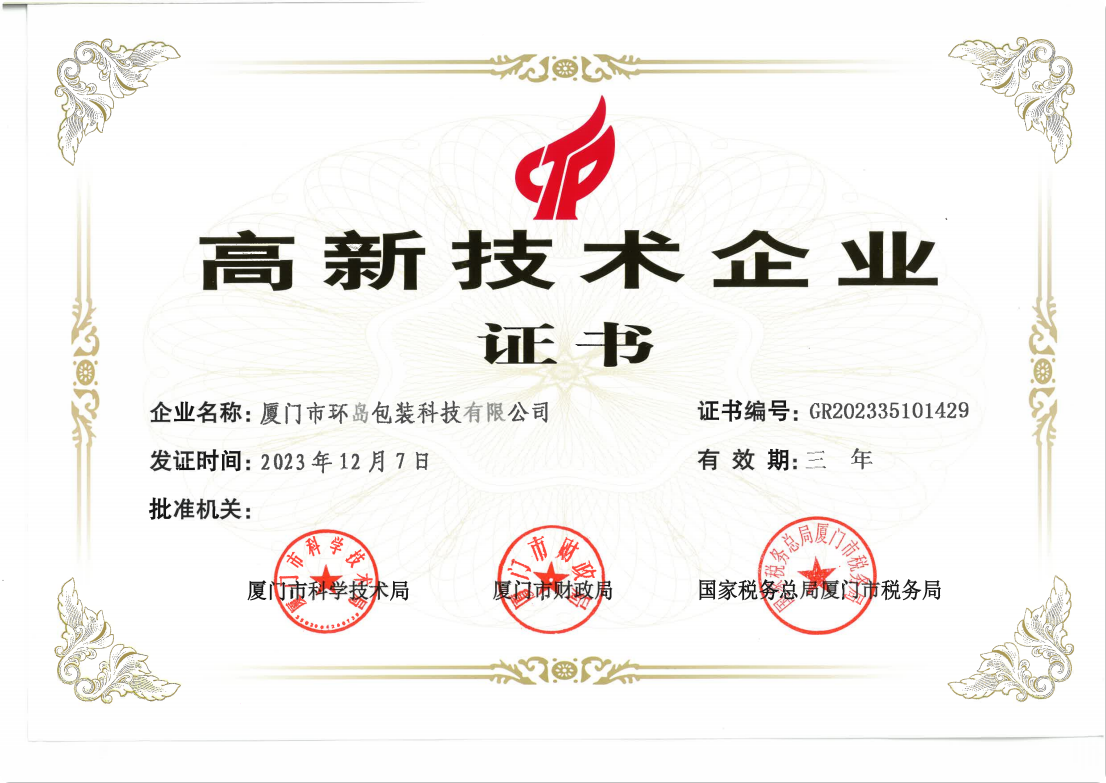
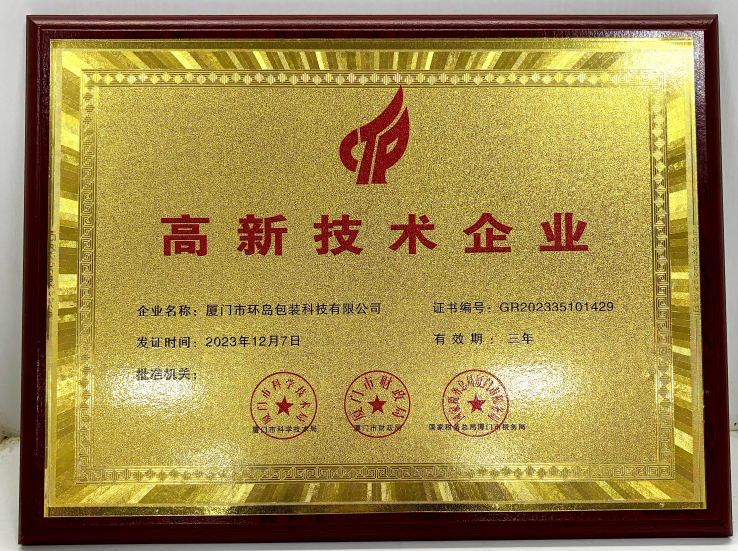
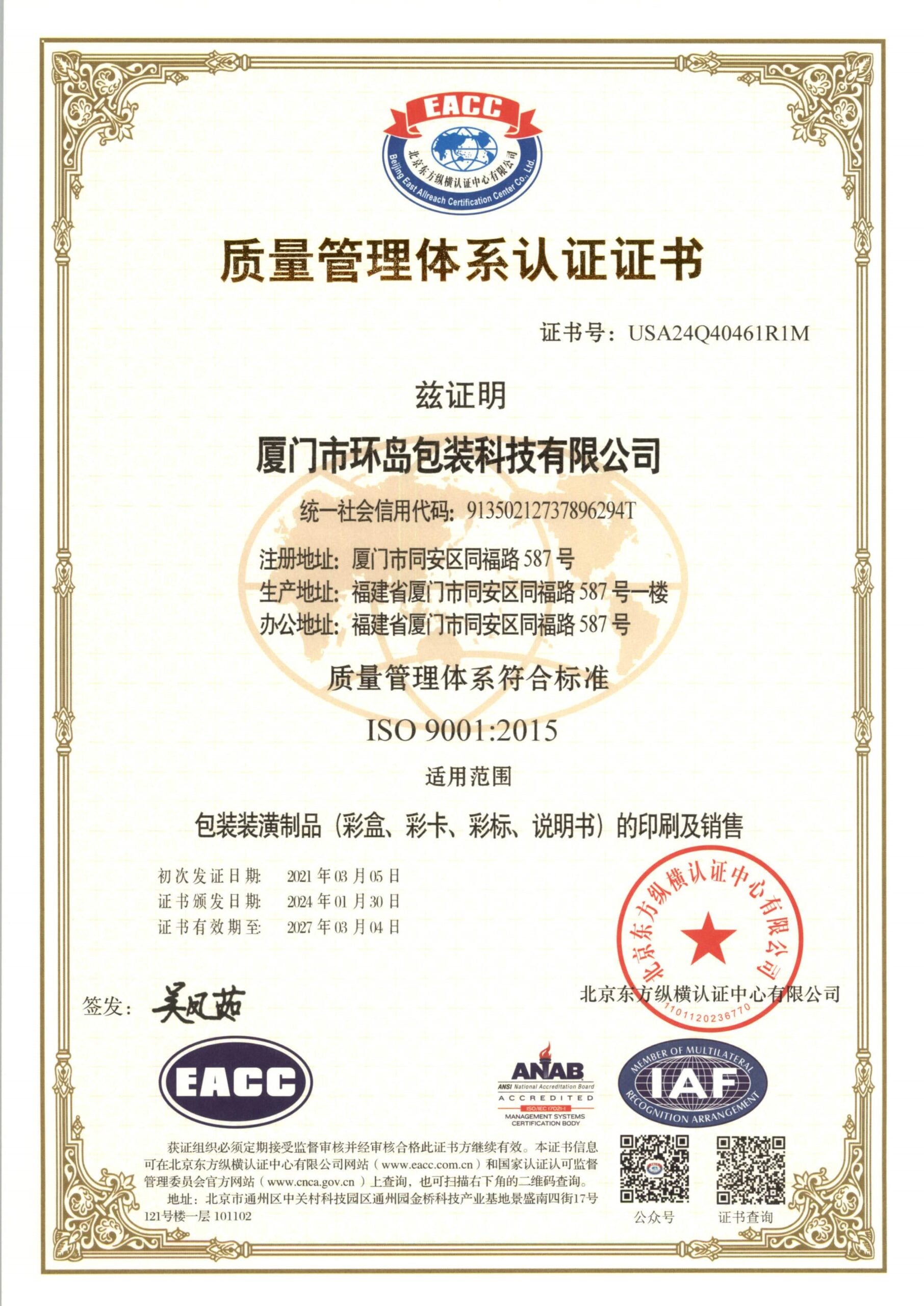
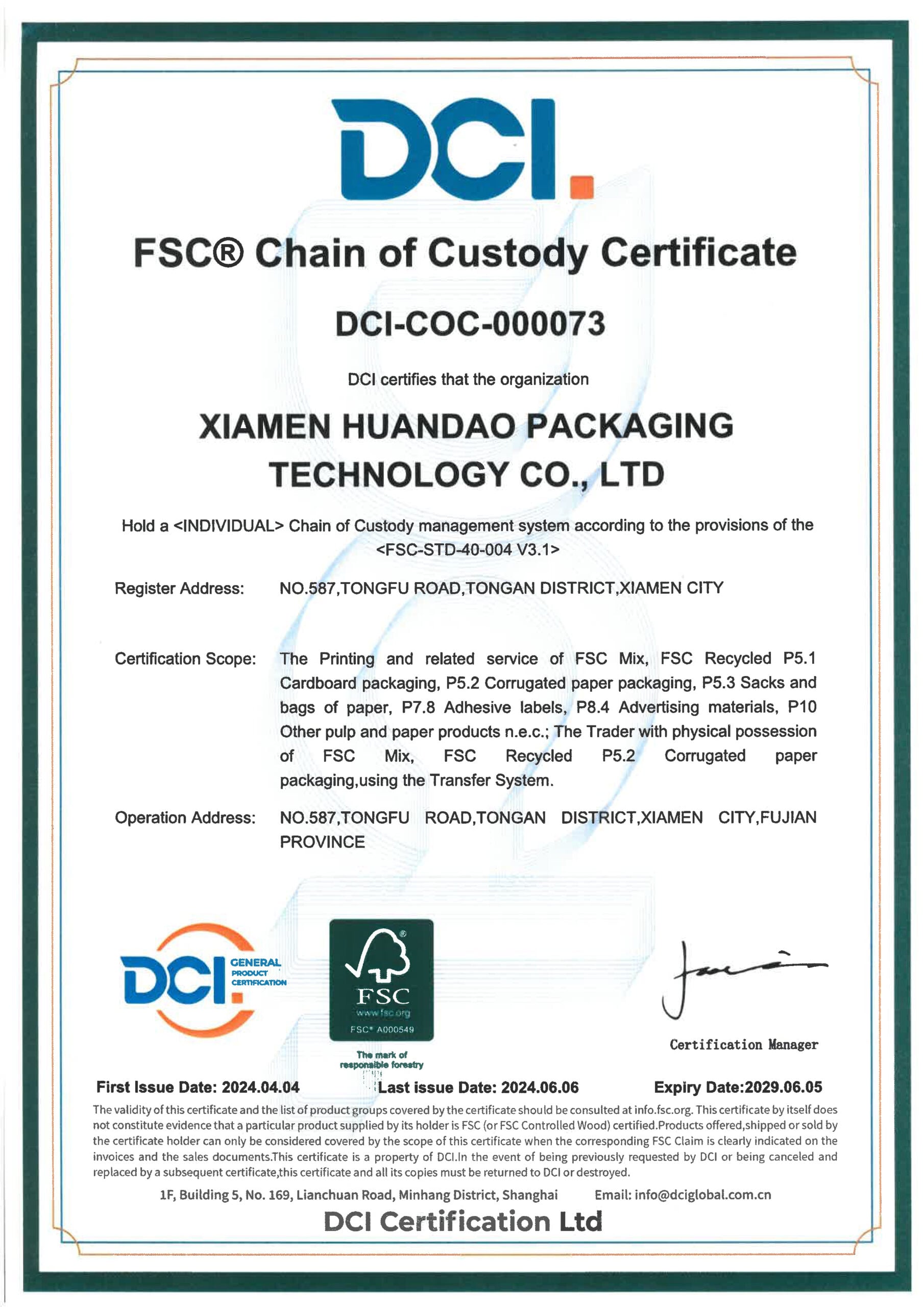
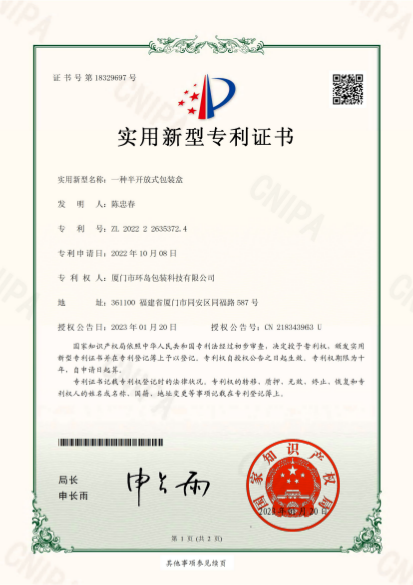
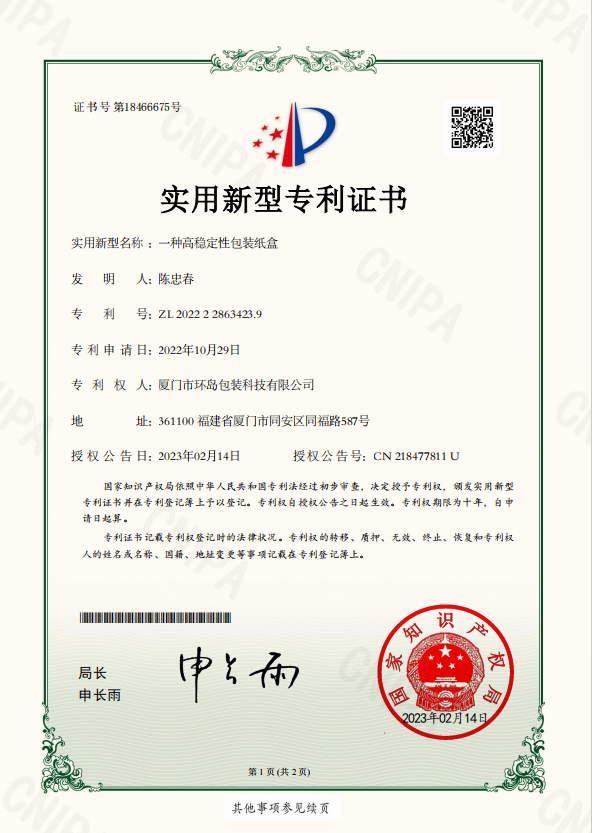
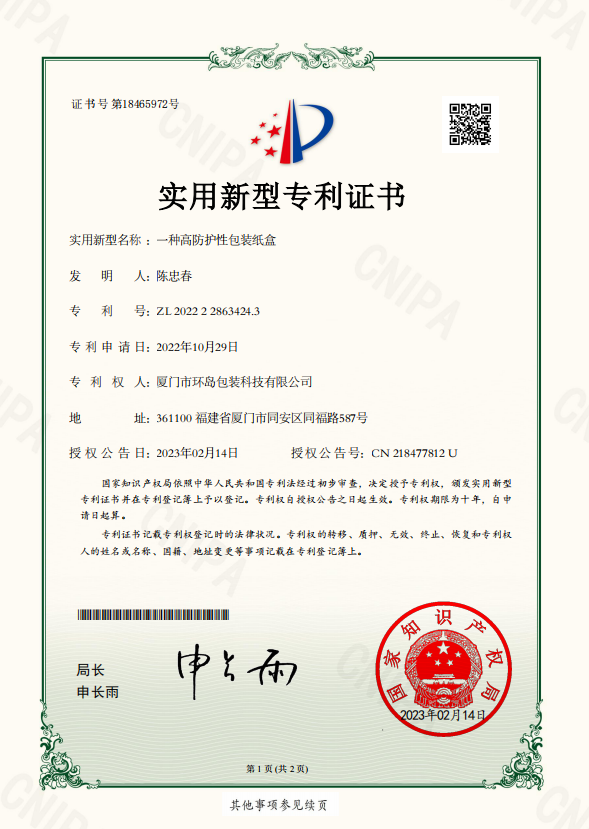
Certifications & Patents
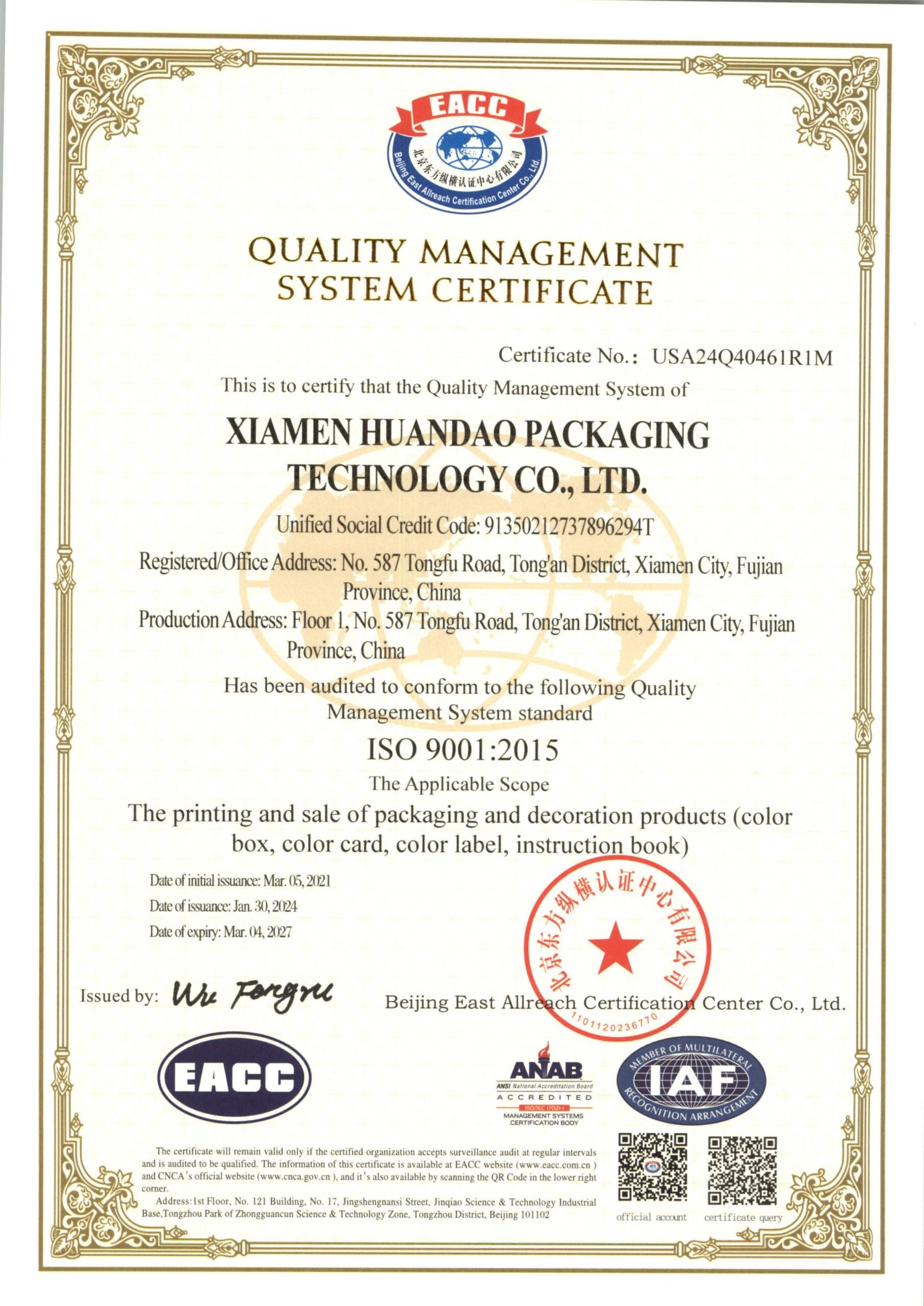
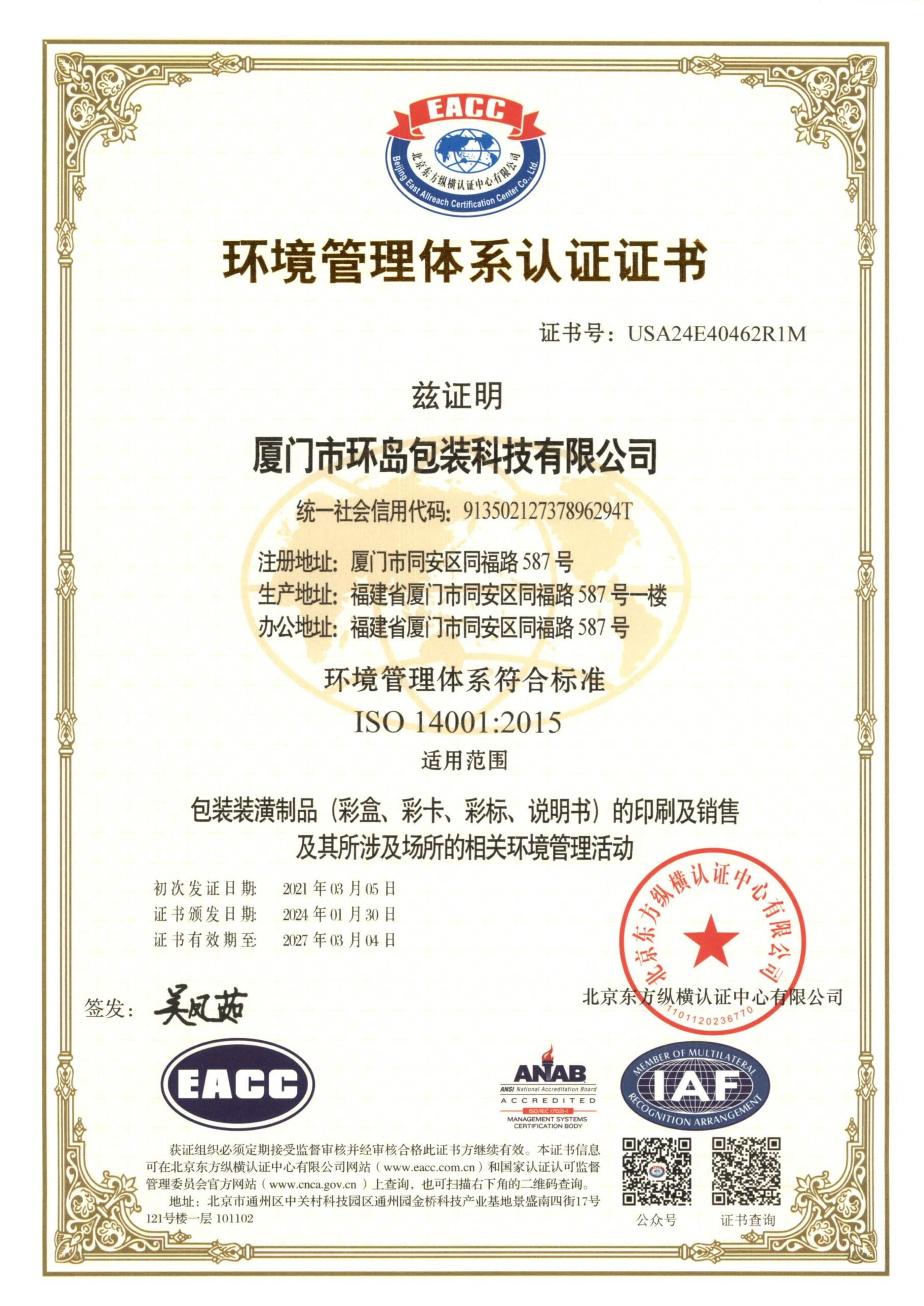
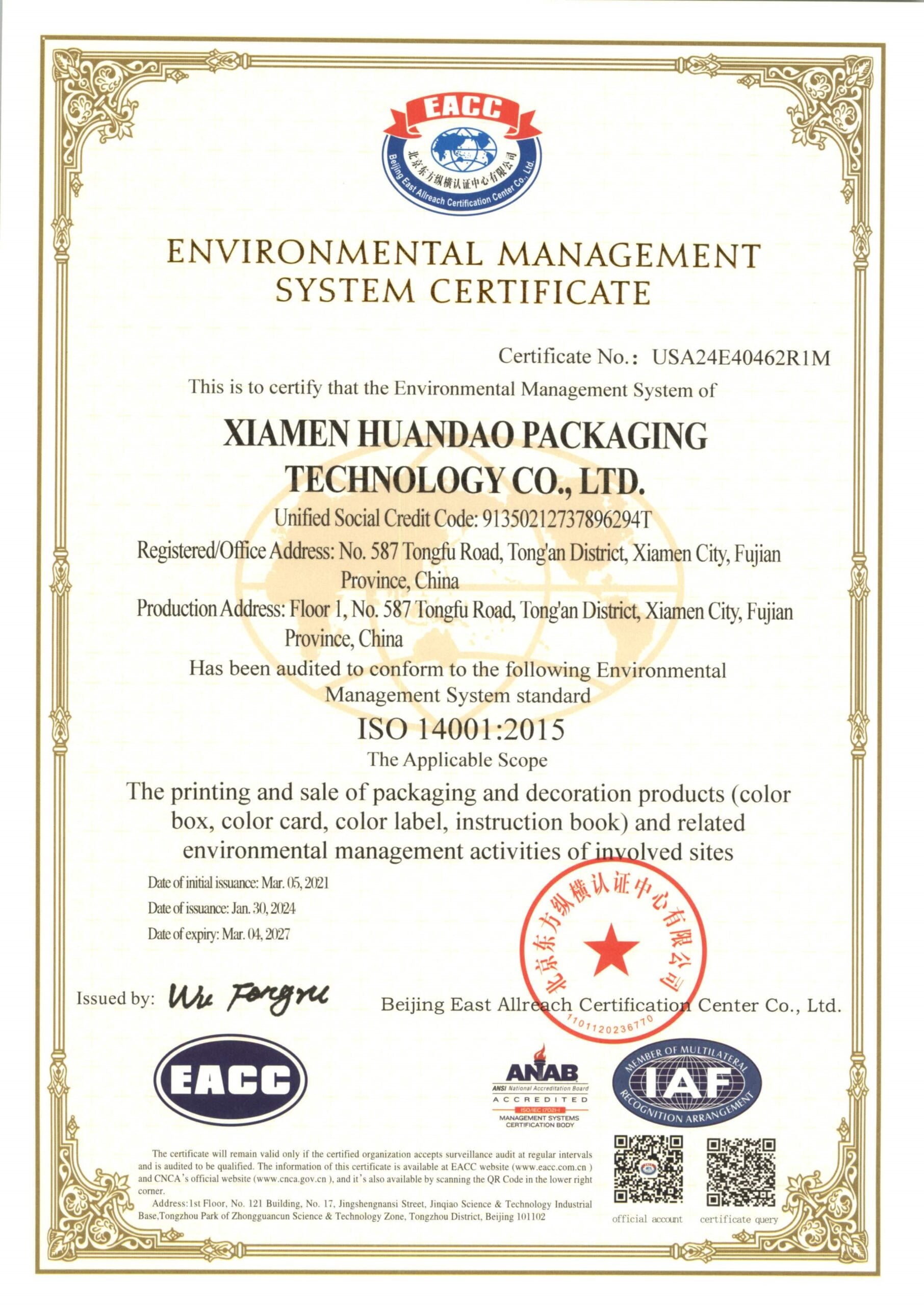
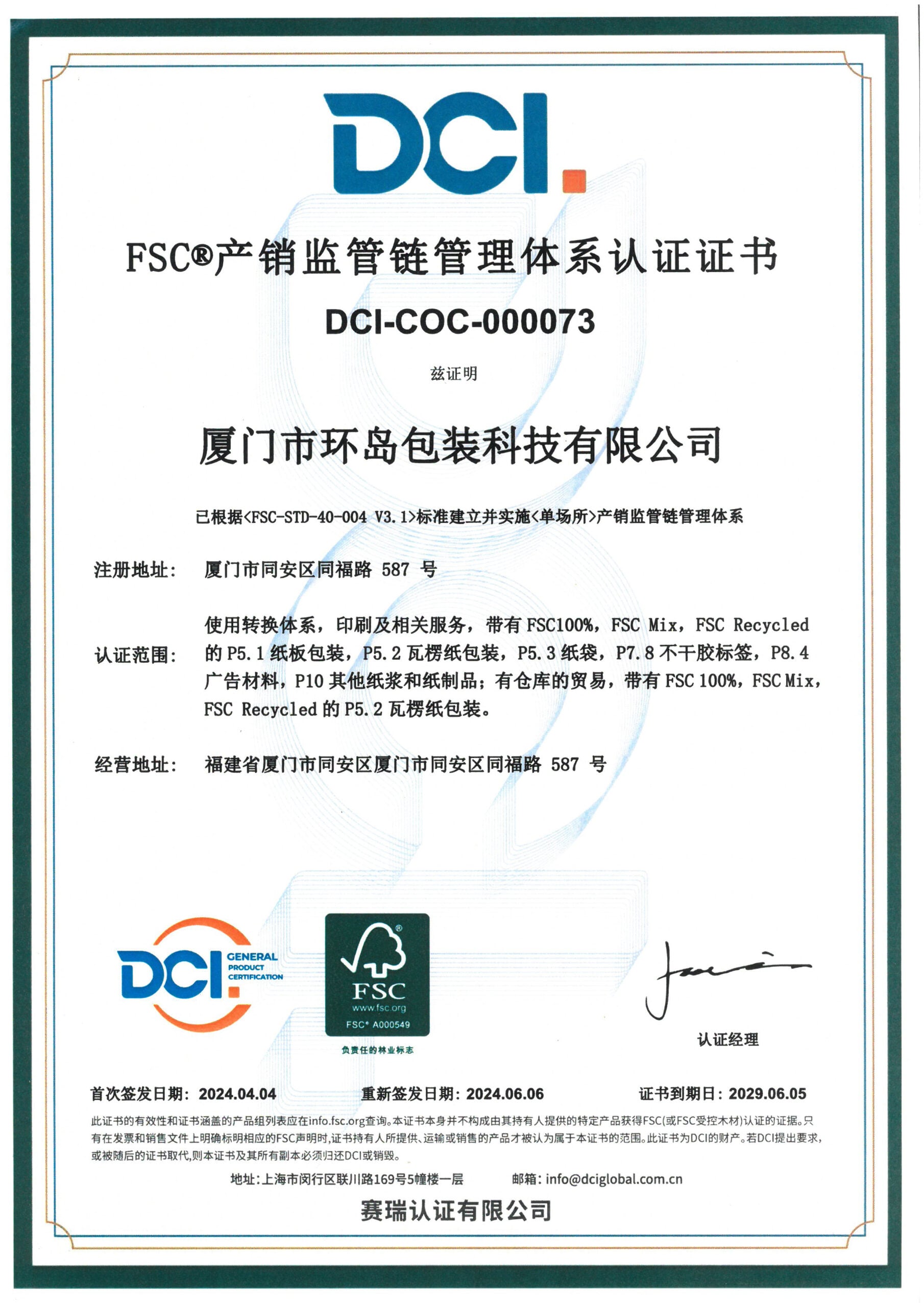
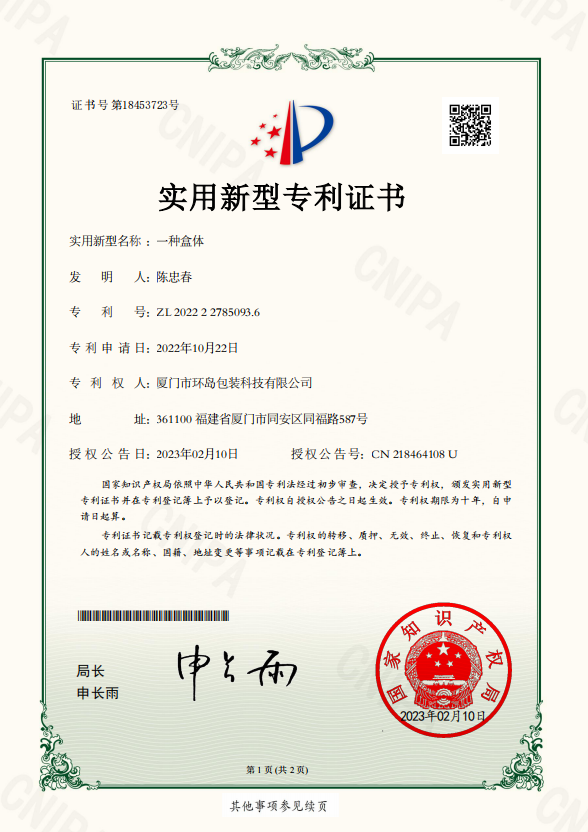
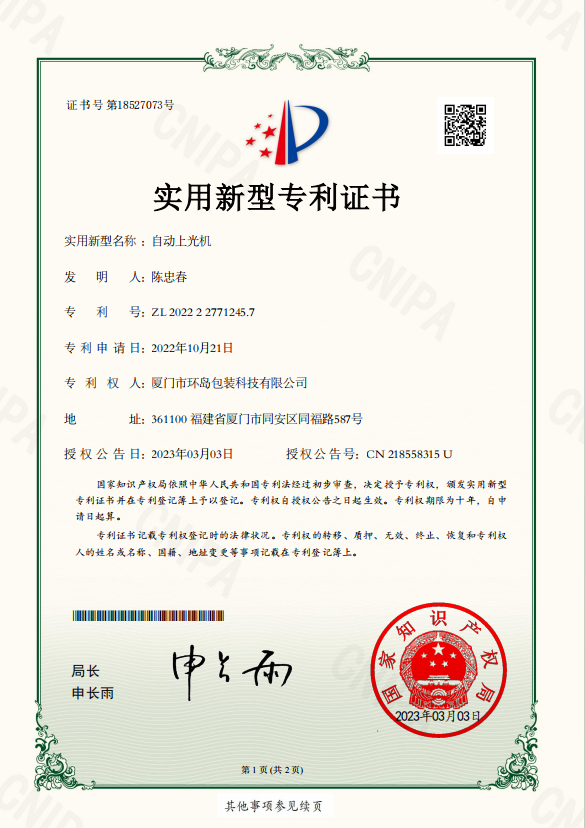
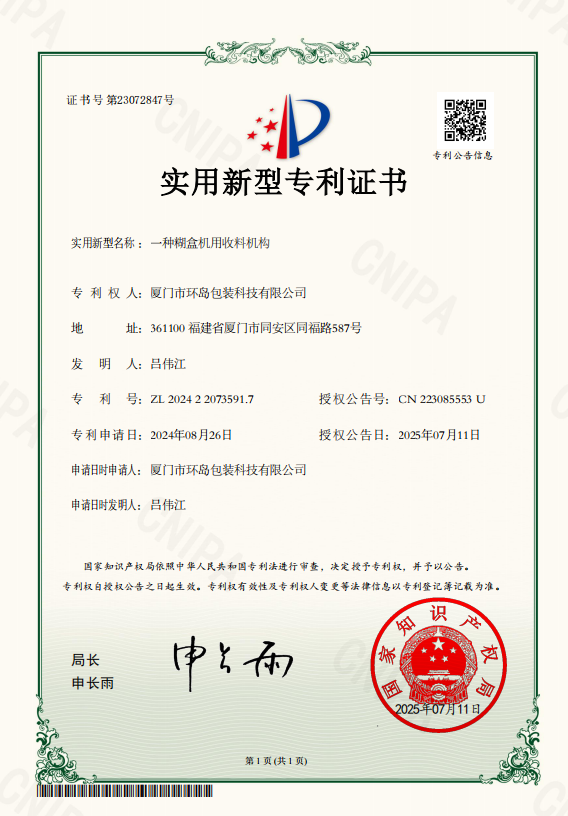
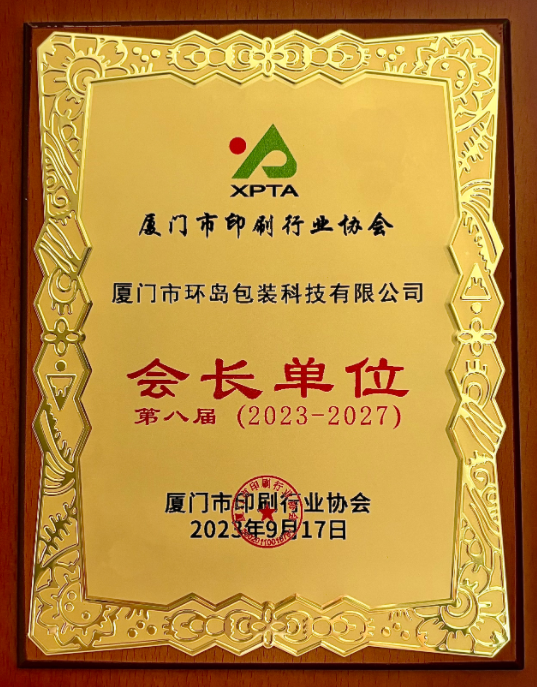
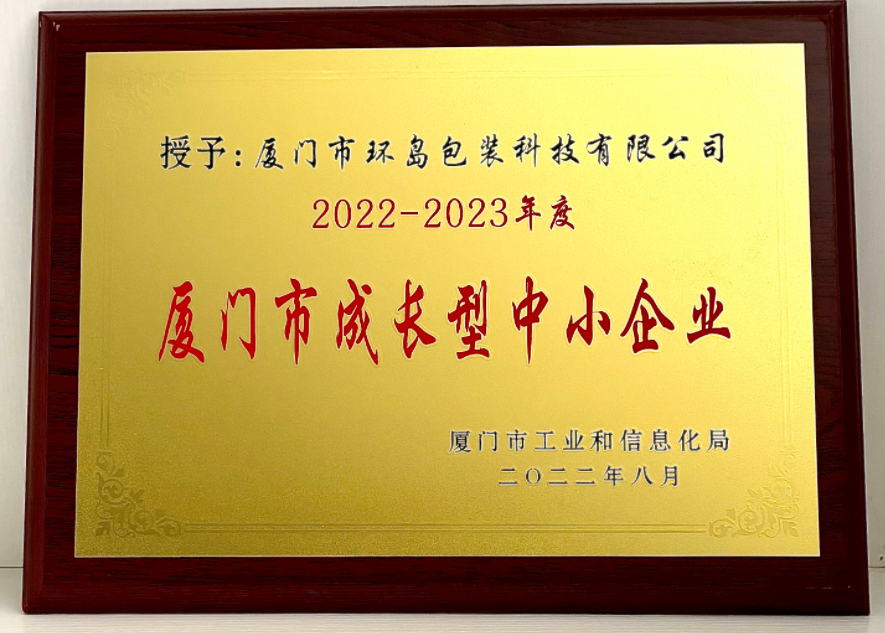
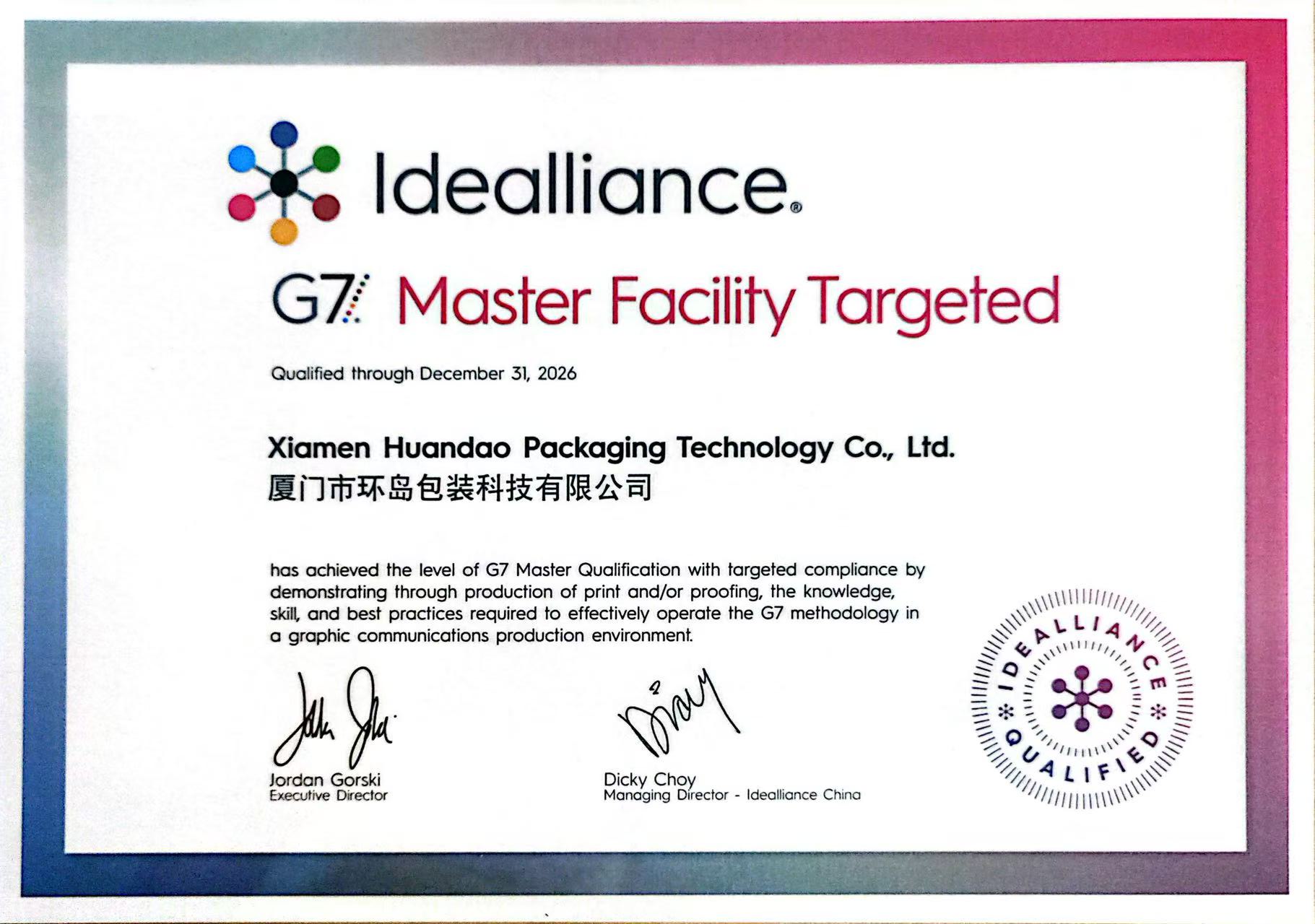
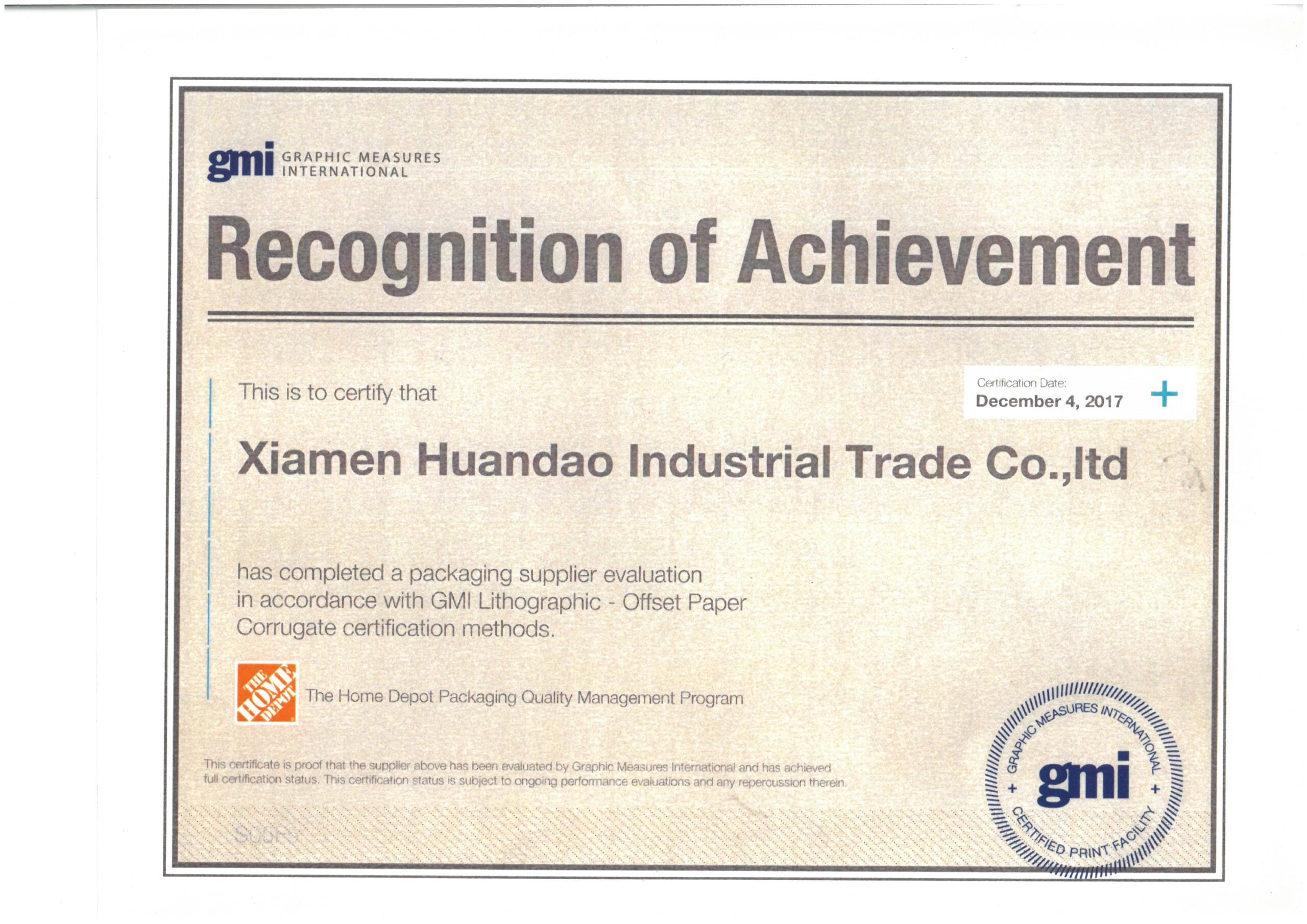
Own Facility
Xiamen, Fujian
National High-Tech
Recognized enterprise
ISO 9001
Operations as supplied
ISO 14001
Operations as supplied
FSC CoC Board
Available by project
×
Commercial item
Confirmed position
What to include in the enquiry
MOQ
1,000 pieces per size/style
Quantity by each size, artwork, and delivery split
Blank structural sample
Free; buyer covers courier
Product or exact dimensions, packed weight, closure and insert needs
Digital printed sample
Free; buyer covers courier
Controlled artwork and intended board/finish route
Press-run finished sample
Fee applies
Needed when production print, substrate, and finish must be represented more closely
Production schedule
Confirmed per quote
Required arrival date, approval date, quantity, finish, packing and destination
Repeat orders
May skip tooling or sampling steps when the approved specification is unchanged
Previous order reference plus a clear change/no-change declaration
Bronze ROI model, no invented savings
Compare total landed cost, not unit price alone. Put board and conversion, tooling, proof and sample work, assembly, insert cost, carton cube, freight, damage, returns, inventory, and split shipments on one worksheet.
A lower unit price can become disadvantageous due to a number of reasons, such as an extra shipment of inserts or an added cube in the box.
A stronger board can still be wrong due to other factors such as puncture, moisture, closure, and/or movement of product.
A custom packaging solution is warranted when a reduction in a named cost or failure is confirmed due to a change in construction, and not because more material is used.
Unlike a unit-price comparison, this worksheet shows the work and risk associated with the numbers. The catch is simple: the lowest unit price is not always the lowest landed cost.
Choose the sample route
For fit and function, use a blank structural sample. For layout and appearance review, use a digital printed sample. For production printing and finish review, use a press-run finished sample.
Food-Contact and Regulated-Use Review
Please tell us if the packaging will be in contact with food, behind a barrier, face temperature extremes, carry a regulated product, or enter a country with specific material regulations. The compliance risk arises because a generic statement about paperboard does not approve the finished article for every listed end use.
Regulatory evidence
FDA guidance ties food-contact status to each substance and its conditions of use. Huandao therefore asks the buyer to define contact, market, and evidence before the board and finish route is confirmed.
If 4°C contact is specified by procurement and 20°C storage is shown by the supplier, treat them as different conditions rather than equivalent. The numbers shown are an example of why time and temperature should be included in the brief and not Huandao product limits.
Define contact
State direct or indirect contact, food type, contact area, time, temperature, barrier, and whether the package is intended for reheating, freezing, or room-temperature storage.
Define the market
Name the destination country and buyer standard. FDA rules, EU requirements, retailer protocols, and brand specifications do not have identical evidence routes.
Define the evidence
Request supplier declarations, formulation or compliance documents, migration evidence where applicable, and a written match between the materials and conditions of use.
Claim boundary
We are not going to put a “food safe” label and call it a day. We require the same level of detail for recyclable, compostable, and environmental claims. We will need specifics on the construction and the destination system for all of the above.
Custom Die Cut Box Engineering & Evaluation Tools
01
PHASE 01
Custom Die Cut Box RFQ Readiness Checker
Check whether the basic inputs for a useful custom box review are present. The percentage measures declared-field completeness only; it does not approve a dieline, board grade, price, or shipping performance.
02
PHASE 02
Custom Box Sample Route Selector
Select the immediate approval question. The result identifies a starting sample route; Huandao confirms the exact scope after reviewing your product, artwork, board, finish, and schedule.
03
PHASE 03
Board & Structure Comparison for Die Cut Boxes
Choose the dominant starting need. The selector identifies a review path from the constructions described in Huandao's supplied product materials; it does not calculate board grade or approve performance.
Custom Die Cut Box FAQs
ACTIVE NODE
00
AWAITING INPUT...
What information do you need to quote custom die cut boxes?
Send product dimensions, packed weight, target internal size, quantity per size/style, artwork status, preferred board and finish, closure or insert needs, distribution route, destination, and required arrival date. Photos or an existing sample help, but a controlled drawing is still needed before production.
Why can one custom box quote look much higher than another?
Quotes cannot be compared fairly for custom packaging boxes until you check whether both offers include the same board, tooling, proof, finish, inserts, assembly, pack-out, freight scope, and validation work. A lower piece price is not equivalent when the specification or included work is different.
Do you make both paperboard and corrugated die-cut boxes?
Yes. Folding paperboard suits many compact retail, cosmetic, and gift applications; litho-laminated E-flute or other corrugated constructions add flute structure. We review them as different systems, not interchangeable names.
What is the minimum order quantity?
Our standard MOQ is 1,000 pieces per size and style. Smaller quantities are reviewed case by case against the structure, sheet layout, print method, tooling, finish, and packing work.
Can I get a sample before mass production?
Yes. Blank structural and digital printed samples are free, with courier cost paid by the buyer. A press-run finished sample carries a fee because it uses a production-representative printing and finishing route.
How do you control color on custom printed boxes?
We agree the proof route and Delta E tolerance, then use X-Rite measurement against the signed target. Board shade, kraft content, coating, lamination, varnish, and metallic effects are recorded because they affect appearance.
Which is better: ECT or burst strength?
Neither is universally better. ECT is tied to edge compression and probable stacking behavior, while burst addresses rupture or puncture; the right specification follows the product, box construction, environment, and likely failure mode.
Can a generic laboratory report guarantee shipping performance?
No. A job-specific report gives useful evidence for the measured property on that production run. Finished-package distribution performance may need packing trials and a protocol selected for the actual parcel, freight, pallet, storage, and handling route.
Can you make a smaller box or an unusual structure?
We can review small formats plus mailer, suitcase, carry-handle, tuck-in, crash-lock, non-rectangular, window, and product stand structures. Feasibility depends on size, packed weight, board, fold behavior, closure, assembly, tooling, and required tests.
Can I use custom finishes and still claim the box is recyclable?
Finish availability does not prove a recovery claim. Lamination, foil, spot UV, windows, adhesives, coatings, contamination, local collection, sorting, and mill capability all affect the answer, so the final construction needs a project-specific review.
Can you supply inserts and outer shipping cartons too?
Yes, Huandao can coordinate the printed die cut box with inner trays, protective inserts, and outer cartons through Huan Yin Packaging Group. Scope, fit, quantity, packing, and consolidated freight are confirmed in the quote.
How long does production take?
Production lead time is confirmed per quote after the dieline, sample route, artwork, board, finish, quantity, packing, and approval dates are known. Repeat orders can move faster when the prior tooling and approved specification remain unchanged.
How are die cut cardboard boxes different from standard or rigid boxes?
Die-cut cardboard boxes are made from cut and creased paperboard or corrugated sheets, allowing shaped panels, locks, handles, and windows. Standard boxes favor common layouts and simpler box packaging, while rigid boxes use a different wrapped-board construction; the right custom packaging material follows the product, channel, packing method, and distribution risk.