Get in Touch with Xiamen Huandao Packaging Technology Co., Ltd.

ISO Certified Evidence
Electronics Packaging
Custom Electronics Packaging Boxes
Huandao Packaging develops and manufactures custom electronics packaging, with custom packaging options quoted as product-specific packaging solutions. For each packaging solution, we design the retail box or display carton, insert or tray, and shipping carton to operate as an integrated packaging system.
- Engineer-reviewed quote in one working day
- Custom printed prototypes in 5–7 working days
- Job-specific print and board reports
- AI and print-ready PDF artwork files accepted
Request an Electronics Packaging Quote
Your files are handled as confidential, and we sign an NDA on request before receiving your artwork.
Minimum Order
1,000 pieces per size and style
Printed Prototype
5–7 working days after artwork approval
Production Window
15–30 days after sample approval
Specs & Assets
CMYK + 2 Pantone spot colors
AI & print-ready PDF accepted
ECT/burst, ink-rub reports
Custom Electronics Packaging Formats for Industries We Serve
Our electronics packaging boxes are developed around the packed product, its accessories, the retail presentation and the shipping route. The available custom packaging options include litho-laminated printed corrugated boxes, folding cartons, carry-handle boxes and printed boxes with fitments for buyers across the electronics industry.
Litho-Laminated Corrugated Retail Boxes
For heavier electronic products, we combine offset-printed graphics with corrugate to provide shelf presentation plus added board structure.
Folding Cartons and Window Boxes
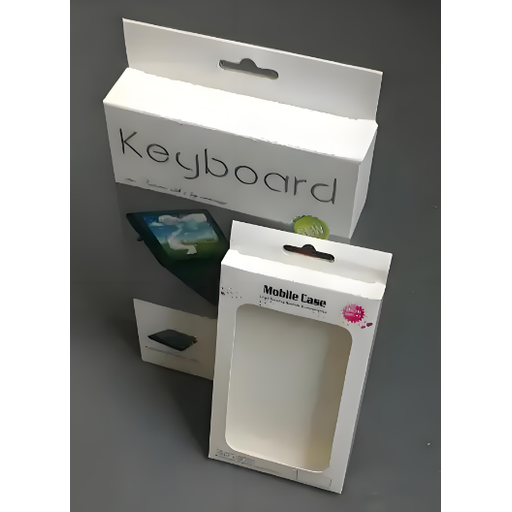
For a gadget, accessory or electronic device, we produce compact packaging box formats with brand graphics, a logo panel, a window or a hanging feature.
Carry-Handle Boxes
For an easier retail handoff, we design paperboard or corrugated carry-handle structures around the electronic product.
Printed Boxes with Fitments
Within the pack-out, we coordinate the outer electronics packaging box with an inner insert, tray or accessory compartment.
Applications In Scope
- Consumer electronics and connected devices
- Small appliances and personal-care electronics
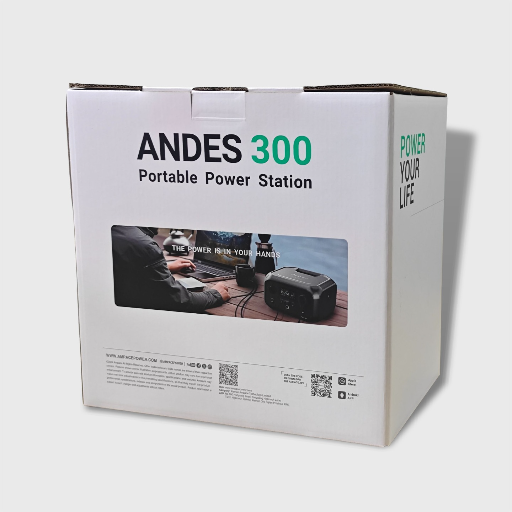
- Portable power stations and battery products
- Energy-storage product packaging
- Electronic components packed inside finished retail kits
- Accessories, chargers, cables and documentation sets
Pack-Out Engineering and Material Choices
Packaging design starts with the product envelope, mass, fragile zones, loose accessories and expected handling. A thicker board is not a substitute for product restraint, and board strength is not always the right call by itself.
01
Retail Carton
Printed paperboard or litho-laminated corrugated fiberboard carries the brand system, product information and unboxing sequence. Board grade is selected after the packed weight and structure are known.
02
Insert and Tray
A die-cut paperboard or corrugated insert can locate the electronic product, charger and accessories. Foam is not always required and is not interchangeable with load-path engineering; the correct restraint method follows mass, geometry, surface sensitivity and required evidence.
03
Outer Shipper
The shipping carton is specified separately from the retail packaging. Empty space is not always waste; the wrong call is to remove every clearance before the cushioning and route have been defined.
04
Claim-Bound Material Brief
If your brief asks for sustainable packaging, eco-friendly positioning, recyclable content, plastic reduction, biodegradable claims or a lower environmental impact, define the material evidence and claim rules. Sustainability is not inferred from paperboard alone.
Pack-Out Definition and Specification-to-Proof Framework
Define the product, accessories, insert, retail carton, shipper, print target and required proof as linked layers. A material report supports its stated property; it does not replace a filled-package test for the intended route. Skipping that separation costs you a clear acceptance boundary.
W-01
For packs containing lithium cells or batteries, the responsible dangerous-goods party must define the applicable transport package and documentation; the PHMSA lithium battery guide for shippers explains why requirements vary by battery and shipment configuration.
Retail Packaging Print and Finishing Capabilities
For electronics packaging design, we run sheetfed offset printing and control color against the approved artwork and proof. Pre-press, sheetfed offset printing, UV coating, lamination, die-cutting and folder-gluing run in-house.
| Process | Available specification | Application | Production route |
|---|---|---|---|
| Offset print | CMYK plus up to 2 Pantone spot colors; 6-color press with in-line coater | Brand color, product graphics and retail information | In-house |
| Gloss lamination | Quoted against approved sample | High-sheen retail packaging surface | In-house |
| Matte or soft-touch lamination | Quoted against approved sample | Low-glare or tactile surface | In-house |
| Matte anti-scratch varnish | Approved finish sample | Scuff-conscious dark artwork | Confirmed in quote |
| Spot UV | Registered to approved artwork | Selective gloss contrast and graphic emphasis | In-house |
| Foil and relief | Gold, silver or holographic foil; emboss or deboss | Premium mark or product-detail emphasis | Confirmed in quote |
| Window patching | Window shape and film confirmed at structural review | Product visibility in electronic packaging boxes | Confirmed in quote |
Color is controlled against the signed contract proof and the agreed Delta E target. Before production, we confirm the finish stack in writing because coating, lamination and substrate can change the final appearance.
When ink-rub resistance is an acceptance criterion, ASTM D5264 can frame comparative laboratory testing of the approved printed packaging surface.
Electronics Packaging Boxes: Quote Specifications
The table presents buying requirements for each project and converts it into a quote request. We confirm artwork and sample approval before providing a quote.
Specification
Huandao commitment
Quote response
For a usable brief, we return an engineer-reviewed quotation in one working day.
Custom printed prototype
After artwork approval, we schedule custom printed prototypes in 5–7 working days.
Small batch
After sample approval, we schedule small-batch orders in 10–15 working days.
Production run
After sample approval, we schedule production runs in 15–30 days.
Minimum order quantity
Minimum order quantity is 1,000 pieces per size and style; smaller runs are quoted case by case.
Print colors
On a 6-color press with an in-line coater, we print CMYK plus up to 2 Pantone spot colors.
Corrugated supply
For production, we supply single E-flute and single B-flute board just in time; A, C, F, BC and other profiles use sourced board.
Production evidence
For the customer’s own production run, we issue job-specific ECT/burst, ink-rub and basis-weight test reports.
Factory team
Our Xiamen facility has 133 staff supporting packaging production and control.
Quality Control and Job-Specific Evidence
Huandao connects approval data to the customer’s own job instead of substituting a generic material sheet. Each process step is scanned into the MES kanban and reported in real time, with ERP and intelligent scheduling supporting revision and production control.
The risk is a proof-to-production mismatch because the substrate and finish stack affect print appearance. Huandao controls against the signed proof and agreed Delta E target; ASTM D5264 can frame ink-rub testing, while ISTA 3A belongs to the complete packaged-product route.
Production Control Sequence
1
Before quotation, we review the dieline, artwork, color target, material and packed-product requirements.
2
For production, we make the approved proof or sample the reference.
3
At each process stage, we scan the job into the MES kanban for status reporting.
4
Against the customer’s own run, we issue the specified laboratory reports.
Color and Ink Evidence
In production, we control color against the signed contract proof and agreed Delta E target. An ink-rub report can document the tested print surface for the job.
Board Evidence
Our in-house laboratory issues ECT/burst and basis-weight reports on the job itself. These data describe the tested board or box property; they do not prove the performance of the filled packaging system on a distribution route.
When a delivered result does not meet acceptance criteria, the affected job is traced and the remedy is reviewed against the approved proof, specification and test record.
×
Consumer Electronics Packaging Supply Plan and Boundaries
One coordinated supplier can lessen the number of handoffs between the printed box, insert and shipper, but it is an option rather than a universal risk reduction. The right sourcing plan hinges on qualification rules, tooling ownership, backup requirements and the evidence expected at each layer.
For lithium cells or batteries, the responsible dangerous-goods party should check the shipment configuration against the PHMSA lithium battery guide for shippers before the retail carton and transport pack are approved.
| Situation | Why the standard route is incomplete | Required next step |
|---|---|---|
| ESD-sensitive electronic components | A conventional printed carton does not establish electrostatic-discharge control. | State the required ESD packaging properties, test method and acceptance record before sourcing. |
| Lithium cells or batteries in transport | Retail packaging artwork and generic box data do not establish dangerous-goods compliance. | Review cell or battery type, configuration, size, state, destination and transport mode with the responsible dangerous-goods party. |
| Route-performance claim | ECT, burst or basis weight alone does not simulate the complete filled shipping unit. | Define the complete pack-out and an applicable distribution-test protocol such as ISTA 3A where appropriate. |
| Unverified environmental claim | A material name alone does not prove an environmental outcome. | Set the claim, evidence, chain-of-custody and market-language requirements before artwork approval. |
Electronics Packaging Interactive Tools
01
Electronics Pack-Out Brief Builder
Capture the product, insert, retail box, shipper and evidence inputs in one copyable brief. This tool organizes requirements; it does not approve a design, transport route or ESD specification.
02
Corrugated Box Board Area Estimator
Estimate flat board area for an early regular-slotted-box comparison. The model uses a 40 mm manufacturer’s joint and a simplified blank of [2 × (L + W) + 40] by (H + W). It is not a board grade, strength, die-line or price calculation.
03
Electronics Packaging RFQ Readiness Checklist
Select the inputs already available. A high score means the brief is easier to quote; it does not approve structure, print, testing or transport compliance.
Our formats include litho-laminated corrugated retail boxes, folding cartons, carry-handle boxes and printed boxes with fitments for consumer electronics, small appliances, portable power and related products.
Yes. We can quote the printed box, inner insert or tray, and outer shipper as one coordinated supply plan and consolidate them into one shipment with shared freight.
No. Product movement, unsupported corners, accessory contact, empty-space strategy and shipper design can matter as much as board grade. We review the complete pack-out before selecting the packaging material.
No. A paperboard or corrugated insert may work where geometry and restraint allow it; other products may need a different material. The decision follows product mass, fragile zones, surface sensitivity and the required test evidence.
The standard MOQ is 1,000 pieces per size and style. Smaller runs are quoted case by case.
Custom printed prototypes are scheduled in 5–7 working days after artwork approval. Small batches are scheduled in 10–15 working days and production runs in 15–30 days after sample approval.
Our pre-press team works from AI and print-ready PDF artwork files. Include the dieline, logo rules, CMYK or Pantone callouts, finish layers and revision number.
Job-specific ECT/burst, ink-rub and basis-weight test reports are issued for the customer’s own production run. Any additional acceptance report must be defined in the quotation.
No. Transport requirements depend on battery type, configuration, size and mode. The responsible dangerous-goods party must confirm the applicable package, marks, documents and test route for the shipment.