Get in Touch with Xiamen Huandao Packaging Technology Co., Ltd.

Cardboard Counter Display Boxes
We treat product load, retailer footprint, artwork approval, and pack-out method as a unit when creating a specification for cardboard counter display boxes. Prior to releasing an order, our team defines the display structure and provides a proof route and production evidence plan based on the inputs provided.
At a glance
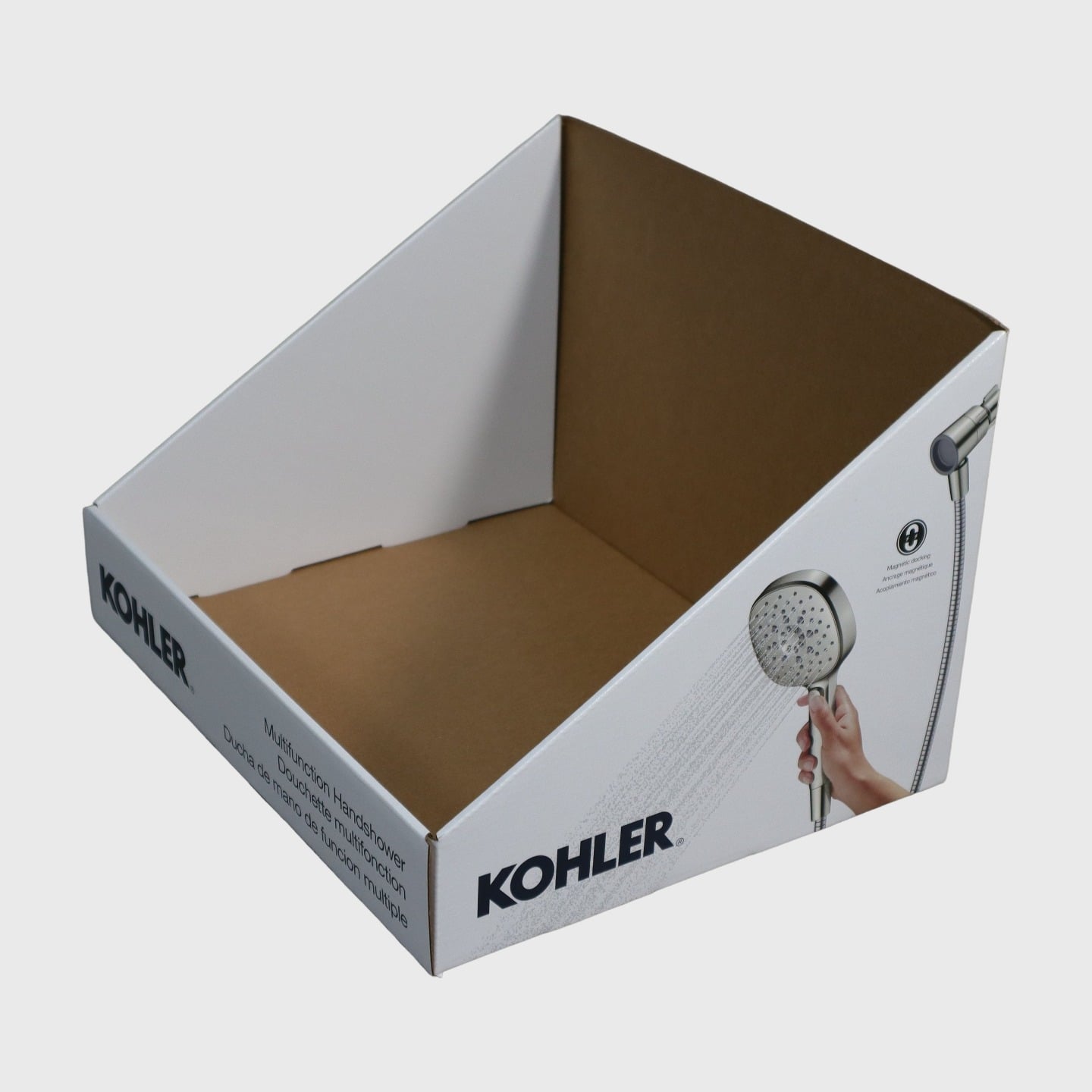
Counter Displays Engineered from Planogram to Proof
A cardboard counter display box may not align with a retailer’s usable footprint, facing count, or header clearance, even if it matches the product dimensions (application example). We analyze each design decision made by a sample or production check, and begin with the planogram and load-state product.
-
Buyer input Product size, weight and pack orientationStructure decision Tray depth, angled floor, dividers or insertsApproval point Blank structural sample and load arrangementProduction evidence Approved dieline and job record
-
Buyer input Counter footprint, facings and header clearanceStructure decision Display envelope and visible print facesApproval point Digital printed sample against the planogramProduction evidence Signed artwork and contract proof
-
Buyer input Display duration, temperature and humidityStructure decision Board route and support geometryApproval point Test configuration agreed for the intended useProduction evidence Run-specific ECT/burst and basis-weight report
-
Buyer input Artwork, spot colours and finishStructure decision Print sequence, coating and converting routeApproval point Proof condition, substrate and finish approvalProduction evidence Ink-rub report and colour-control record
Huandao Packaging Engineering Team“A useful display brief tells us what the product weighs, how long it stays filled, and what the retailer allows on the counter. Those determine what the sample must prove.”
Turn a product list into an engineering brief.
Open the Quote-Ready Display Checklist →Board and Structure Options for Countertop Displays
How buyers describe this format
A cardboard display box can also be specified as a cardboard display, display stand, product display or retail display. Corrugated cardboard and paperboard are various material routes. For custom counter display boxes, custom boxes and other cardboard display boxes, each custom packaging brief defines the custom sizes, customizable structure and right material instead of treating every custom display or custom cardboard pack as the same solution.
- Display packaging boxes and other packaging boxes still require a product-specific durability review.
- A retailer’s envelope and brand requirements drive the design of a custom counter display, not a generic dieline.
E-flute litho-laminated board
Use this route when single E-flute board is produced in line and the support structure is matched to the product load and planogram. The retail graphics are printed on a litho sheet that overlays the display.
- Corrugated support with a smooth printed face
- Suitable for dividers, angled floors and reinforced walls
- Consider humidity, duration, and open front geometry before finalizing the test plan.
Solid board
Solid board is a better option for a display that requires a compact package. The construction and final caliper are confirmed from the product, footprint, and finish.
- Clean folds for compact counter displays
- Printed on all visible faces
- Insert or divider options for product restraint
Why conditioning belongs in the brief
Research by Clemson Packaging on 3,000 corrugated boxes showed that the compression strength of boxes decreased as the relative humidity and moisture increased. This evidence is not related to your display. It explains the need for conditioning and configuration of a display in the test report.
| Specification | Huandao production route | What we confirm for your job |
|---|---|---|
| Board construction 1 | E-flute litho-laminated board | Product load, display duration, environment and support geometry |
| Board construction 2 | Solid board | Caliper, folds, inserts and visible faces |
| Colour route | CMYK plus up to 2 Pantone spot colours | Artwork separations and signed colour target |
| Press route | 6 colours plus in-line coater | Sequence, coating and final substrate |
| Development samples | 2 free formats: blank structural and digital printed | Buyer pays courier; press-run finished samples carry a fee |
| Standard order quantity | 1,000 pieces per size and style | Smaller runs reviewed case by case |
| Management systems | ISO 9001 and ISO 14001 certified operations | Applicable documents confirmed with the quotation |
| Run reports | 3 report groups: ECT/burst, ink-rub and basis weight | Test configuration and job identity recorded |
Print, Color and Finishing Controls
A Pantone reference alone does not define the appearance of the finished display. Huandao connects the signed contract proof to the printing condition, substrate and finish. The parties record the agreed Delta E tolerance in the approval.
Approval risk to remove
Proof approval is ambiguous when the printing condition, substrate and finish are not attached to it. Because each surface decision can alter the approved appearance, Xiamen Huandao Packaging binds the signed record to all four anchors and uses ISO 12647-7 as an external proofing reference.
Four approval anchors
- 01 Approved artwork and separations
- 02 Defined proof or printing condition
- 03 Final substrate and surface finish
- 04 Signed proof with an agreed Delta E tolerance
-
Gloss laminationHigher surface gloss and wipe resistanceApprove with the final substrate
-
Matte laminationLower glare and restrained appearanceReview dark solids and fold areas
-
Soft-touch laminationTactile surfaceConfirm rub and handling expectations
-
Matte anti-scratch varnishMatte surface with added scuff controlDefine the visible handling zones
-
Spot UVLocal gloss contrastRegister to the approved artwork
-
Hot foil stampingGold, silver or holographic accentConfirm foil reference and stamping area
-
Embossing or debossingRaised or recessed graphic detailReview board, depth and reverse-side effect
-
Window patchingProduct visibility through a cut windowReview opening geometry and patch film
Sampling and Approval Before Production
Sampling separates structural questions from color and finish decisions (application example). As a result, each approval has a specific purpose. The quote verifies the route and keeps the approved inputs attached to the job.
-
Send the brief.
Include dimensions, loaded weight, planograms and quantity.
-
Review the structure.
Assess footprint, facings and inserts. Consider the environment and duration of the display.
-
Approve a blank sample.
Assess assembly, access and stability of the product.
-
Approve a digital sample.
Assess overall presentation and visible faces.
-
Lock the color target.
Sign off the contract proof defining the agreed condition for print, finish and substrate and Delta E.
- Release for production.
Blank structural sample
Free, buyer pays courier. This is to verify product assembly and fit and the planogram.
Digital printed sample
Free, buyer pays courier. For layout and scale review and presentation.
Press-run finished sample
A sample fee applies. Use it for the final production run of a small quantity.
Repeat-order shortcut
Repeat orders skip tooling and sampling when the approved construction and artwork remain unchanged. We confirm the resulting schedule for the specific job rather than publishing a generic lead-time range.
Ordering, Lead Time and Consolidated Pack-Out
The price is determined by the board construction, quantity, print separations, finishing and inserts. Sampling route and pack-out also impact the price. We do a quote based on the variables mentioned above.
Hidden cost check
Cheap displays create downstream labor, damage, wasted-space and reprint costs. MOQ, sampling route and lead-time confirmation need to be visible before an RFQ, because an incomplete comparison can hide risk outside the unit price.
-
Cost driver Display footprint and loadWhy it changes the job Change board area, support geometry and test scopeHow to control it Send the loaded-product arrangement with the planogram
-
Cost driver Artwork and spot coloursWhy it changes the job Change pre-press, ink and approval workHow to control it Supply final artwork and colour references together
-
Cost driver Finish stackWhy it changes the job Adds material, setup and converting stepsHow to control it Apply premium finishes to the areas that influence the shelf impression
-
Cost driver Pack-out and insertsWhy it changes the job Affect assembly, carton cube and handlingHow to control it Review display, insert and shipping carton as one system
MOQ
The standard MOQ is 1,000 pieces per size and style. Smaller runs are quoted case by case.
Lead time
Lead time is confirmed per job in the quotation. Repeat orders can skip tooling and sampling when the approved specification is unchanged.
One shipment
The printed box, inner trays, inserts and outer shipping cartons can be supplied together and consolidated into one shipment with shared freight.
Total delivered cost, not a fabricated ROI
Comparison of unit price should be made with sample work, assembly, carton cube, and risk of damage and reprint. Consolidation creates a coordination option, but the benefit of freight depends on the final quantities and route of delivery.
From Display Brief to Consolidated Shipment
-
Send product and retail inputs: Dimensions, weight, number of facings and footprint, graphical material, quantity, environment and planned launch date.
-
Receive structural feedback: missing information is flagged before a route to support and sample is determined.
-
Approve the written quotation: MOQ, sample cost, lead time and shipment terms are accepted for the quote.
-
Approve samples and artwork: structural, digital and run approval are granted only where necessary.
-
Follow the production process from printing to finishing, converting and agreed laboratory test checks.
-
Consolidate and dispatch printed boxes, inserts, trays, and outer cartons in a single shipment.
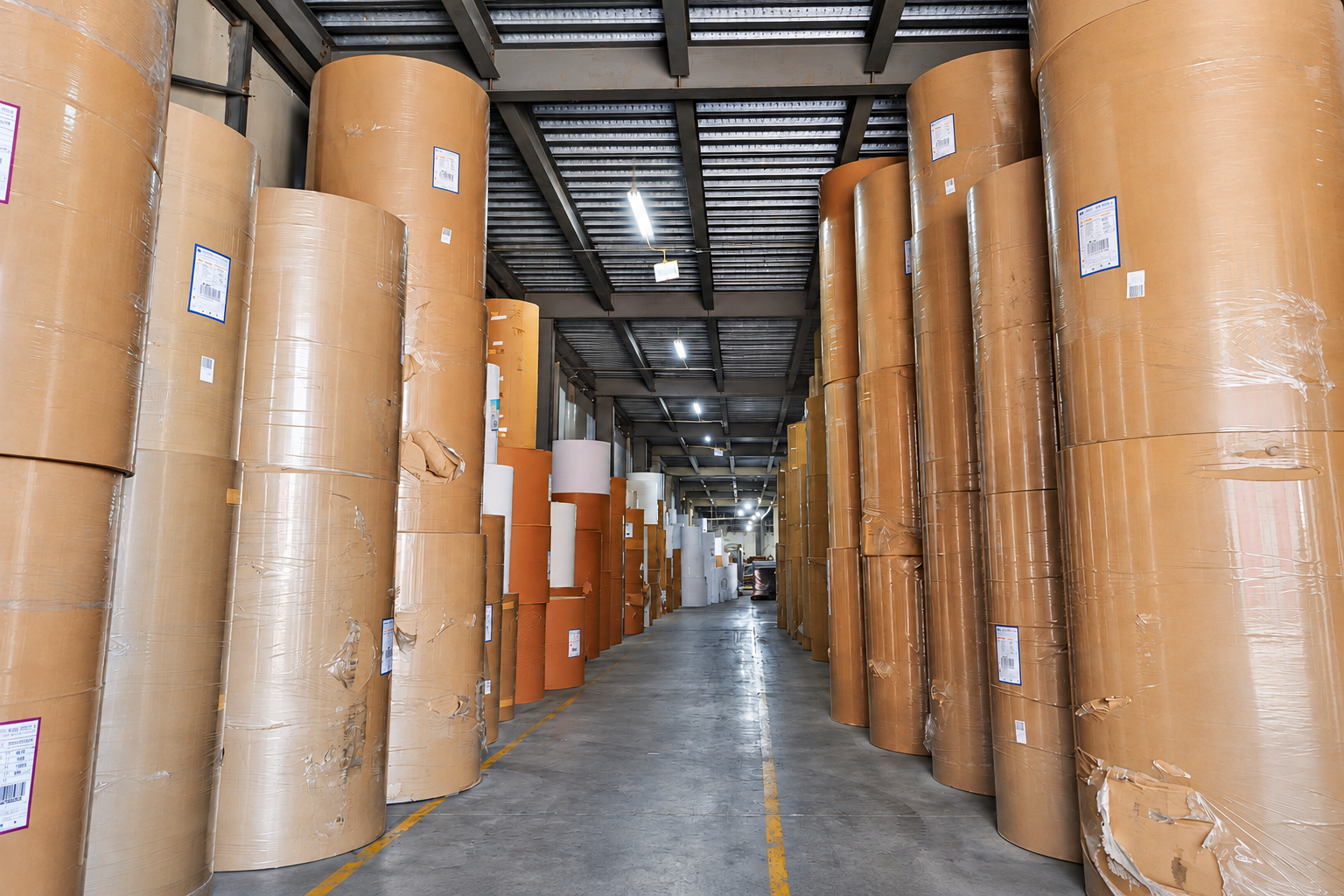
Inputs That Prevent Rework
| Input | What to specify | Why it matters |
|---|---|---|
| Loaded product | Dimensions, unit weight, orientation and quantity per facing | Sets tray geometry and support conditions |
| Retail planogram | Maximum footprint, height, facings and barcode zones | Prevents a structurally sound display from missing the store envelope |
| Use conditions | Display duration, expected humidity and replenishment pattern | Defines what the structural sample and test plan must examine |
| Artwork package | Final files, Pantone references, finish map and legal-copy zones | Keeps colour and converting approvals on the same revision |
In-House Production and Job-Specific Quality Reports
“Quality packaging” does not indicate which operation was controlled or which batch was tested. Each process step is scanned into MES kanban, and the required laboratory test reports are issued against the customer’s own production run.
An owned manufacturing site
The production facility is at No. 587 Tongfu Road, Tong’an District, Xiamen, with 133 staff. It is Huandao’s own plant, not a trading office.

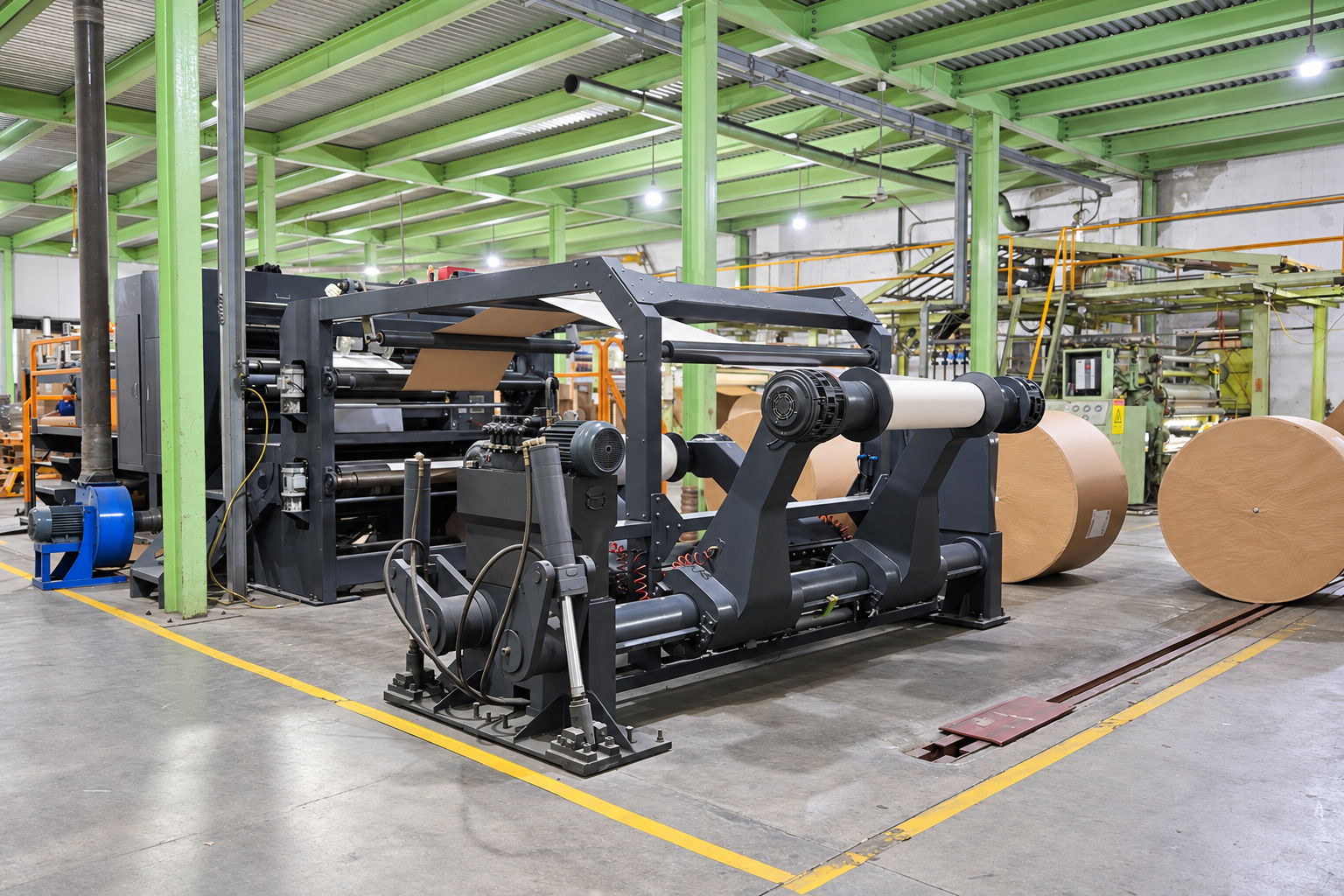
Test scope stays explicit
Transport tests do not automatically prove performance of open-front or sustained displays. The configuration, conditioning and intended duration are retained with the job record.
- Pre-press check: Ensure artwork, separations, visible fades, and proof target are linked to the job.
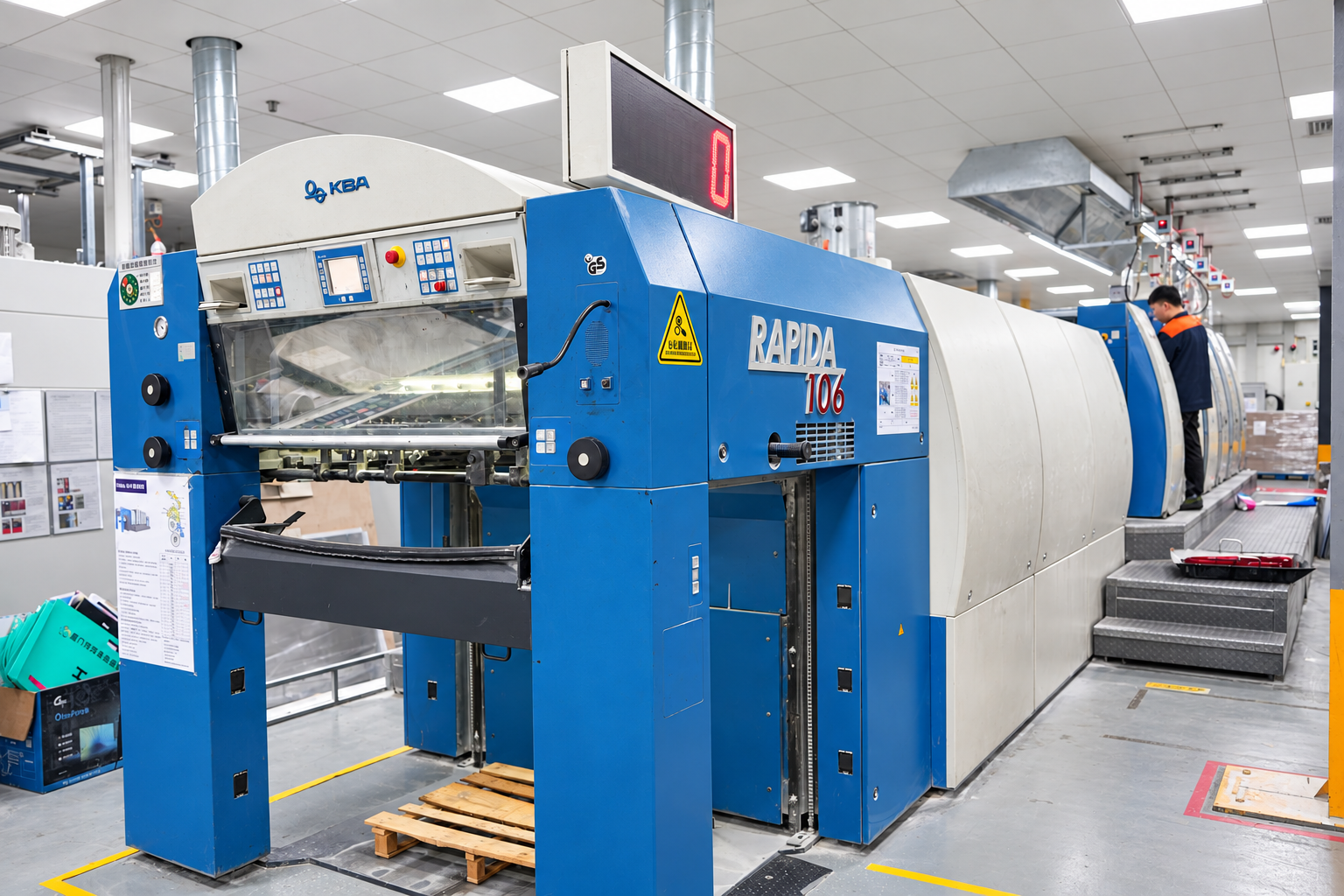
- Sheetfed offset printing: X-Rite colour management system calibrated to G7 provides production control against signed off proof.
- Coating and lamination: approved finish route stays affixed to substrate and artwork.
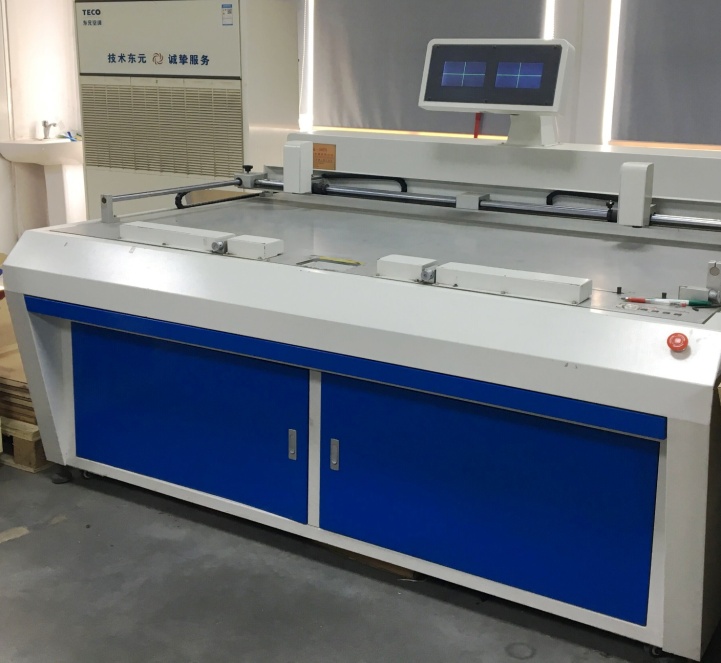
- Die-cutting: the production dieline follows the approved structural sample.
- Folder-gluing and assembly check: fold sequence and joints are checked against written specification.
- Laboratory reporting: ECT/burst, ink-rub and basis-weight results are issued for the job itself.
Read a report with its configuration
A transport compression test, a constant-load test and an open-front, display case test, answer different questions. We record the configuration and condition of the test unit to restrict the report to the findings it covers.
Counter Display Structures from the Supplied Product Range
-
Printed open-front cardboard counter display with an angled floor
Angled-floor presentation keeps the product facing the shopper.
-
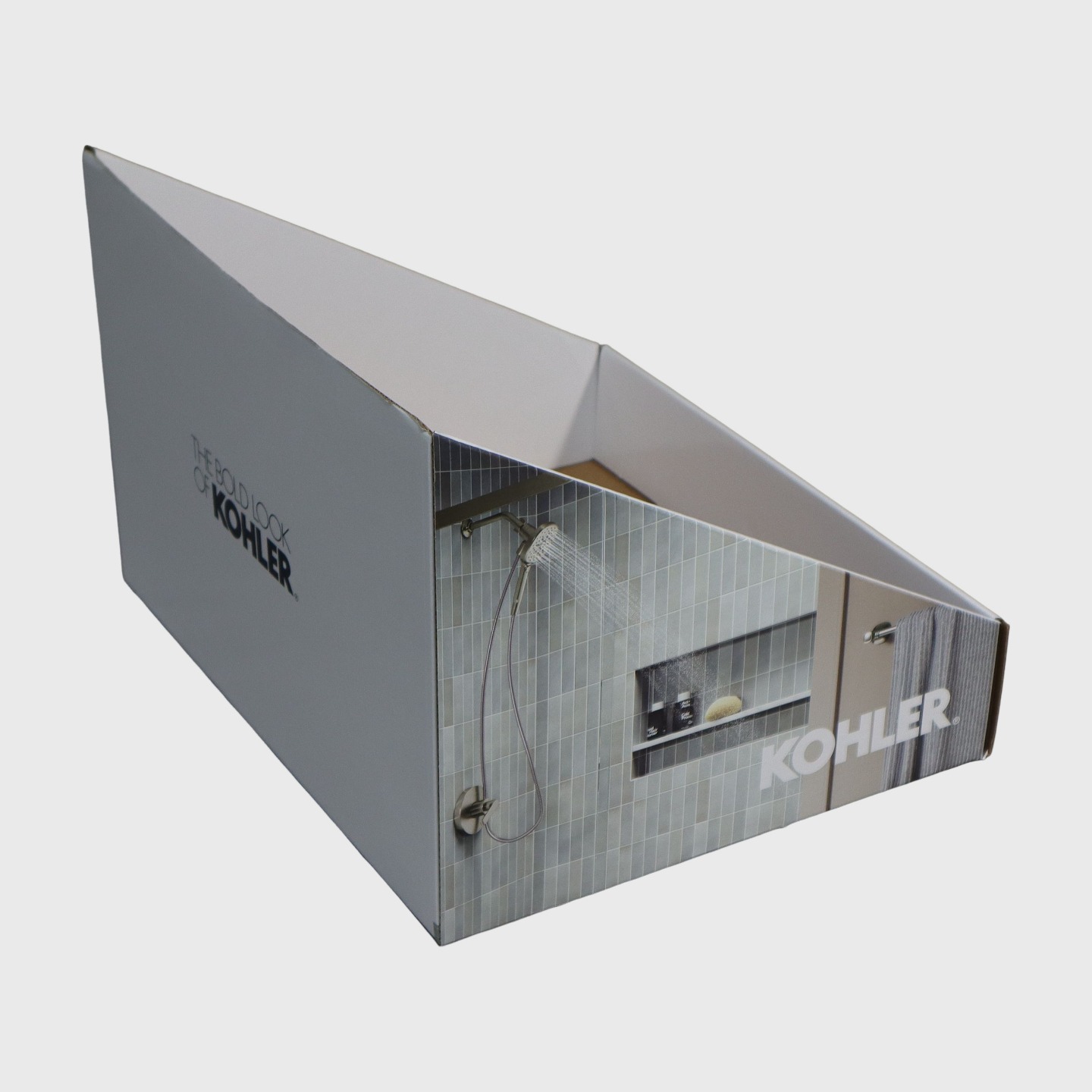
Litho-printed countertop display box with branded visible faces
Visible faces carry the retail artwork across the display structure.
-
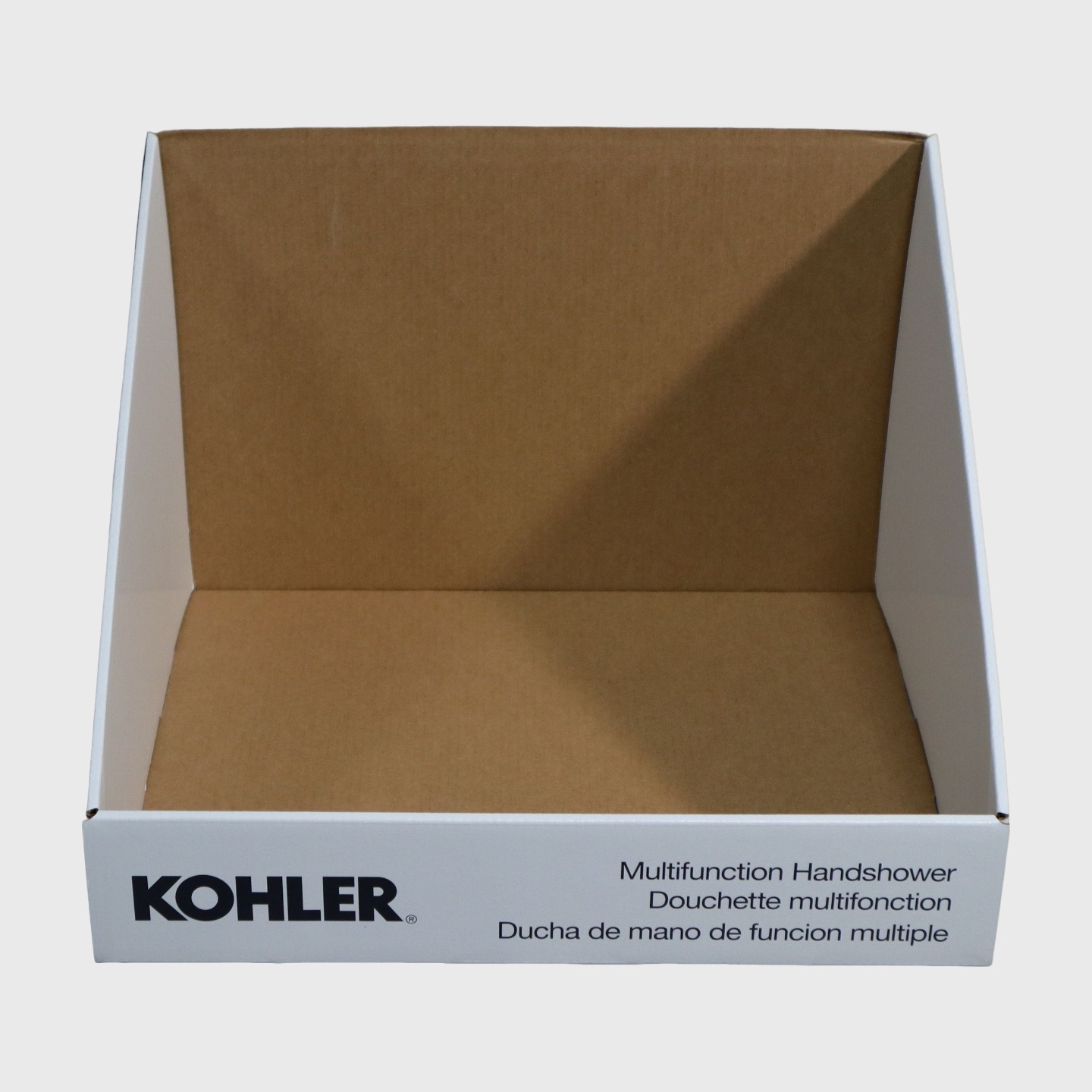
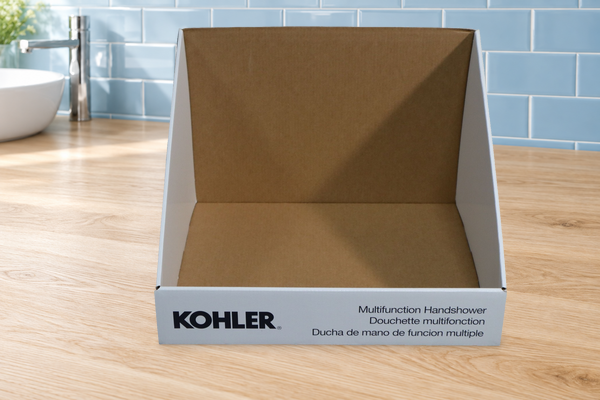
Custom cardboard countertop display tray shown from the front
Product fit, facings and footprint are reviewed together.
Cardboard Counter Display Box Engineering & Approval Tools
-
Display Input Checker
Product Dimensions, Loaded Weight & Counter Footprint Verification
-
Proof Approval Planner
Contract Proof, Substrate, Surface Finish & Colour Target Alignment
-
Quote-Ready Display Checklist
Board Construction, Sample Route, Pack-Out & Order Quantity Review
Cardboard Counter Display Box FAQs
-
E-flute litho-laminated board suits structures that need corrugated support and a high-quality printed face. Solid board suits compact formats where a thinner profile and crisp folds are more important; we confirm the choice from the loaded product and planogram.
-
Strength cannot always be associated with the name of the material. Provide product weight, facing count, support structure, expected display duration and environment in order to specify the structure and the tests.
-
Yes. We consider product restraint, re-plenishment and the retailer’s store footprint when designing dividers and inserts, and validate the design with a structural test sample.
-
Yes. Sizes are made to retailer’s planograms, with the dieline and visible faces and product access reviewed prior to sampling.
-
Send final artwork, dielines if available, Pantone references, legal-copy and barcode zones, plus a finish map. We can print CMYK plus up to 2 Pantone spot colours on the 6-colour-plus-coater route.
-
A blank structural sample and a digital printed sample are free, with courier paid by the buyer. Press-run finished samples carry a sample fee.
-
Our standard MOQ is 1,000 pieces per size and style. We review smaller runs case by case in the written quotation.
-
Yes. We can coordinate the printed box, inner trays, inserts and outer shipping cartons and consolidate them into one shipment with shared freight.
-
Lead time is confirmed per job after the structure, artwork, finish, sample route, quantity and destination are reviewed. Repeat orders can skip tooling and sampling when the approved specification is unchanged.
-
FSC chain-of-custody certified board is available on request. Specify the requirement before quotation so the material and claim route can be confirmed for the job.